
Comparisons
Truck Cap vs. Tonneau Cover for Everyday Hauling
A truck cap encloses space above the bed rails. A tonneau usually closes near rail height. Start with the tallest item that must stay covered throughout the trip, measured from the bed floor. This question can rule out an entire category without comparing finishes or locks.
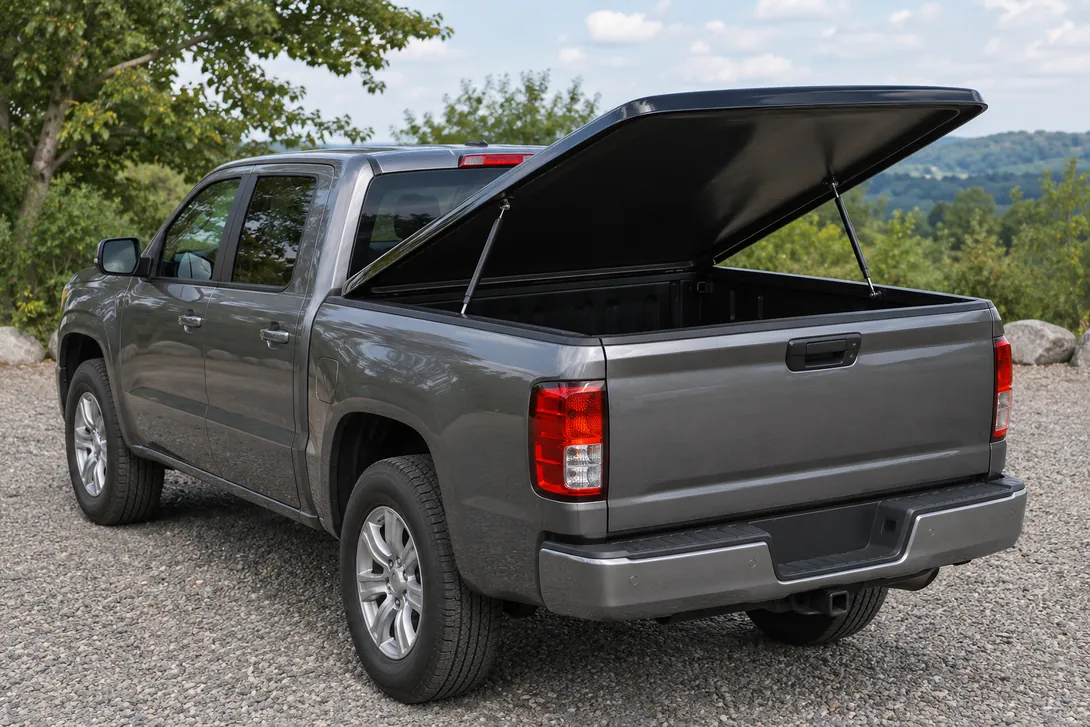
Compare the routes cargo takes
A cap can shelter a taller load but its rear opening, window or hatch frame can be narrower or lower than the interior. A tonneau can open the top for forklift or overhead access, subject to how its panels store. Loading path and enclosed volume are separate tests.
Use a pair of realistic layouts
LEER's 100R is an example of a fiberglass cap and its 700 is a hinged tonneau. Both have vehicle-specific shapes and moving glass or lids. A hard fold offers another option when occasional overhead loading matters more than a single-piece finish.
| Constraint | Cap | Tonneau |
|---|---|---|
| Load height | Check rear door opening and interior roof height. | Check lowest surface, crossbow or latch under the cover. |
| Access from above | Roof can obstruct a crane, pallet or tall object. | Check whether the open cover leaves the needed footprint. |
| Removal and storage | Plan labor, connectors and a cap-sized supported area. | Handling varies from a removable soft roll to a full-width rigid lid. |
Worked example
A cabinet passes the bed but misses the doorway
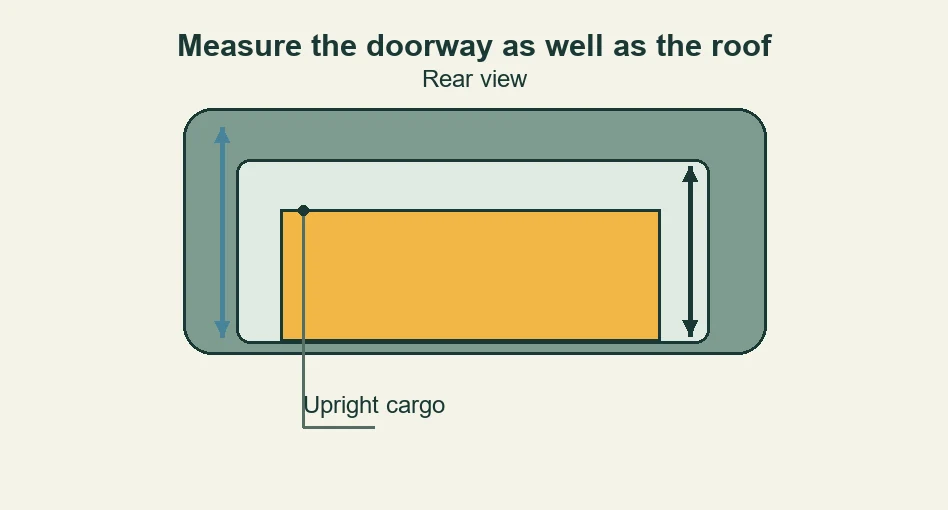
A buyer wants to transport tall cabinets in all weather. Their largest cabinet fits on the bed floor and is shorter than the cap’s published interior height. Before choosing the cap, trace the clear rear-door opening including the frame and any latch projecting inside.
Check whether the cabinet can pass upright at its widest point and whether there is room to tilt it if needed. Then compare a tonneau removed or opened in its permitted position. That may simplify overhead loading but will not enclose an upright cabinet above the rails. Knowing which requirement applies on most trips prevents a costly compromise.
- Measure the entrance first
- A shell’s maximum interior dimension can be larger than the usable loading doorway.
- Include cabling and storage
- Removing an installed cap may involve wiring and a larger supported storage area than removing a folding top.
Decide which opening to measure
A refrigerator carried upright, a dog crate and an assortment of grocery bags ask different things of the same truck. Sketch the actual item and the opening it must pass through.
| Situation | What to check |
|---|---|
| Tall items that must stay enclosed | Start with the cap's clear doorway and usable interior height. Check ventilation and temperature separately for any living occupants. |
| Short items plus frequent overhead loading | Compare tonneaus that clear your load footprint when fully open. Measure the stored assembly. |
| Occasional oversized freight and everyday weather protection | Compare how many people and how much storage space each removal requires. Add dealer removal or reinstallation to your ownership budget if applicable. |
Get comparable quotes
Provide the same vehicle and equipment list to both suppliers. Ask what is included for paint, locks, wiring, hardware and installation. Keep the truck's payload in view when adding a cap, rack and cargo together.