
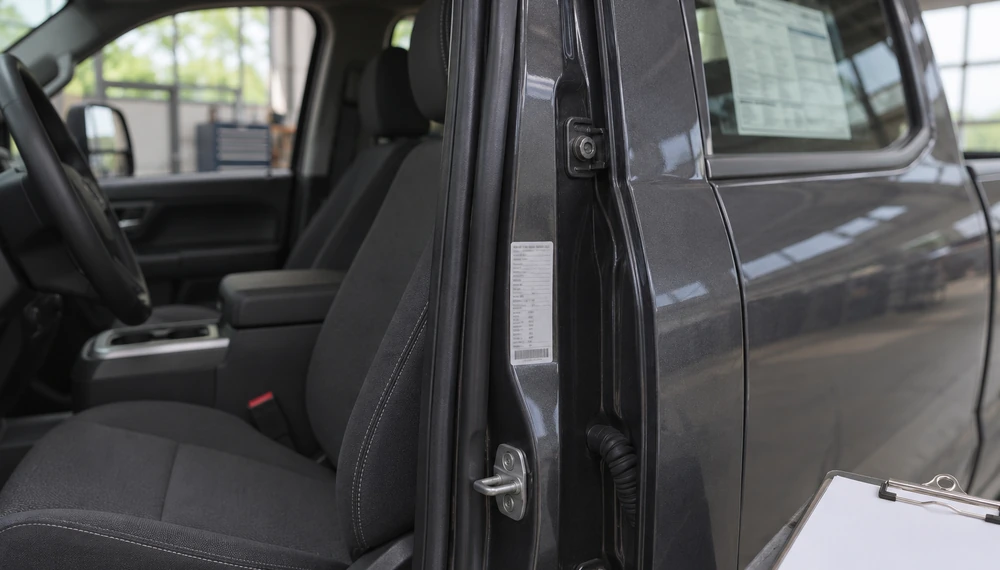
Get the full model name
Compare the badge, door label, window sticker and dealer record. If all you have is a VIN, look it up on the official decoder or ask your dealer for the model and model year.
Official NHTSA VIN DecoderFind the guide for your pickup before choosing a cover. The same badge, bed name or model year can appear on trucks with different mounting points.
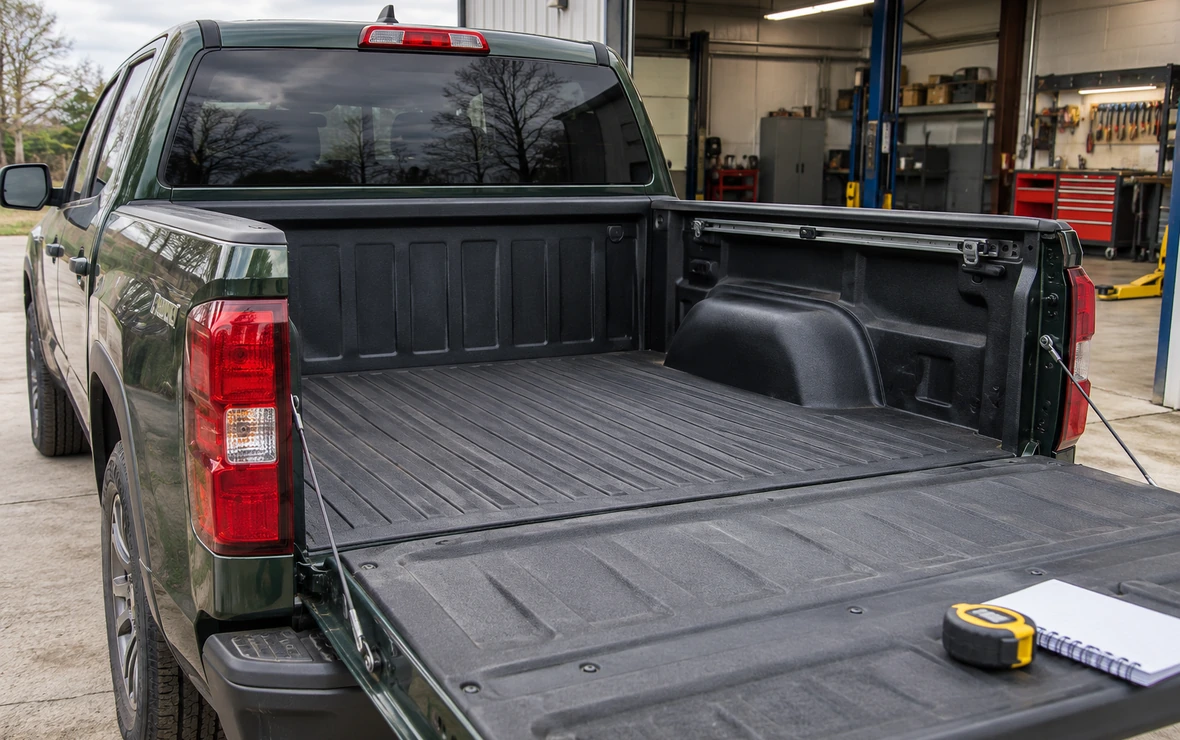
Use the vehicle record and the parts you see in person, especially when you are buying from a used listing.
Compare the badge, door label, window sticker and dealer record. If all you have is a VIN, look it up on the official decoder or ask your dealer for the model and model year.
Official NHTSA VIN Decoder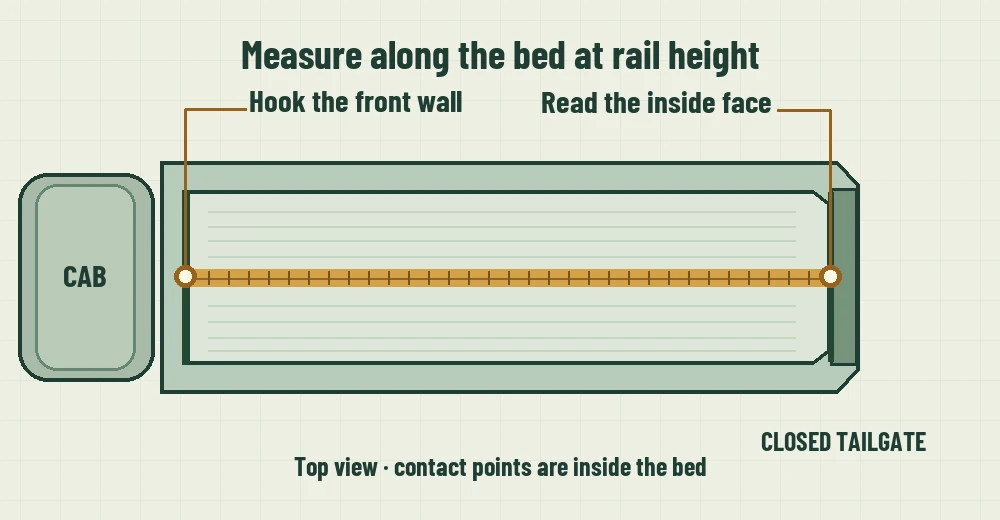
Measure from the inside front wall to the inside of the closed tailgate at rail height. Record the number in inches and compare it with the guide for that exact truck.
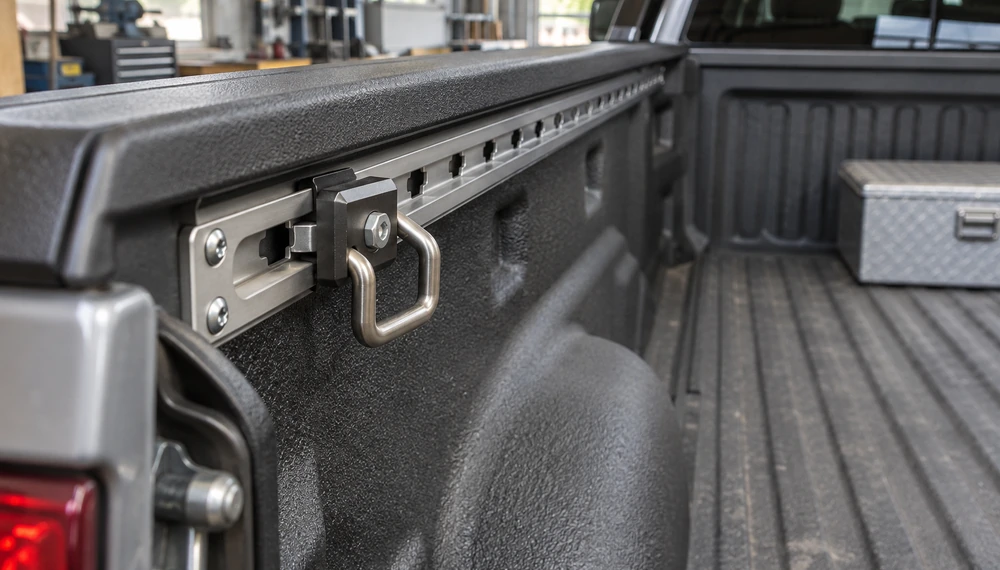
Photograph both rail profiles, the front corners and the top of the tailgate. Keep shots of any cargo track, exterior storage lid, old cover rail or liner under the lip.
If a listing gives you two different parts, check which truck name the seller entered. Start with the clue that matches your paperwork.
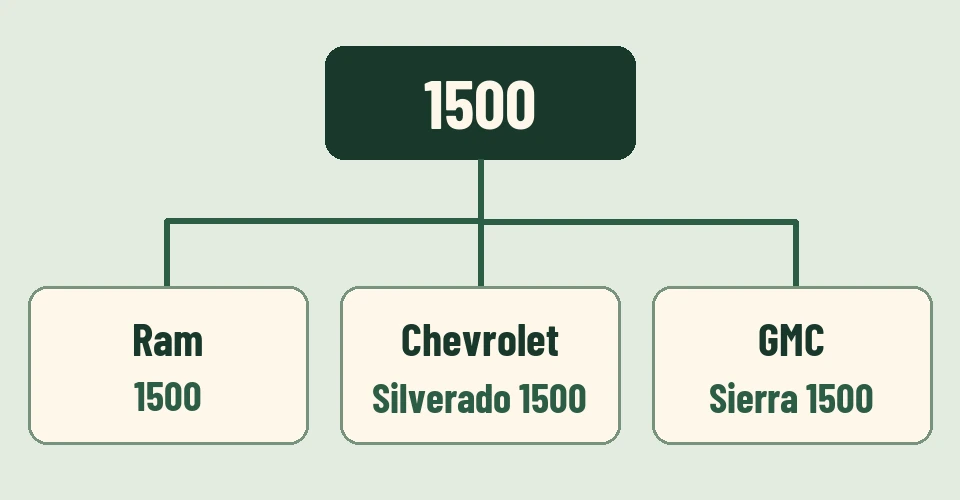
Look for Ram, Chevrolet Silverado or GMC Sierra. Sierra and Silverado also have separate HD and EV guides. Confirm the full vehicle name before opening the fit listing.
Find the three 1500 models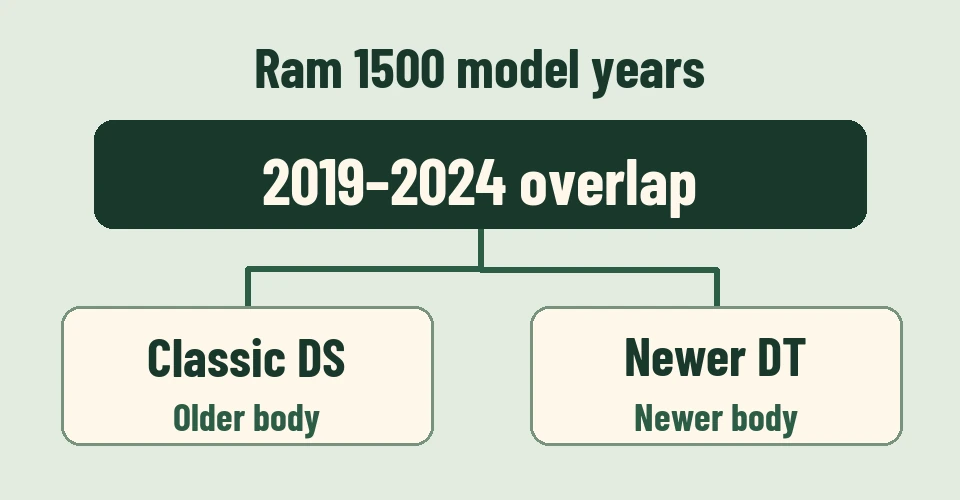
In 2019–2024 model years the Ram 1500 could be the Classic DS or newer DT. A 2021 or 2022 listing and the Dodge/Ram wording alone leave the body unclear. Verify it on the original record.
Ram’s Classic model history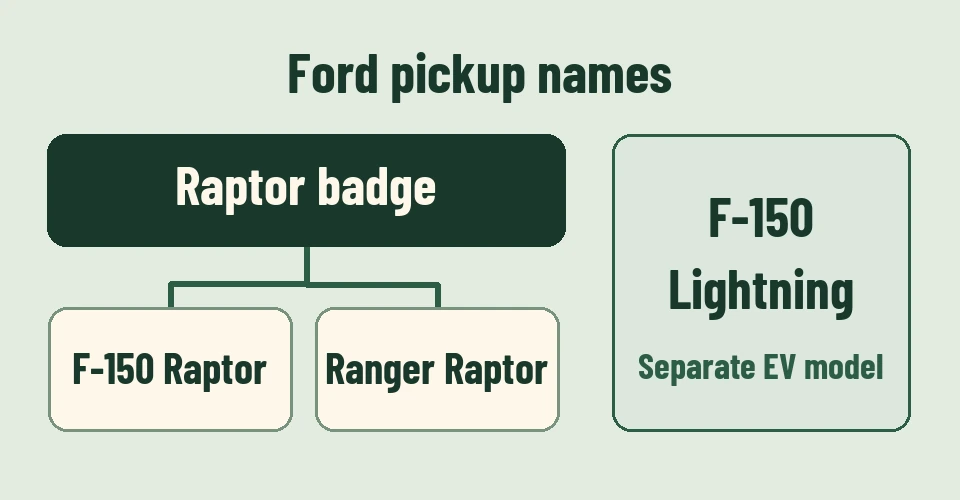
Use the full F-150 Raptor or Ranger Raptor name when checking a bed. F-150 Lightning has its own guide when that is the name on the paperwork.
Search with what you know or open your make below. Each result leads to a guide where you can check the year, body and mounting details.
Check the spelling on the original vehicle record or clear the filters. If your truck does not have a guide here, you can still use the checklist to ask the cover maker about the mounting points.
See the measuring and fit checklistF-Series, Ranger, Maverick and Ford original equipment
Enter the F-150 model year and bed length, then check the tailgate and the surfaces the clamps would grip.
Measure the compact bed and use the Maverick application at the manufacturer. Compare the rail area if an old cover is already installed.
Read the Ranger year and bed label, then compare the bed lip and liner. Check a Ranger Raptor application by its full name.
Check the F-250 Super Duty’s own bed and tailgate details. Compare any rack feet or top-rail liner with the cover hardware.
Read F-150 Raptor or Ranger Raptor on the vehicle record before picking a guide. Measure the actual bed and compare the rails.
Check the F-350 Super Duty application and actual rail height. Record any factory or added rack hardware separately.
Use the F-150 Lightning application. Confirm the exact model, bed and installed equipment before carrying over a part number from another F-150.
Confirm that the paperwork names the Sport Trac pickup. Check any old panel, latch and seal or mounting rail before searching the year.
Start with the Ford accessory label or original window sticker and ask the parts catalog for the exact truck and bed application.
Silverado, Colorado and previous nameplates
Use the exact cab, bed and model year. Inspect the latch side of any tailgate hardware and the bed-rail shape where clamps would sit.
Separate the 2019 LD from the newer 1500 and the 2022 LTD from the refreshed body. Take your tailgate and storage details into the lookup.
Measure the older bed between the inside walls. Record the side shape and existing rails before comparing the model-year listing.
Identify the factory bed panels and Midgate. Compare how those panels and their seals attach before considering a replacement.
Measure the short box at rail height and note the back-window edge and any earlier mounting holes. Use an El Camino-specific application.
Confirm Silverado EV and the actual Midgate or tailgate equipment on the truck. Check the accessory or cover application by that body.
Use the Silverado 2500 HD’s own catalog and bed, then note whether factory rails, bed storage or a rack change the mounting space.
Compare the Fleetside and Stepside bed shapes. Measure at the rails and look for older mounts or holes before ordering by model year.
Distinguish the pickups’ different beds before looking up a part
Confirm that it is a Sierra 1500, then check the body name, bed size and tailgate, especially if the gate has more than one moving section.
Select the HUMMER EV Pickup when you look up parts. Its bed and attachment hardware have their own applications, separate from the SUV.
Note the model year and bed, then see whether tailgate storage or other accessories enter the cover latch or seal path.
Read Sierra 2500 HD in the vehicle record and take the bed and tailgate details to this guide before comparing parts.
Use the Sierra EV application and identify its actual Midgate and tailgate features, if equipped. Compare the mounting points on the EV bed.
Check the H2 SUT pickup body and the panel pieces on the original cargo box. Use the H2 parts reference for that equipment.
Classic, DT, heavy-duty pickups and Dakota
Use Classic or newer DT first. Record the length, front braces, RamBox and split-tailgate hardware before looking at a part number.
Use the Ram 2500 application for your year and bed. Photograph the clamps, cargo rails and side storage if it has RamBox.
Look for the two exterior lids and identify the inner cargo rail. Measure clearance for the cover and each lid through its full travel.
Use Dakota on the vehicle record, including older Dodge listings. Check bed length and whether prior rails or clamps remain.
Start with the Ram 3500 configuration and bed. Record side equipment, the tailgate and the space any towing hardware needs.
Identify the two tailgate leaves, then inspect front bed braces and read the instructions for your actual split-gate cover kit.
Use the original Mopar accessory label or dealer order, then check the truck and bed that were specified on the invoice.
Tacoma and Tundra product and accessory fit
Confirm whether it is the earlier or later Tacoma body, then look under the bed lip for the deck rail and any Trail storage hardware.
Bring the exact model year, nominal bed name and a photo of any factory deck rail. Compare the attachment area on the actual bed.
Read the original Toyota accessory number, or take the dealer order and a photo of the existing mount to the parts counter.
Utility tracks, dual-action gates and factory hardware
Check whether the Utili-track channels are installed. Identify the bed length and whether the channels or liner occupy the proposed clamp points.
Confirm the cover clears the dual-action tailgate and the In-Bed Trunk through the openings you actually use.
Read Titan or Titan XD on the exact vehicle record. Check its bed length and Utili-track hardware in the Nissan application.
Look up the original Honda accessory number and compare the mount and latches before trying to reuse hardware from another cover.
Jeep, Hyundai, Rivian, Tesla and Subaru
Use the Gladiator pickup application. Check box rails, any bed rack and the hardware already on the Jeep.
Identify the existing manual or powered setup and check whether the truck has the wiring and compatible hardware its upgrade requires.
Identify whether the Santa Cruz already has the integrated tonneau assembly. Photograph its track and release points before looking for a replacement.
Measure the Baja’s short cargo box and photograph the attachment points and old fasteners. Search using the exact model year and part category.
Inspect whether the factory powered cover is installed and operating. Record any changed bed hardware before comparing aftermarket options or replacement parts.
These factory references help you identify the original equipment. Use the model guide for the mounting and vehicle details.