
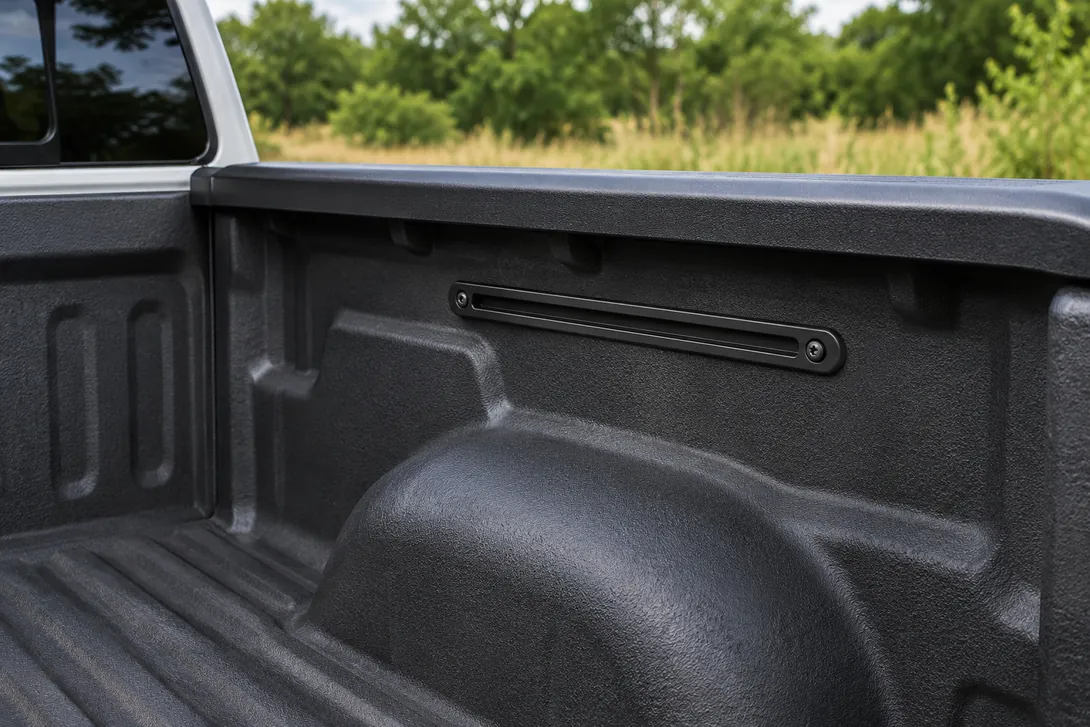
Bedliner lip or factory track
A liner rolled over the rail or a factory track under it can occupy the clamp’s contact point. Compare the cover’s clamp drawing with a close photo of your rail. Some track-specific kits use a different clamp position.
Close the tailgate. Hold the tape at the height of the bed rails, hook the inside front wall next to the cab, and read it at the inside face of the tailgate.
Keep the tape straight and parallel to the sides of the bed. Write down the exact reading in inches before you match it to a cover maker’s fit chart.
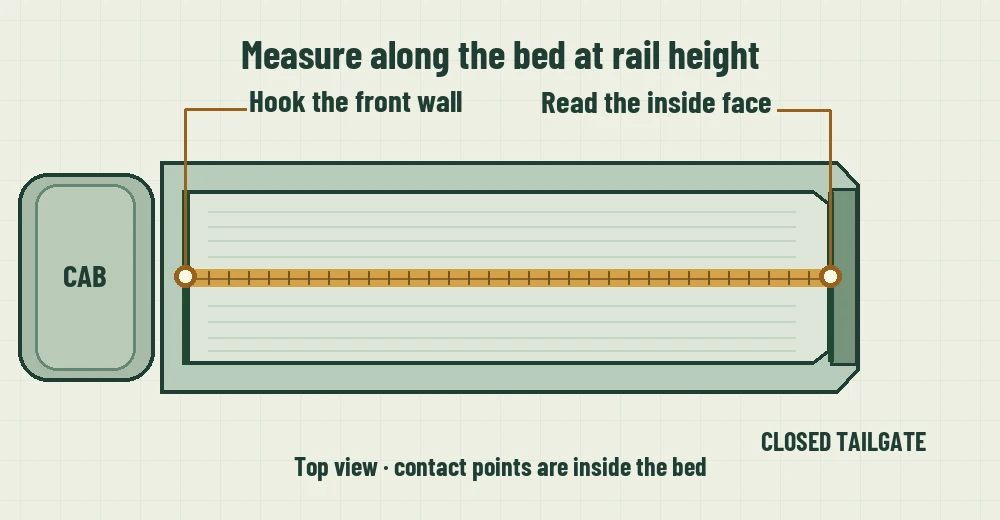
Start with length for the cover size. Then measure width and record anything that changes how the kit clamps or seals.
Park on level ground, close the tailgate and clear enough cargo to hold a tape straight. Put the hook against the inside of the front wall, below the rear cab window and near the top of the bed. A second person can hold that end.
Keep the tape level and pull it rearward parallel to the rails. Read where it meets the inner tailgate surface. If you can, repeat the measurement and record the original reading, including any fraction. Measuring to the outside adds the thickness of the tailgate. Leaving it down moves the end point; going corner to corner gives a longer diagonal.
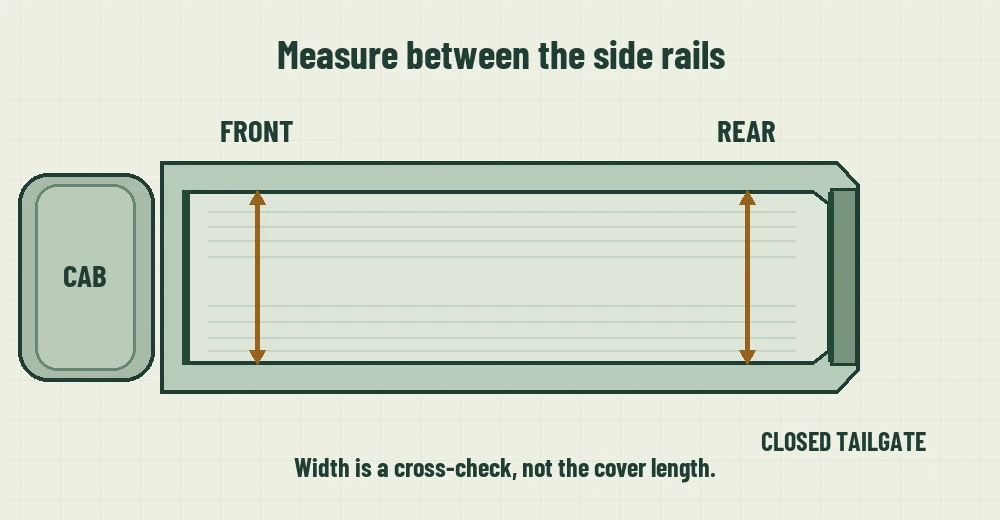
At rail height, record the inside distance between the bed sides just behind the front wall and just ahead of the tailgate. Some makers, including Peragon, use overall length and the exact truck to look up the cover. Use width as a cross-check for taper and to help verify the rail and clamp clearance. Wheel-well width measures floor cargo space.
A liner rolled over the rail or a factory track under it can occupy the clamp’s contact point. Compare the cover’s clamp drawing with a close photo of your rail. Some track-specific kits use a different clamp position.
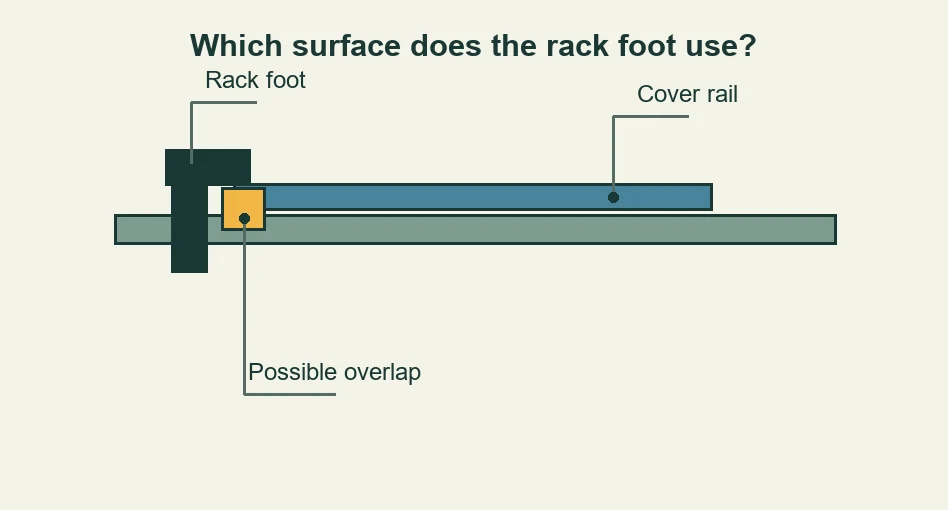
Note where rack feet, cargo boxes and tie-down hardware sit. Verify the mounting surface and leave room for the cover to travel, including the space a tall panel uses while opening.
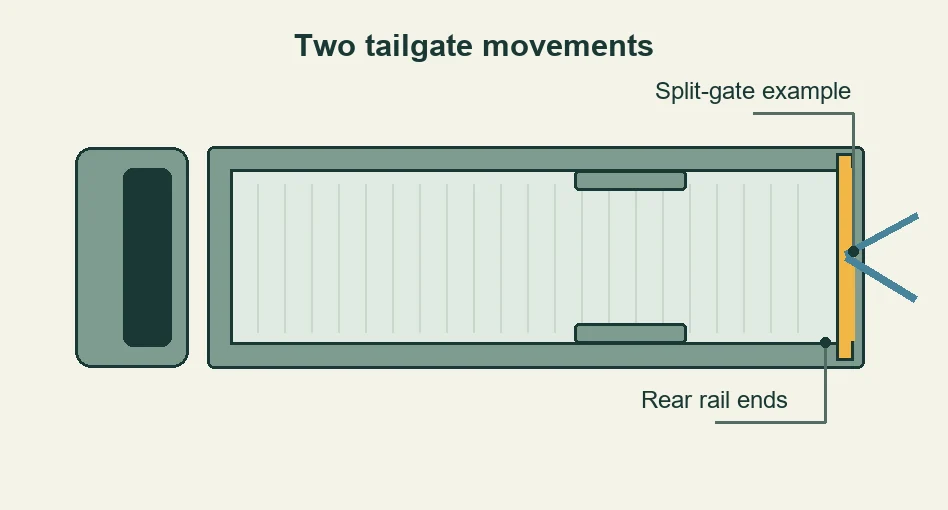
Record split, swing-out or powered tailgates separately. Ask the cover maker about that gate and confirm seal contact and closure order with the kit installed.
Enter the original inches, including a decimal or common tape fraction. The result is the same length in feet and inches, ready to compare with a manufacturer’s fit chart.
Divide inches by 12. Keep the whole number of feet and subtract that many feet in inches to get the remainder.
66 in = 5 ft 6 in · 74.5 in = 6 ft 2.5 in · 67 1/8 in = 5 ft 7.125 in
Short bed is a relative label. It changes with the truck. Reference values come from specific measurement points, and close readings do not make different listings interchangeable.
| Truck and source | Short | Mid | Long |
|---|---|---|---|
| 2026 Ford F-150 · interior floor reference | 67.1 (5.5 ft) | 78.9 (6.5 ft) | 97.6 (8 ft) |
| Ford F-150 · Peragon fit reference | 66 | 78 | 96 |
| Chevrolet Silverado 1500 · Peragon fit reference | 68 | 78 | 96 |
| Ram 1500 · Peragon fit reference | 65.5 | 74 | 97.5 |
Ford’s first row measures inside at floor level. Peragon’s rows are that manufacturer’s own fit references. Compare your tape reading and exact truck with the cover maker’s own fit chart, not another maker’s list or tolerance.
Write down the model year, make, model and exact inside length. Add near-front and near-rear rail widths, tailgate style, bedliner edge and equipment near the rails. Keep these notes together when you use a manufacturer fit chart.
Once you’ve measured and checked the exact year, truck and equipment with the cover maker, search for listings for that configuration.
Buy On AmazonReferences: RealTruck’s rail-height measurements, Peragon’s measurement and fit references, Ford’s 2026 F-150 specifications (PDF) and Peragon’s track-specific clamp instructions (PDF).