
Owner guides
Stepside Truck Beds and Tonneau Cover Fit
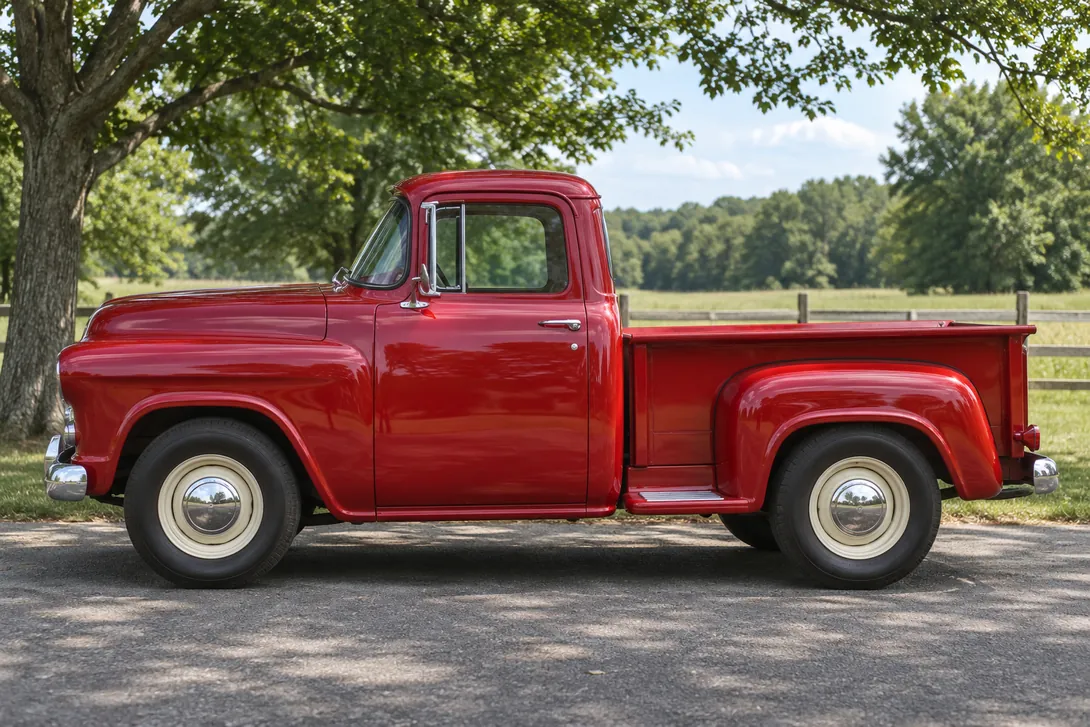
A Stepside or Flareside pickup can share its cab and advertised bed length with a conventional truck while having a substantially different box. The cover must fit the narrow mounting surfaces and rear corners as well as the length.
Identify the box before choosing a year
Look at how the outside rear fenders stand relative to the sides of the cargo box. On a narrow box with pronounced fenders, confirm the truck maker's bed designation. A restored truck may carry a replacement bed, so the cab badge and registration alone do not establish the installed box.
Measure at the mounting height
Record the inside lengths and widths at the front, middle and tailgate, then note corner radii, stake pockets and liner edges. Photograph both front corners and the closed tailgate. Compare the resulting outline with a fit guide that explicitly names the bed style.
| Detail | Why it matters |
|---|---|
| Usable rail width | A clamp or hinge may miss the required mounting flange. |
| Tailgate profile | The rear seal and latch travel depend on the actual rear opening. |
| Replacement or custom bed | The original truck year may no longer identify the box at all. |
Worked example
A painted lid from a truck of the same year
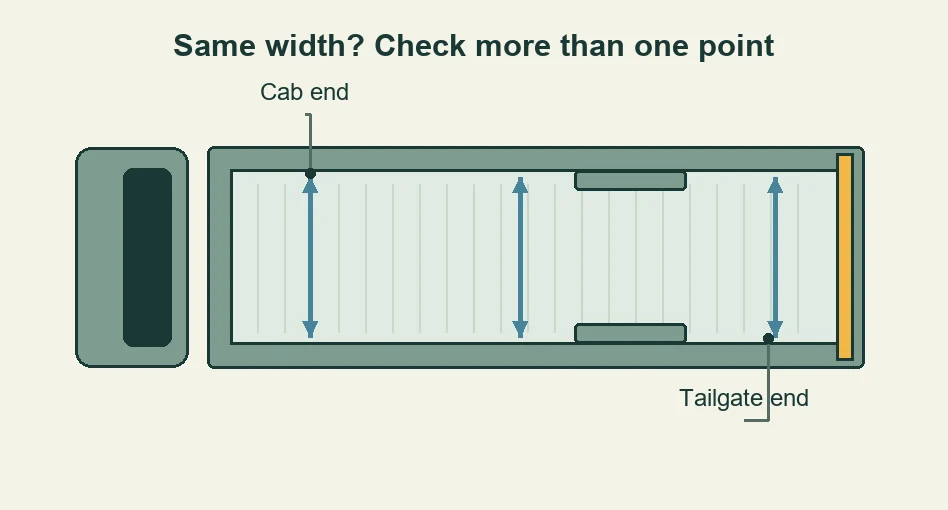
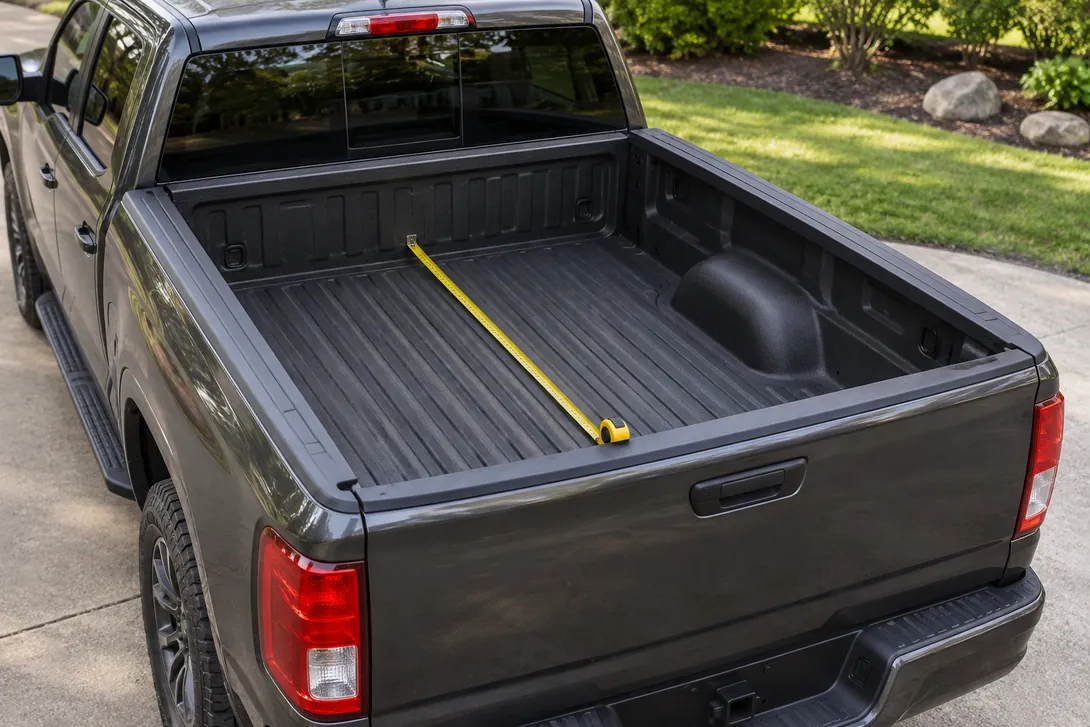
A restorer finds a used fiberglass lid advertised for the same year as a Stepside pickup. Both bed lengths are close, but the seller’s image shows a straight, wide cargo box. Before paying for freight, ask for inside mounting width at the front and tailgate, a photo across each corner, and the application label on the shell.
Compare with the narrow box actually installed on the truck. If the hinge feet land outside the available rail or the shell crosses the tailgate corners at the wrong angle, paint match and length cannot rescue the fit. Look for the bed-style-specific application or obtain a custom quote.
- Check for a swapped bed
- Older trucks are sometimes restored with a different cargo box from the one originally fitted.
- Record the clamp face
- External fender width does not tell you where a clamp can actually hold the cover.
Read the listing carefully
Terms such as fleetside, sportside, styleside, flareside and stepside vary by maker and context. Use the term on the manufacturer's actual fit line and check the stated exclusions.
| Situation | What to check |
|---|---|
| Exact truck, year and narrow bed style | Compare the stated dimensions and kit hardware with your bed as it stands now. |
| Only make, model and bed length | Ask for explicit confirmation of the installed box style and the part number. A length match alone leaves the width unresolved. |
| No current application | Look for a complete documented used kit or a custom quote. Verify hinges, rails and replacement seals can still be sourced. |
Evaluate a used lid on its own merits
Check where mounting holes and hinge plates sit and whether the rear contour meets your tailgate. A painted lid with matching overall length can still be impossible to clamp correctly. Put the confirmation in writing before paying for freight.