Tonneau Atlas

Tonneau Atlas field guide

Tonneau Covers: A Field Guide for Truck Owners

A tonneau cover is a low cover that closes over a pickup’s cargo bed. It can keep gear out of sight and reduce direct exposure to weather. What happens when it opens matters just as much.

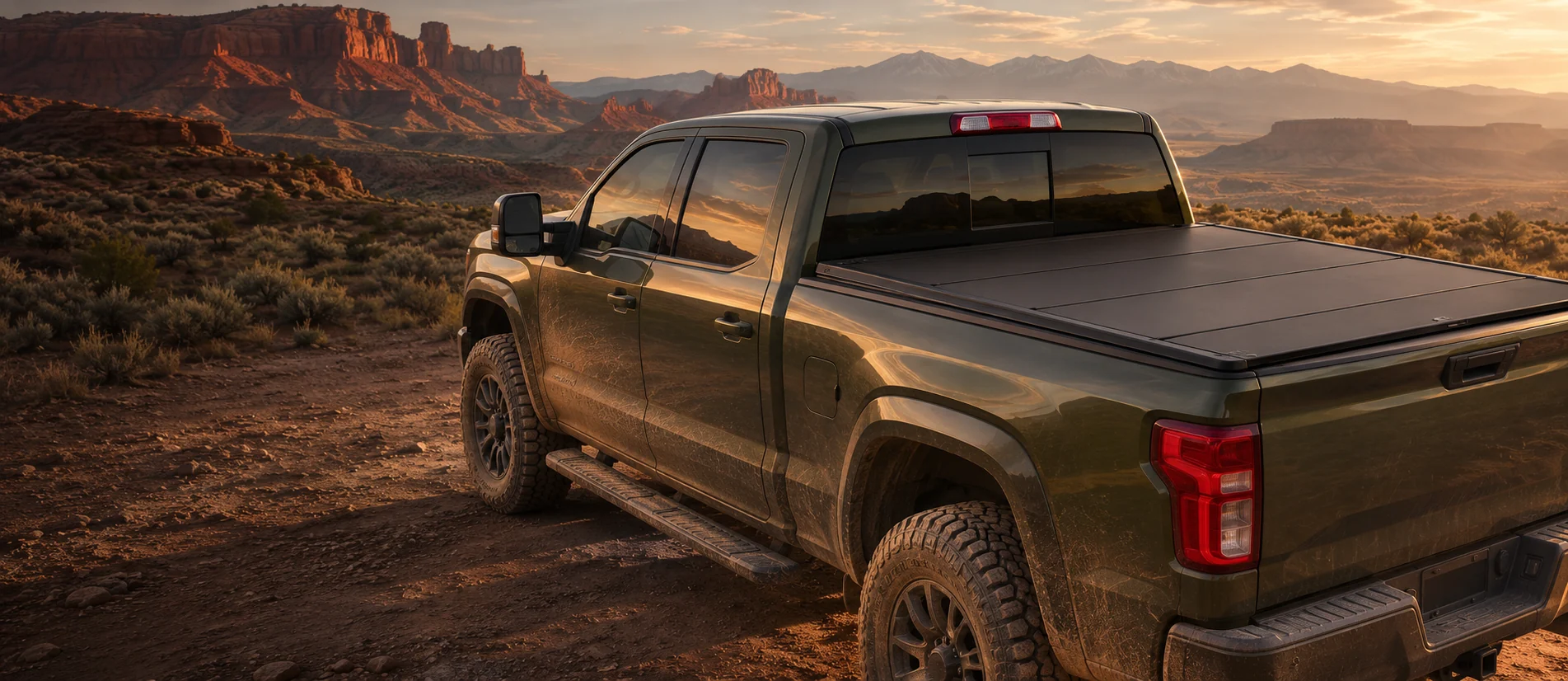
A low, flat tonneau cover closes over the pickup bed behind the cab.
Closed over the truck bed, just behind the cab.

A bed liner covers the floor and walls to resist wear. A tonneau closes the opening at the top. A truck cap encloses the space above it.

what a tonneau cover does

Is a cover worth it?

Start with what you actually carry.

Pick the day that looks like yours. A useful cover helps the load you move most often and leaves enough space for the one that is hardest to fit.

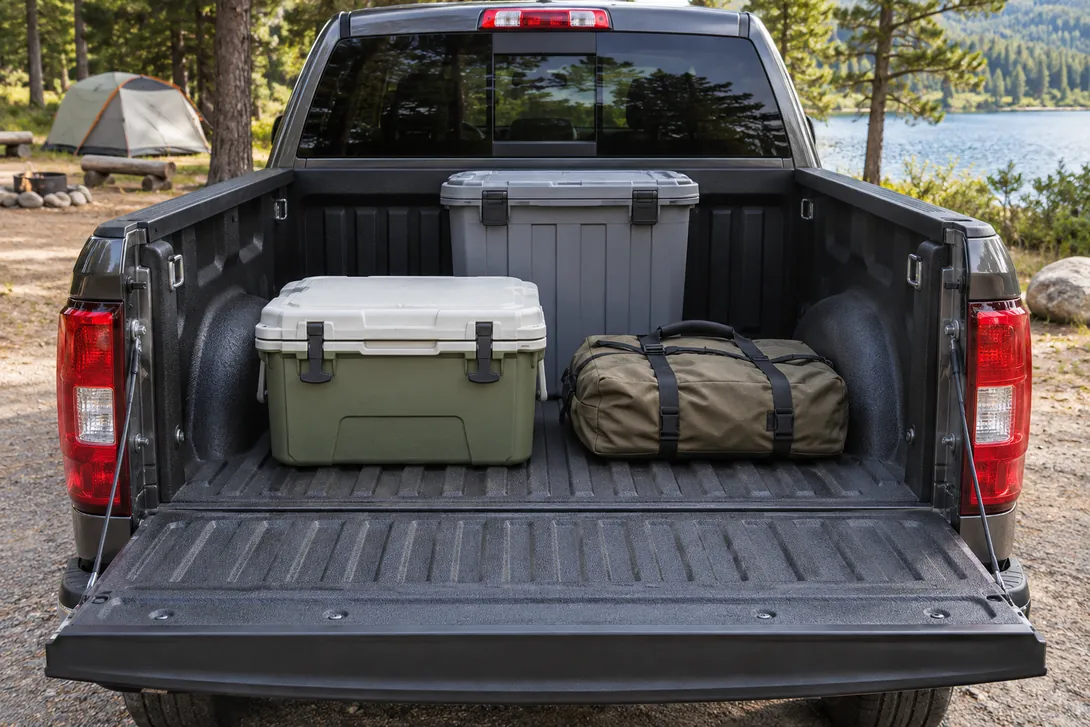
Cooler and bags tucked below the sides of a pickup bed.

Bags, gear and groceries

A cover can make sense.

What to check

If your gear rides below the rails, a cover keeps it out of sight and reduces direct rain and road spray. Keep anything water-sensitive inside sealed bags or bins. Place frequently used items by the tailgate before comparing opening styles.

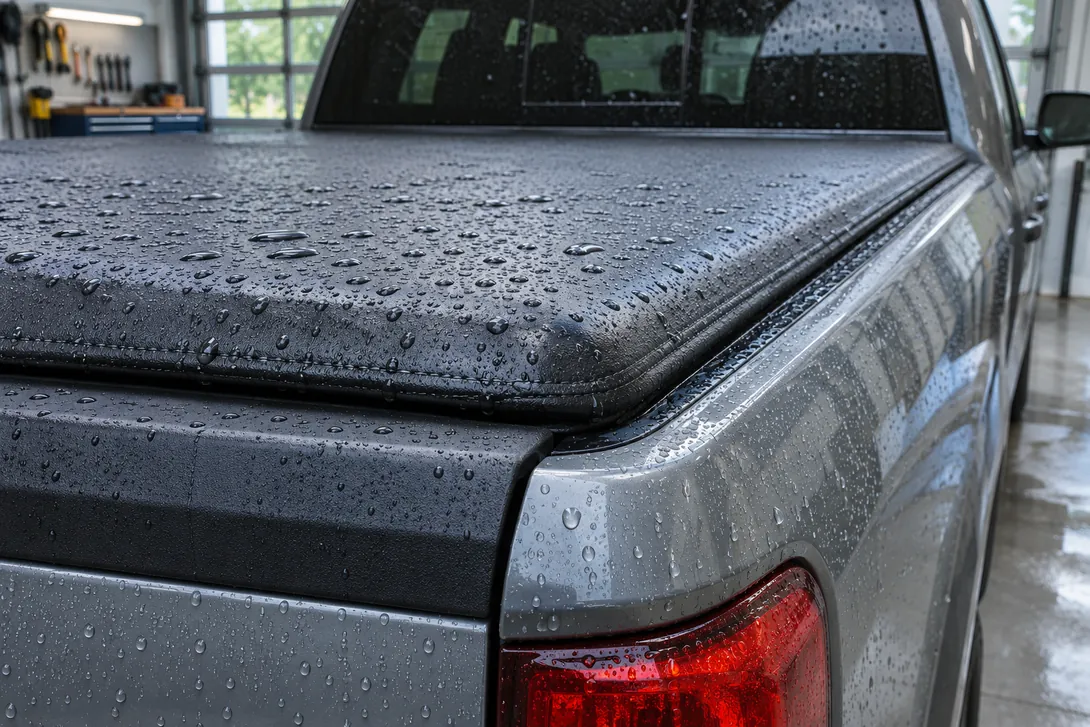
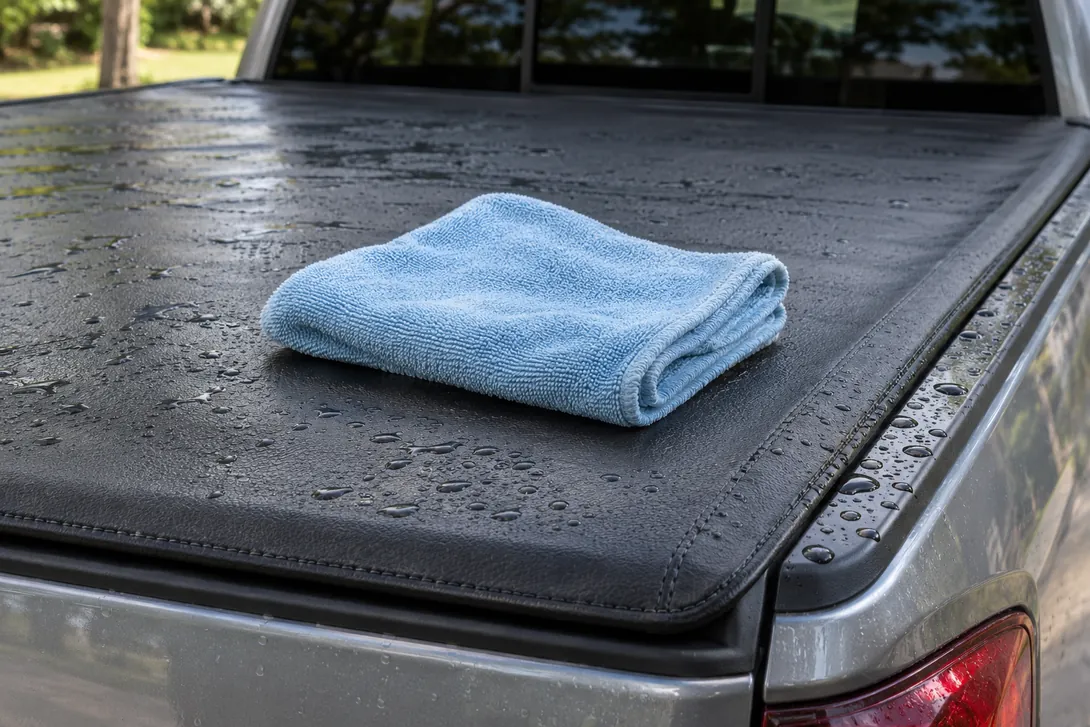
Rain beads along the rear edge of a closed pickup bed cover.

Tools while parked

Look for rigid panels and a lockable tailgate.

What to check

Confirm which components actually latch: the tailgate, the cover and the cover rails. A hard surface can deter casual access, but it remains reachable from outside the truck. Carry high-value tools inside or use a dedicated locking box when practical.

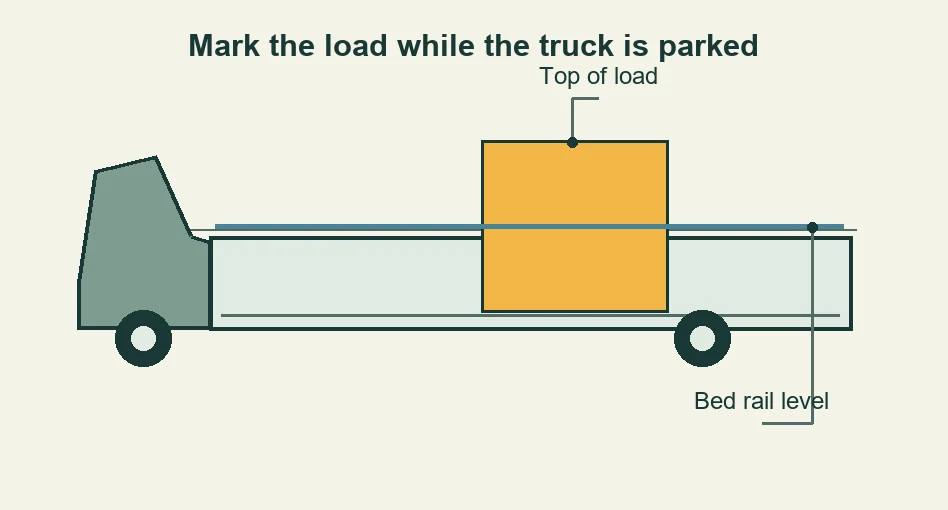
Side-profile diagram showing a tall load extending beyond the rail height of a truck bed.

Tall or full-length cargo

Choose where the open cover can park.

What to check

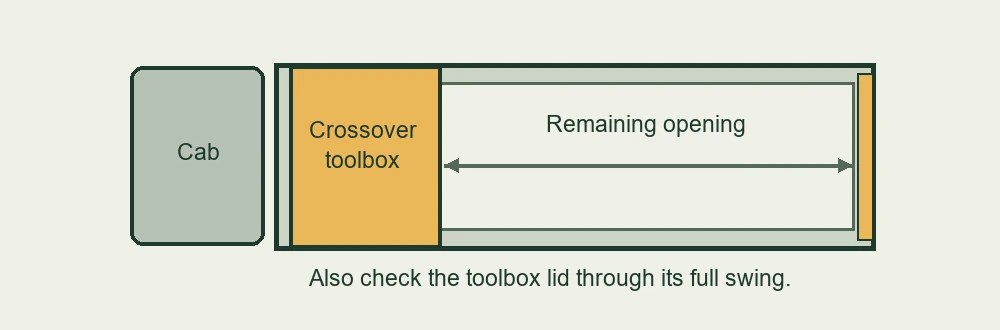
Measure your longest or tallest regular load. A flat panel stack can occupy the front third, an upright stack can affect the view behind the cab, and a retractable canister can take up cargo space. If none clears your load and rack together, an open bed or a removable option may be simpler.

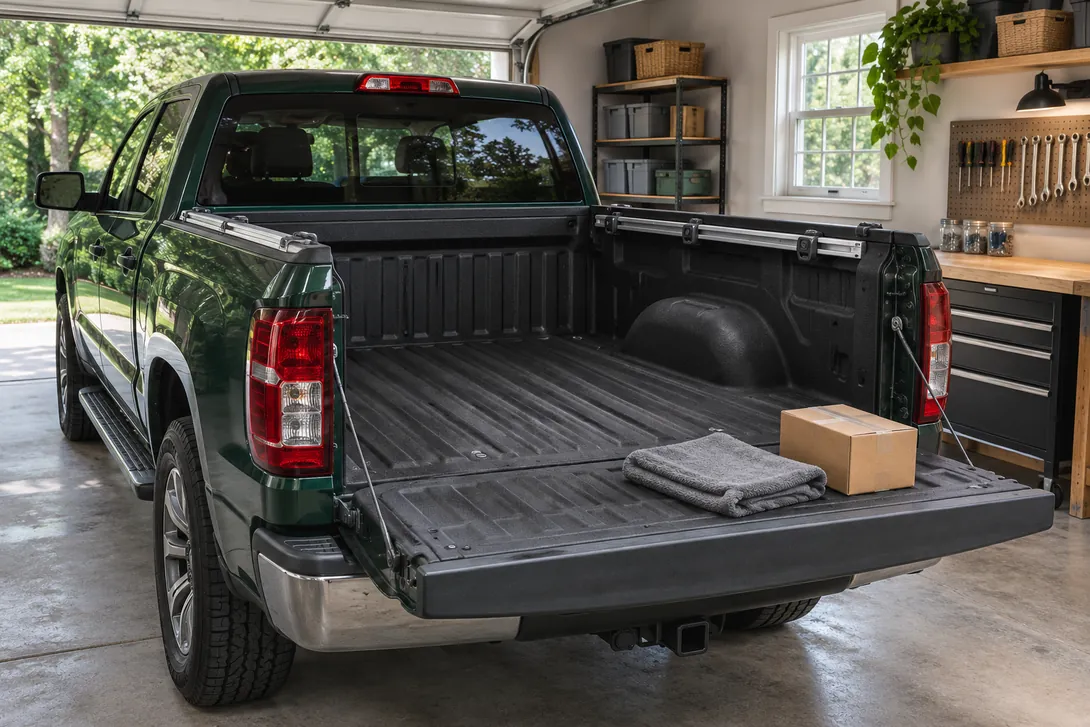
An uncovered truck bed with its tailgate down and no load inside.

Mostly an empty bed

You can skip the cover.

What to check

If you rarely carry things you want to conceal or shelter, keep the open bed and avoid adding hardware that takes up space. A bed liner makes more sense for protecting paint from abrasion. Revisit a cover when you can name the load or problem it would solve.

How covers move

Where does the cover go when you open it?

Use the side view to compare the space each design uses. Dark green marks the cover. The empty area to the right opens toward the tailgate.

Opening style, material and space trade-offs
StyleConstructionSpace when openTrade-off to check
Roll-up Soft vinyl or rigid interlocking slats The roll stays across the front rail. Check its diameter before adding a crossbar or loading tall cargo near the cab. Soft versions can cost less; hard slat systems add rigidity and can cost more.
Flat-folding Soft fabric over a frame or rigid panels The stack can occupy the front section. Check whether a long item can pass under it and whether the stack can be removed. Simple flat-folding layouts preserve tailgate access; check how much bed stays covered.
Upright-folding Typically rigid, with braces or props Where supported, the stack leans near the cab on the approved props. Confirm rack and cab clearance and check rear sightlines. Compare the added opening with the space the upright stack blocks.
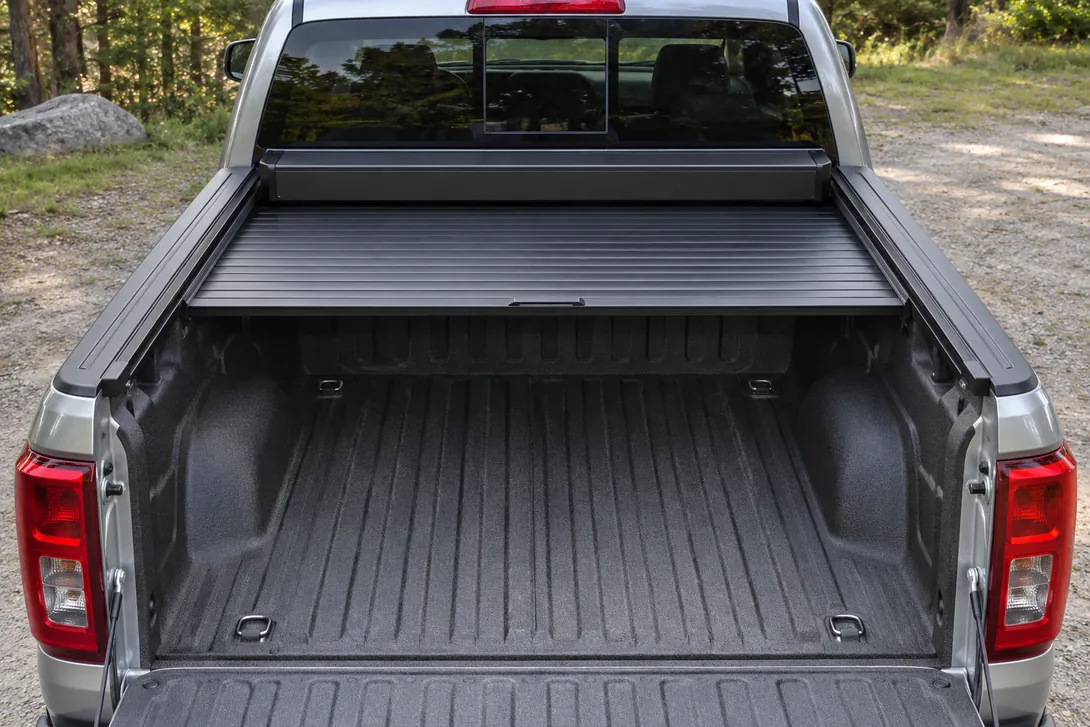
Retractable Linked slats under tension; check the kit materials The cover retracts into its canister, which remains inside the bed. Check the space left below and behind the housing. Allow for an in-bed canister and any extra hardware for rails or racks.
One-piece lid One rigid shell The lid remains over the bed as it tilts. Check height under the lid, rack interference and any approved removal procedure. Compare overhead clearance with how much cargo must stand above the rails.

Brand and series

Find the series behind the badge.

Start with the way a cover moves, then compare the specific series and rail options. A brand can sell several unrelated designs under the same name.

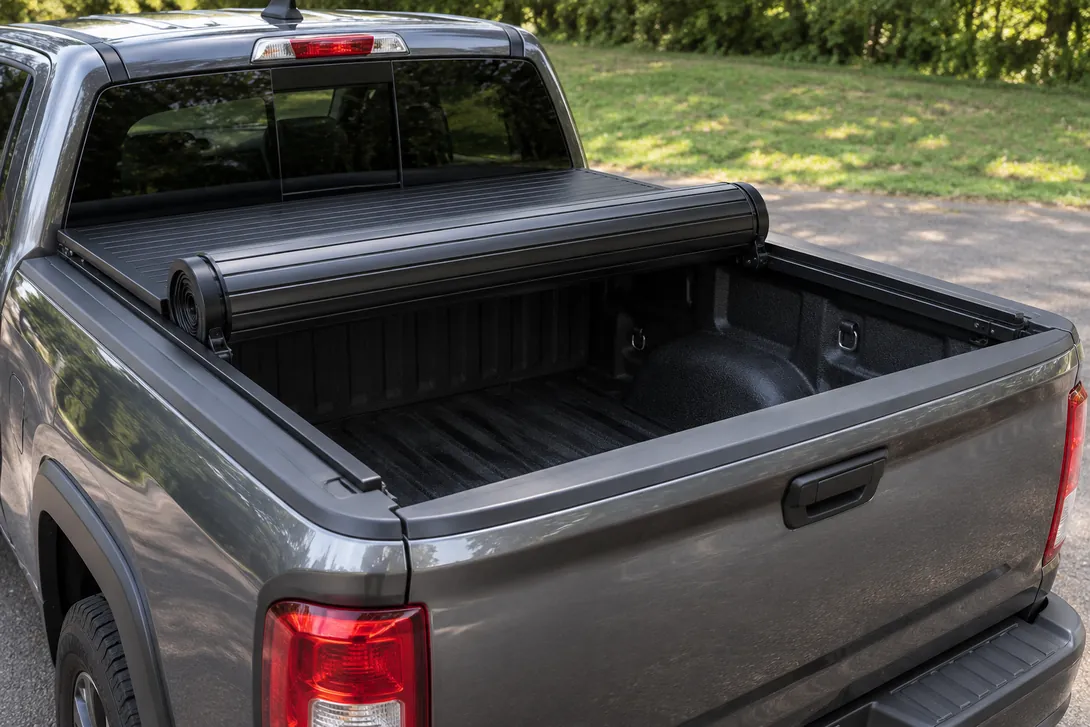
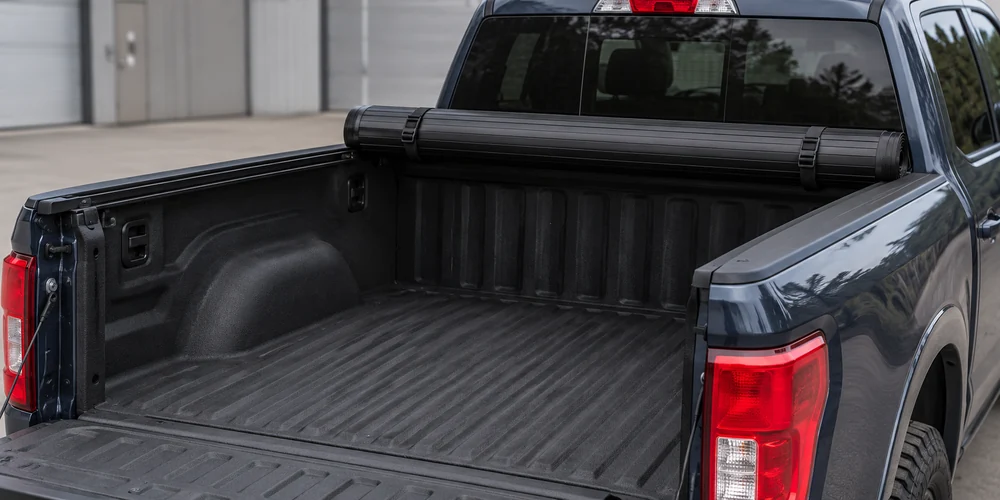
Hard rolling cover shown rolled behind the cab.

BAK

Revolver and BAKFlip cover different opening needs: a rolling slat pack or hinged panels.

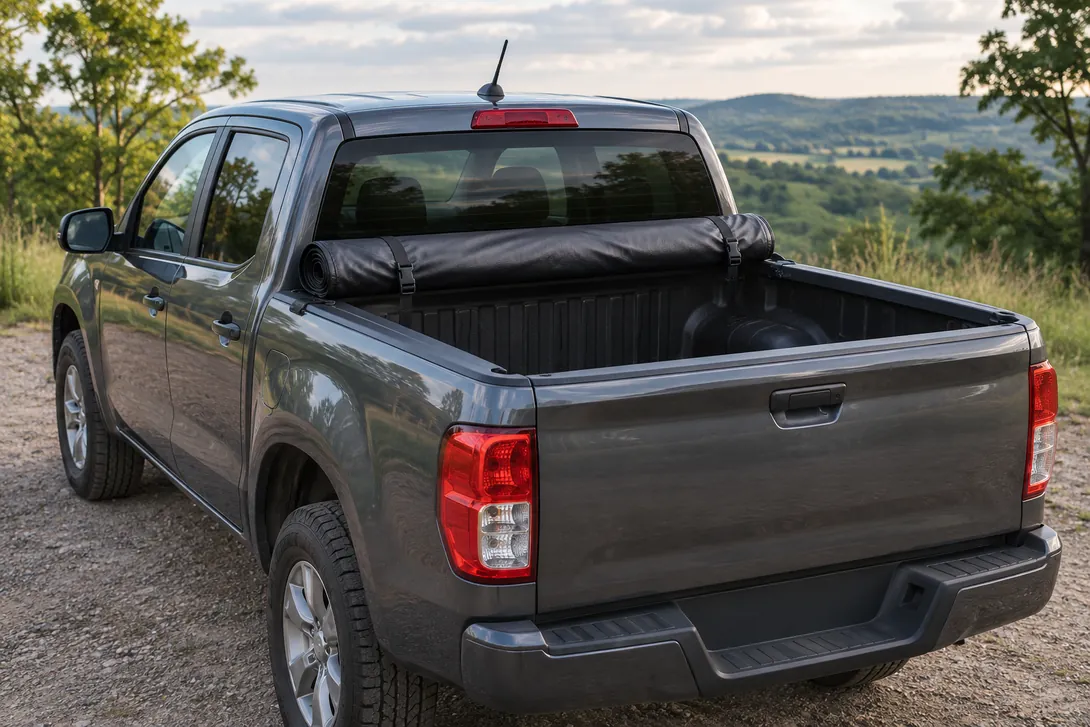
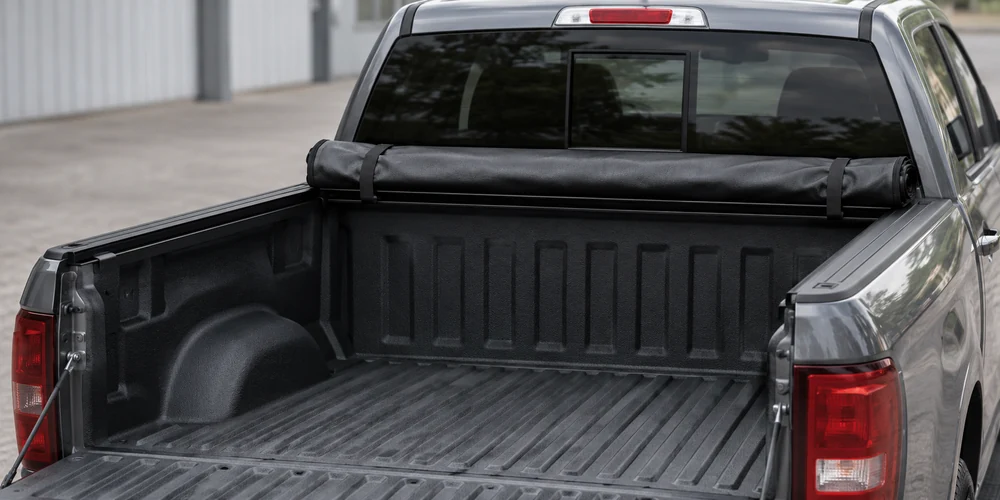
Soft roll-up cover stowed near the cab.

TruXedo

Start with the soft roll-up TruXport. Compare the latch, rail position and cover revision before choosing a kit.

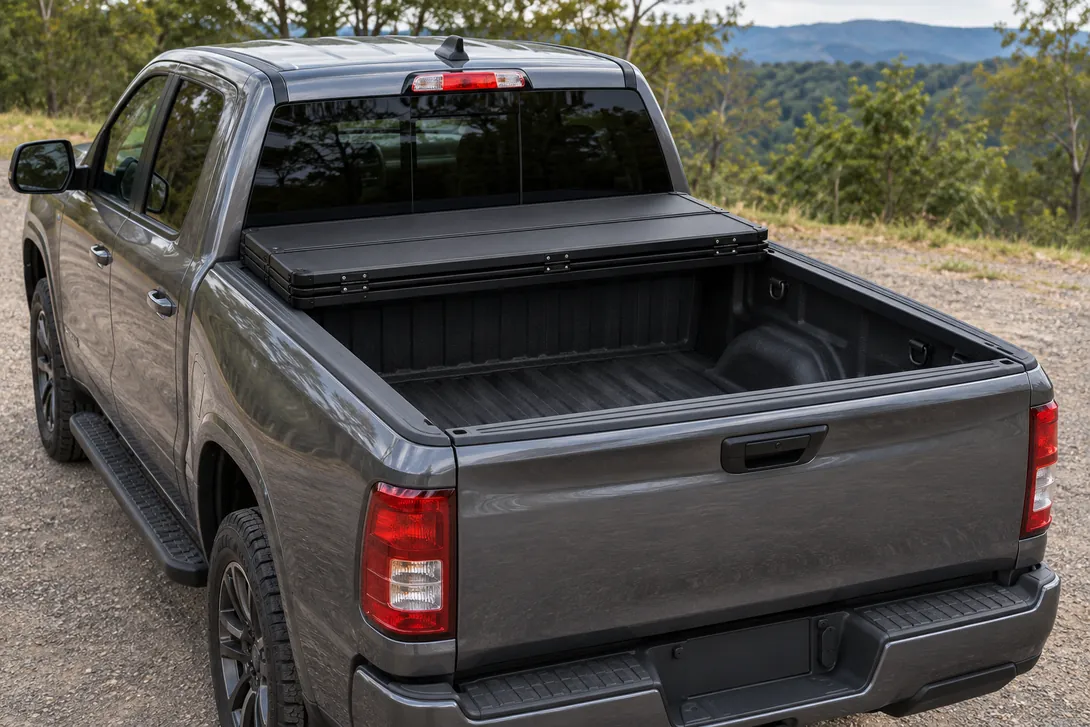
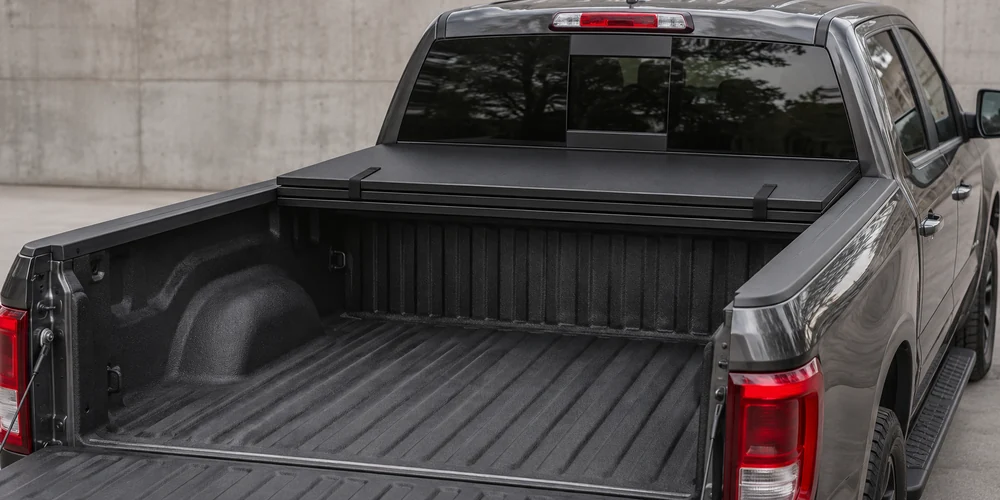
Folding cover stacked over the front section of the bed.

Gator

The EFX hard fold leaves a flat stack at the front when folded. Compare it with other Gator lines by mechanism.

Retracting cover drawn back into a front housing.

Retrax

RetraxPRO XR is a retractable example with T-slot rails. Confirm rack-foot compatibility and space for its canister.

Compare actual covers

A better fit starts with the work you do.

These four examples show distinct ways to use the same bed. Compare how much opening each leaves, how it closes and what to verify on your truck. Establish the exact year, bed size and factory equipment before ordering.

TruXedo TruXport soft cover rolled near the cab of a silver pickup.

Soft roll-up

TruXedo TruXport

Regular open-bed access with a flexible cover. Release the rear latches and roll the vinyl toward the cab.

Where it goes
A compact fabric roll at the cab.
Fit check
Confirm cover generation, latch arrangement and the top-mounted rail fit.
Construction and latches
Vinyl over supports; hides cargo. Use a locked tailgate where the kit requires it.
BAK Revolver X4s rigid slat cover rolled across the front of the pickup bed.

Hard roll-up

BAK Revolver X4s

For a rigid surface with rolling access. The connected aluminum slats and top roll together.

Where it goes
A slatted roll rests at the front of the bed.
Fit check
Check the roll diameter, cab clearance and matching rails for your bed.
Construction and latches
Aluminum slats and locking side rails; confirm both sides fully close.
Gator EFX hard panels folded into a flat stack at the front of a dark pickup bed.

Hard fold · flat stack

Gator EFX

Good for frequent tailgate access. Rigid panels fold into a horizontal stack, leaving the front section occupied.

Where it goes
A flat panel stack at the front.
Fit check
Allow for the stack when carrying tall gear; check the kit’s release and tailgate closing order.
Construction and latches
Rigid panels and under-cover latches; check the tailgate order.
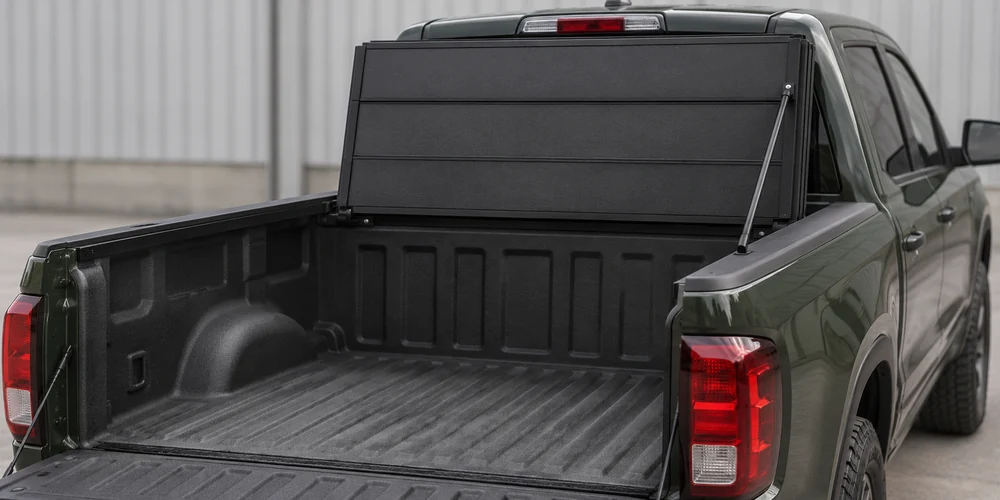
BAKFlip MX4 Gen 3 cover raised near the cab with a support rod visible.

Hard fold · upright option

BAKFlip MX4 Gen 3

Use the upright position when the bed needs to open for a tall load. Follow the matching manual to secure the stack.

Where it goes
The panel stack can stand against the cab on the specified supports.
Fit check
Check the rack, moving-panel clearance and the sightline behind the cab.
Construction and latches
Rigid panels and latch hardware; confirm the exact rail and kit version.

Fit before shopping

Measure the bed. Then match the truck.

A manufacturer fit chart combines model year, bed size and equipment. Bed size alone cannot confirm the mounting kit.

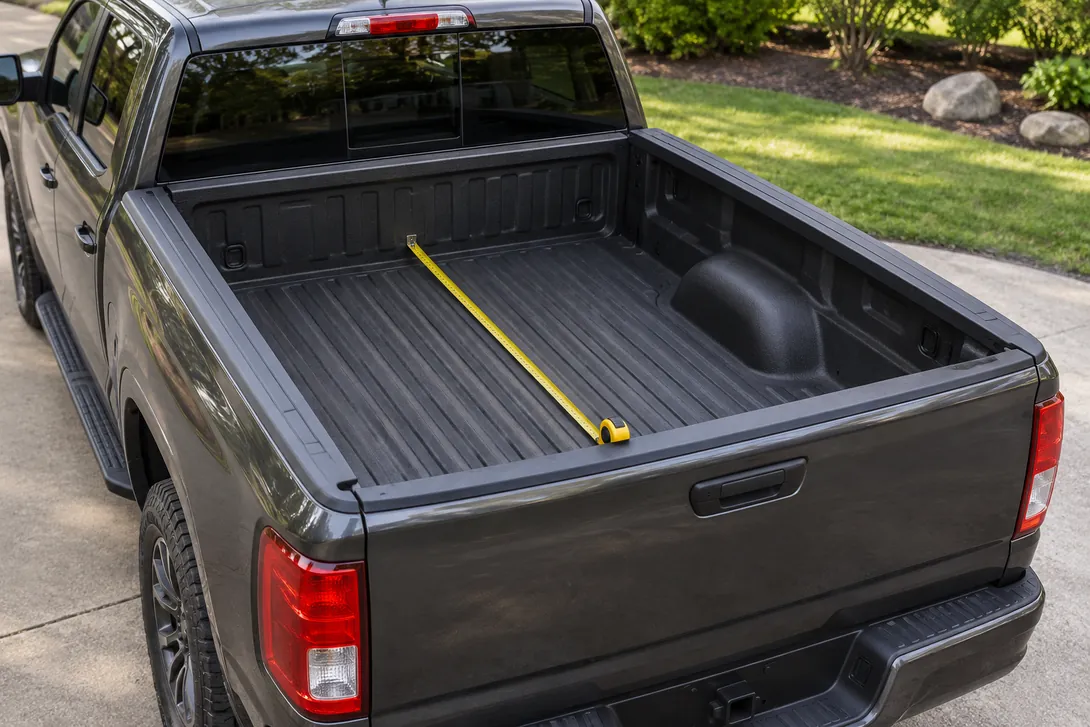
A tape measure lying between the front and rear of a pickup bed.
At rail height, measure in a straight line from the inside of the front wall to the inside edge of the closed tailgate. Compare the result with the cover maker’s fit chart.

Bring these details to the fit chart.

  1. Truck identity. Record the year, model, generation or body style.
  2. Actual bed length. Use the rail-level measurement, not the bed floor or the bumper.
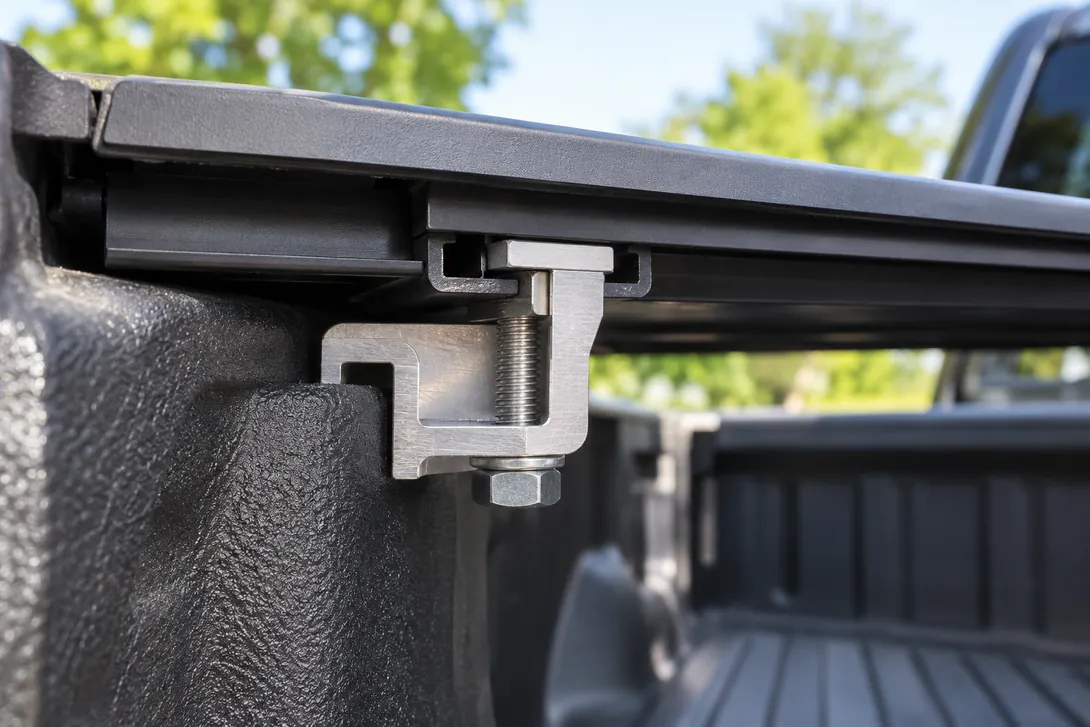
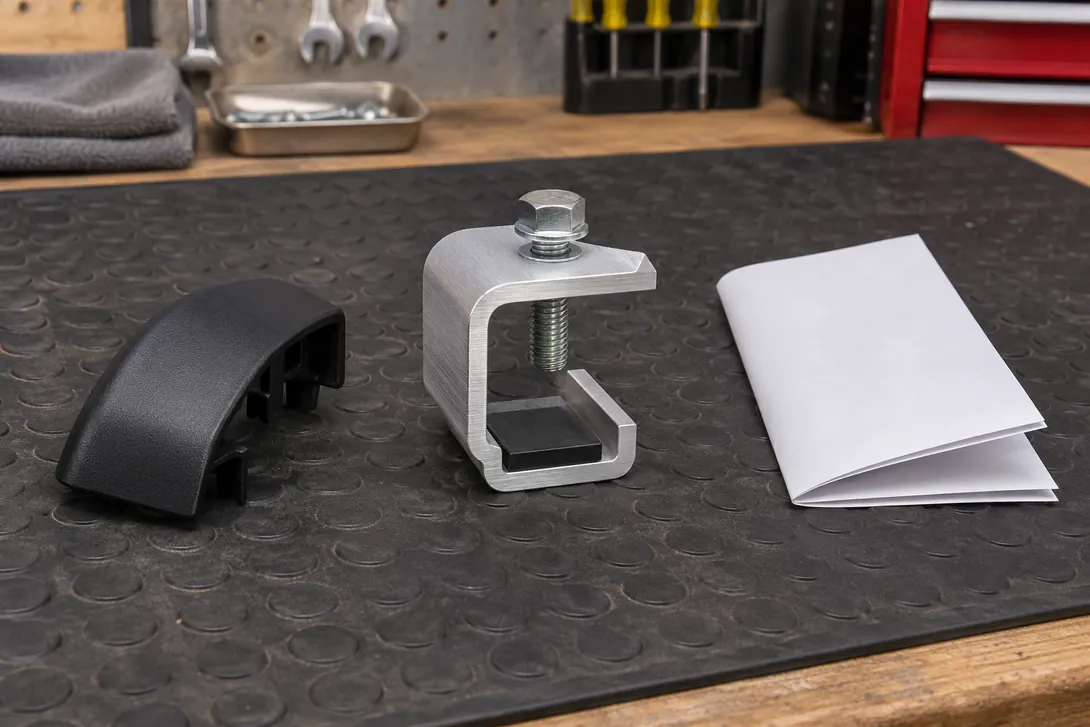
  3. Rail and tailgate equipment. Record factory tracks, molded storage, racks and any special tailgate. Check the clamp room inside the rail.

Already have a cover?

Start with the question in front of you.

Use your cover model and serial number when ordering hardware or following installation instructions. Search the owner guides by symptom or task.