
Owner guides
Tonneau Cover Repair for Leaks, Loose Rails and Latches
A wet corner, a loose roll and a sticking latch call for different checks. Locate the symptom first so you can decide whether alignment, a seal or a specific replacement part is involved.
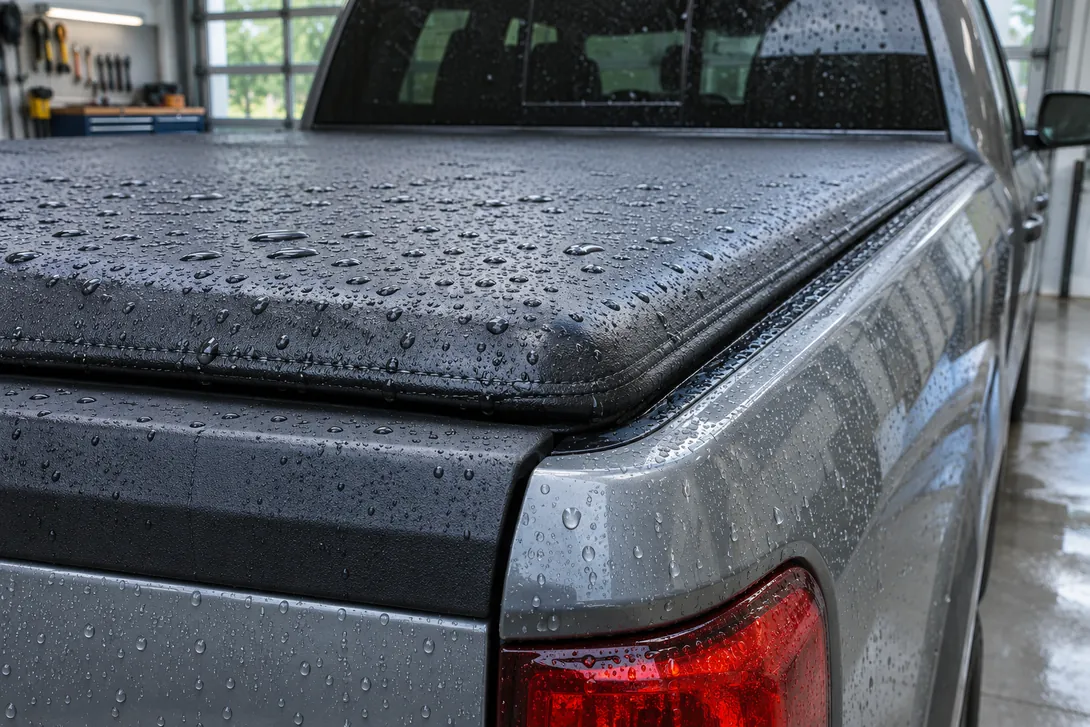
Trace a wet corner
Start with a dry bed. Put dry paper towels at the suspect front or rear corners, then close the cover with everyone outside. Apply a gentle stream to one short area. Stop the water, open the cover and inspect the paper. Dry the bed before the next test. At the front check the bulkhead seal and any drain outlet. At the rear check the tailgate corners and how the edge seal rests with the tailgate shut.
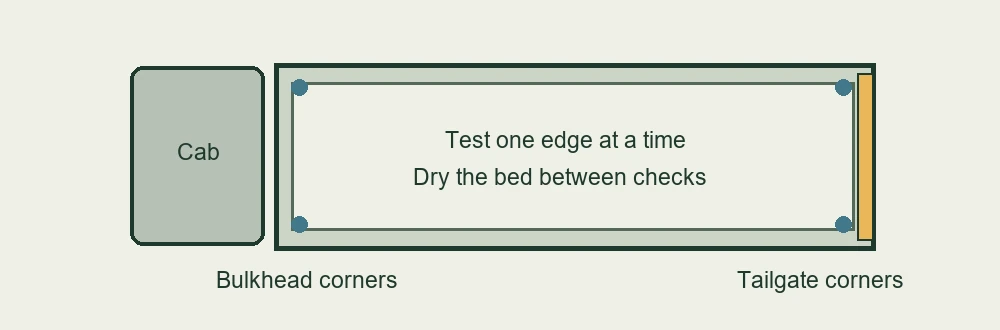
Compare the two sides of the latch
Compare left and right with the truck parked. Look for debris, a folded seal, unequal rail position or a damaged latch. If the problem followed installation, return to the alignment checks in the manual. If a component is cracked or engagement is uncertain, repair it before driving with the cover.
Worked example
The wet spot is at the tailgate, but where did it enter?
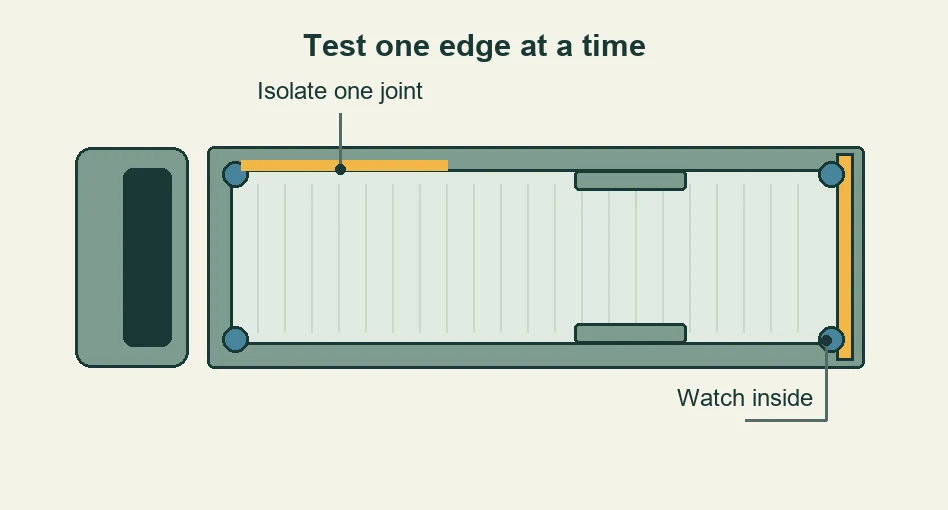
A towel in the rear corner is damp after rain. Dry the bed and take out the cargo so you can see the rail. With the truck level and parked, check the corner seal for a fold or a gap. Use a gentle, localized rinse on one short section while observing the inside from a safe position.
Dry between trials. Water that first appears high on the side and then travels rearward points you upstream. Water that starts at the tailgate gap during its own test calls for a different seal check. Photograph the first wet spot before ordering anything.
- Separate seal and latch symptoms
- A latch that fails to engage needs attention before road use.
- Record the part profile
- Compare thickness, corners and mounting method with the exact replacement listing.
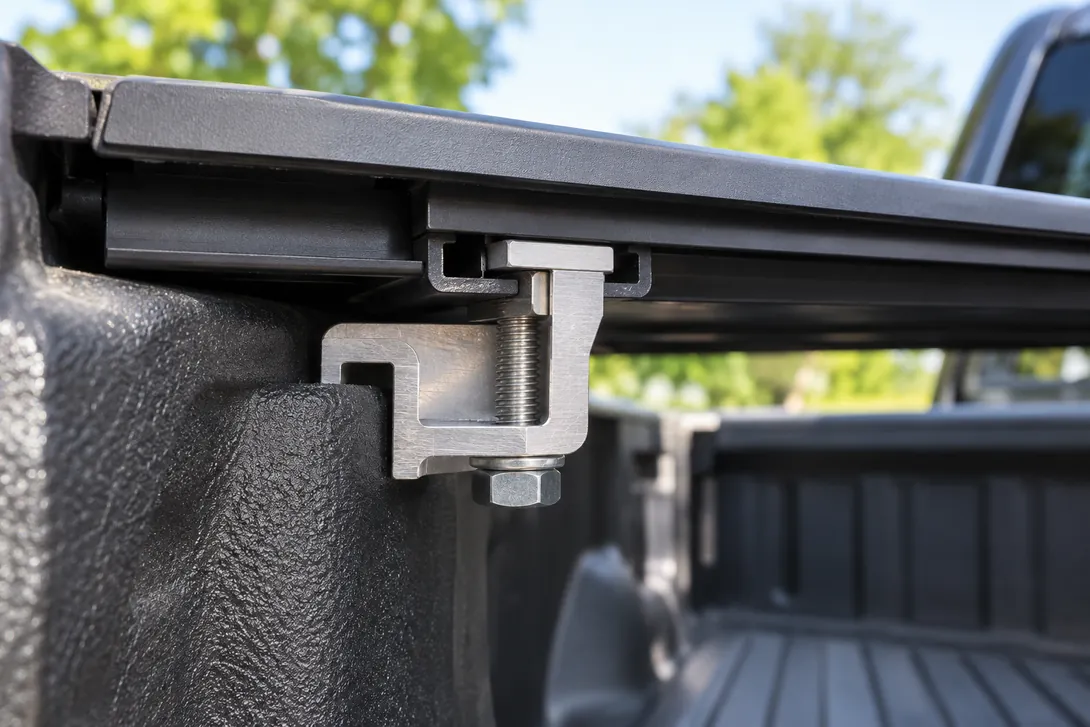
Find the exact failed part
Record the cover brand, model or generation, serial or part number if present, and bed length. Photograph the suspect part from above and below, including the mounting holes. A left-hand latch can differ from its right-hand partner. Match the part diagram and side before paying for hardware, a rail seal or a replacement tarp.
| Situation | What to check |
|---|---|
| Wet front corner | Dry the area. Trace the bulkhead seal and any canister outlet, testing one short section at a time. |
| Latch misses one side | Look for a folded seal, debris or unequal rail alignment before replacing the latch. Do not travel with uncertain engagement. |
| Torn soft surface | Identify the exposed fabric and whether a seam or mounting point is torn. A compatible skin repair cannot restore structural hardware. |
Adjust, replace or call for service
A small local gap that changes as you align the rails points to setup. A torn seal or broken latch calls for the matching component. A soft-cover patch cannot restore a broken structural part. For a damaged panel or a mechanism that jams, send the photos and kit number to the maker before forcing it. Store moisture-sensitive gear in a sealed container until you have checked the repair.