
Accessories
Tonneau Cover Seals and Weather Stripping
Replacement weather stripping should match the point where water entered and the gap the closed cover actually leaves. Adding a thicker seal to the wrong edge can hold a panel or tailgate off its latch and create a second leak.
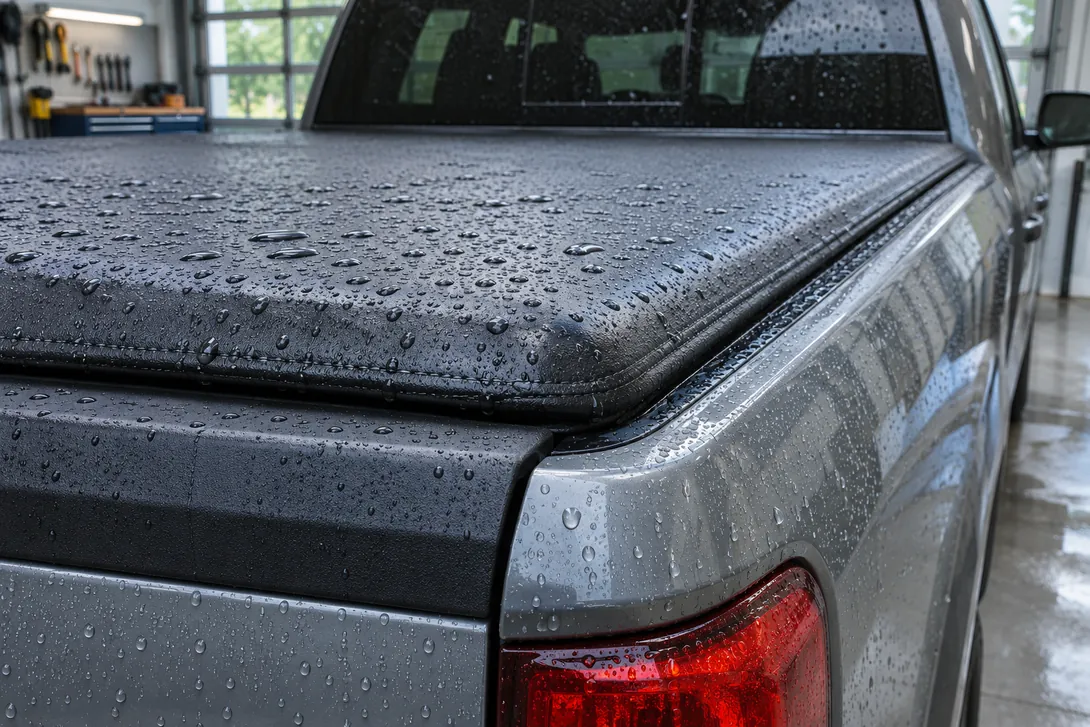
Locate the wet path before ordering
Start from a dry bed. Place separate paper strips at the bulkhead ends, side rails, panel joints and rear corners. Introduce gentle water one area at a time as permitted by the maker. Mark the first wet point. A puddle on the floor only tells you where water settled.
Identify the profile and fastening method
Use a good section of the existing strip to identify the bulb, lip, flat foam, push-in channel or adhesive backing. Note uncompressed profile, sealing surface and how the ends meet at a corner. On a retractable cover, check drain outlets and connections before deciding a new seal is needed.
| Location | What to inspect |
|---|---|
| Front bulkhead | Step between front wall and side caps, seal continuity and rail junctions. |
| Side rail | Orientation, channel fit, local compression and interference from clamps. |
| Tailgate perimeter | Bed-to-gate gaps, latch clearance and the lower drain path. |
| Panel hinge | A model-specific hinge seal or assembly may be required. |
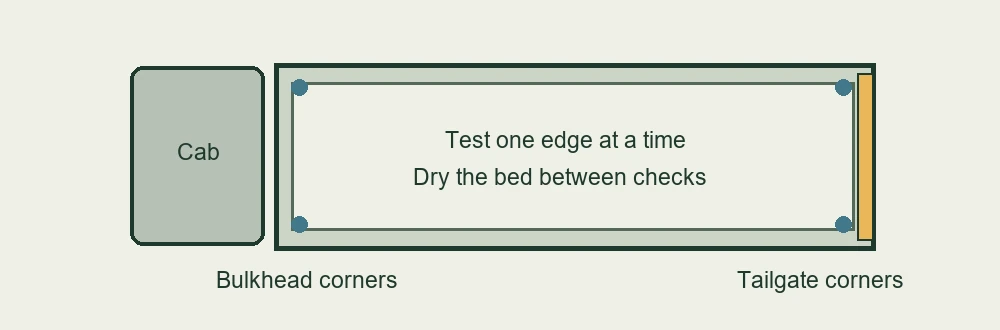
Worked example
A thicker rear strip holds the cover off its latch
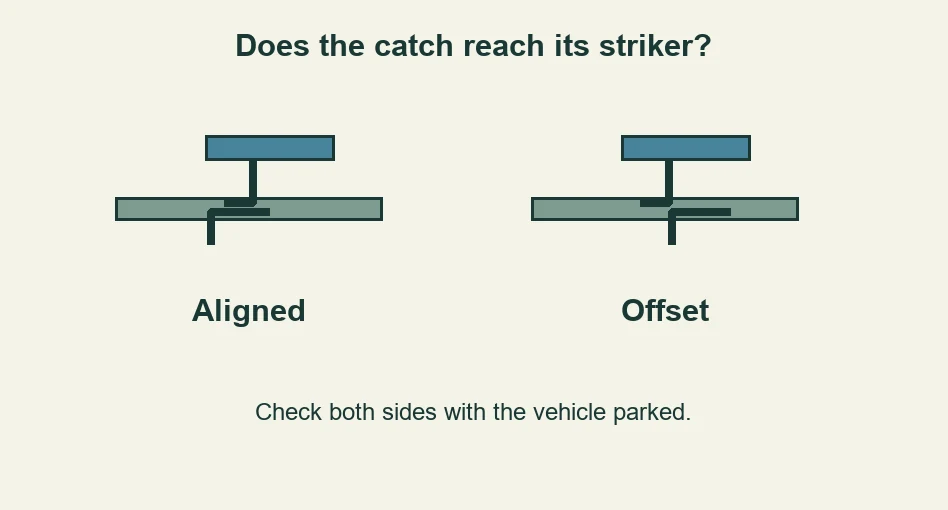
After finding water near the tailgate, an owner considers adding a second layer of foam across the rear. Dry the bed and isolate the first wet point with a gentle water check allowed by the maker. If water starts at the corner where the front seal meets the side rail, a rear strip will leave the route intact.
If the gate perimeter is responsible, compare the original profile and available gap with a compatible replacement. After installation and the specified cure period, shut the cover and gate in sequence and verify both latches engage without unusual pressure. Repeat the original local water check.
- Photograph the end profile
- A side view of the lip, bulb or retaining channel helps identify the correct replacement.
- Protect intended outlets
- A drain channel can resemble an unwanted gap until you trace where the captured water is supposed to leave.
Select the purchase scope
Universal adhesive foam can help in some manufacturer-approved locations. A formed rail or hinge seal often has a specific section that must slide or snap into a matched channel.
| Situation | What to check |
|---|---|
| Water starts at the front edge | Photograph the bulkhead height and both corners. Check whether the original kit specified a separate front seal. |
| Water starts low around the tailgate | Consider the truck's own gate perimeter, separate from the top cover. Match a seal to that application. |
| Water collects under the canister | Check drainage first. Sealing an intended water exit can make the problem worse. |
Retest the same spot
Allow adhesive to cure as directed, then repeat the original test at the same location and water intensity. Check that the cover and gate fully engage without extra force and the intended drains remain open.