
Cover styles
Waterproof Tonneau Cover Claims and Leak Points
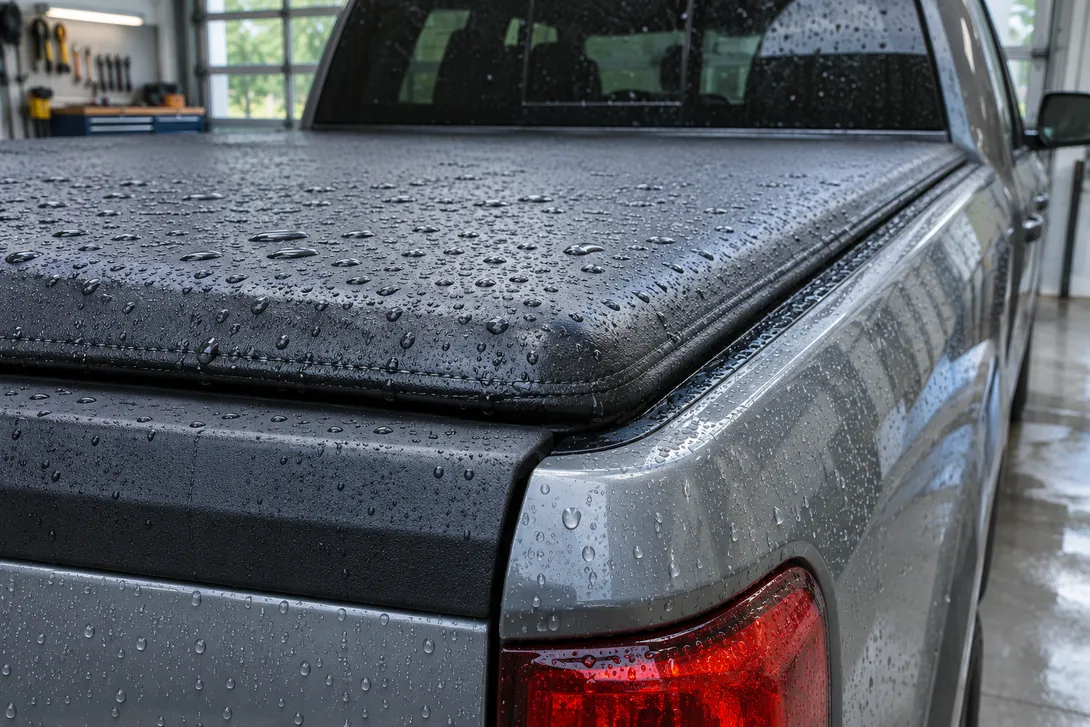
Direct rain can stay off the top of the load while water enters at a tailgate gap, rail corner or blocked drain. Assess the cover and truck box together. A continuous top surface does not seal every opening underneath.
Find the first wet point
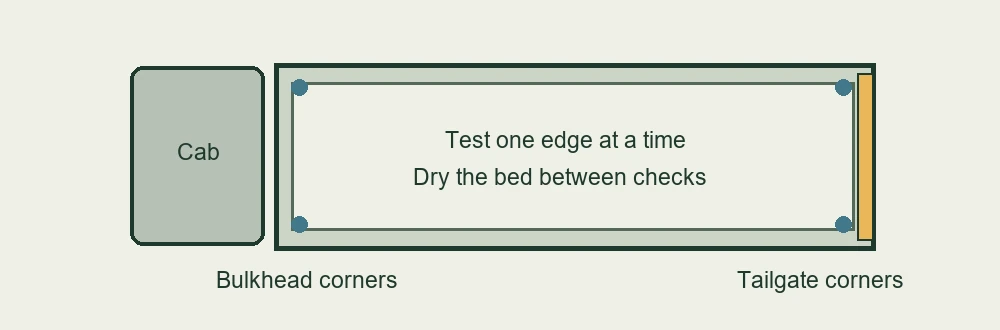
Start with a dry empty bed and separate strips of dry paper near the bulkhead, side rails and tailgate corners. While parked, apply gentle water to one area at a time within the maker's wash guidance. A puddle low in the rear may have started at the front and followed a rail.
Distinguish collection from sealing
Retractable covers may deliberately collect water and direct it through drain tubes. Seals on folding or rolling systems depend on alignment and surface contact. A tailgate perimeter product addresses gaps in the truck, a different path from a misaligned top panel.
| First wet area | What to look at |
|---|---|
| Front corners | Bulkhead height, rail transition and drain connection if present. |
| Side rail | Rolled-under seal, poor contact or water escaping a gutter. |
| Tailgate sill | Truck perimeter gaps and rear cover seal separately. |
| Below a canister | Drain connection and unobstructed approved exit route. |
Worked example
A wet rear corner after the first rain
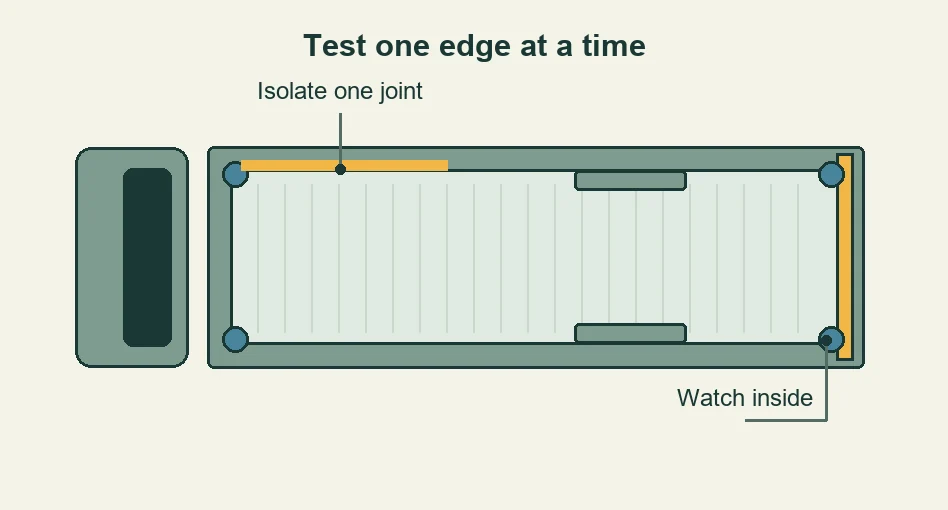
A pickup owner finds a damp moving blanket beside the tailgate and is about to add more rear seal. Empty and dry the bed first. Place separate dry paper indicators at the front corners, along the side rail and at the rear sill.
With the truck parked, introduce gentle water at one suspected area at a time within the manufacturer’s care limits. If the first paper to darken is beside the front rail, investigate that junction and its drain route before altering the tailgate. Retest the same small area after the corrected installation. The blanket’s final location alone cannot identify the faulty component.
- Avoid soaking all corners together
- A single local change makes it possible to tell which inspection or adjustment affected the result.
- Dry the test area between runs
- Water left in a channel can appear during a later check and confuse the diagnosis.
Interpret weather claims in context
Ask which truck and conditions a published water test used. Keep documents or electronics in secondary weather-resistant storage if their loss would matter. A successful parked test says little about water driven at a joint with a high-pressure nozzle.
| Situation | What to check |
|---|---|
| During ordinary rain | Start with the local low-flow test. Record the first strip to get wet for the installer. |
| During pressure washing | Check the manual's washing restrictions before treating the result as a seal failure. |
| After adding a liner or rack | Inspect seal compression and mounting alignment around the changed hardware. |
Fix the route you identified
Restore the prescribed rail alignment or drain path before adding material. If the truck's tailgate gap is responsible, select a compatible perimeter seal and check that the gate still latches and water can still drain.