
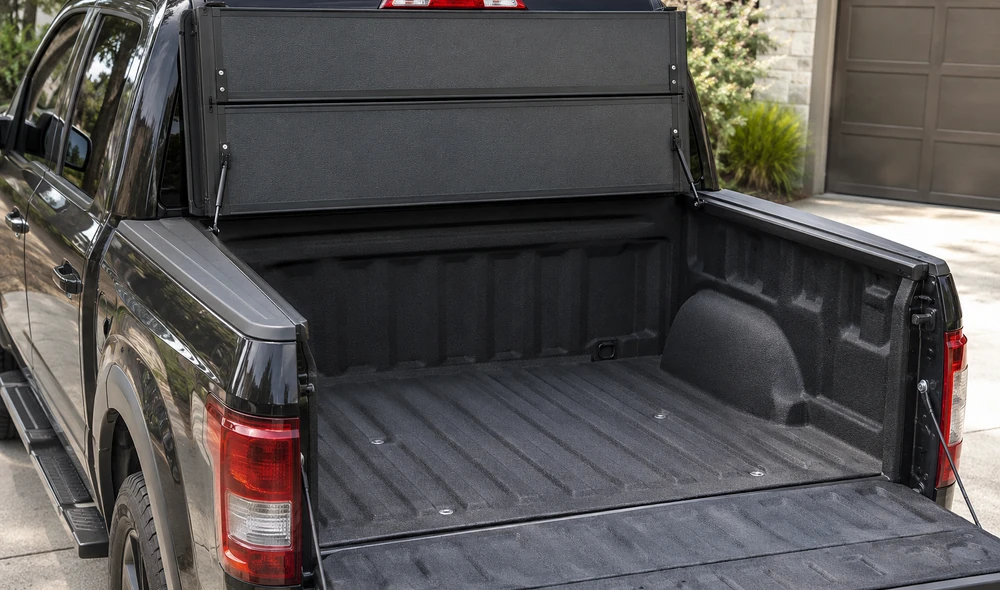
MX4 Gen 3 standard
The standard rail holds and latches the hard folding panels. Compare it if you want flat and supported upright positions and do not need accessory T-slots on the cover.
Look up a standard partMatch the version and the full part number before buying an MX4 or ordering a replacement. Standard Gen 3, TS and EZ-Lift differ in their rails or opening hardware.
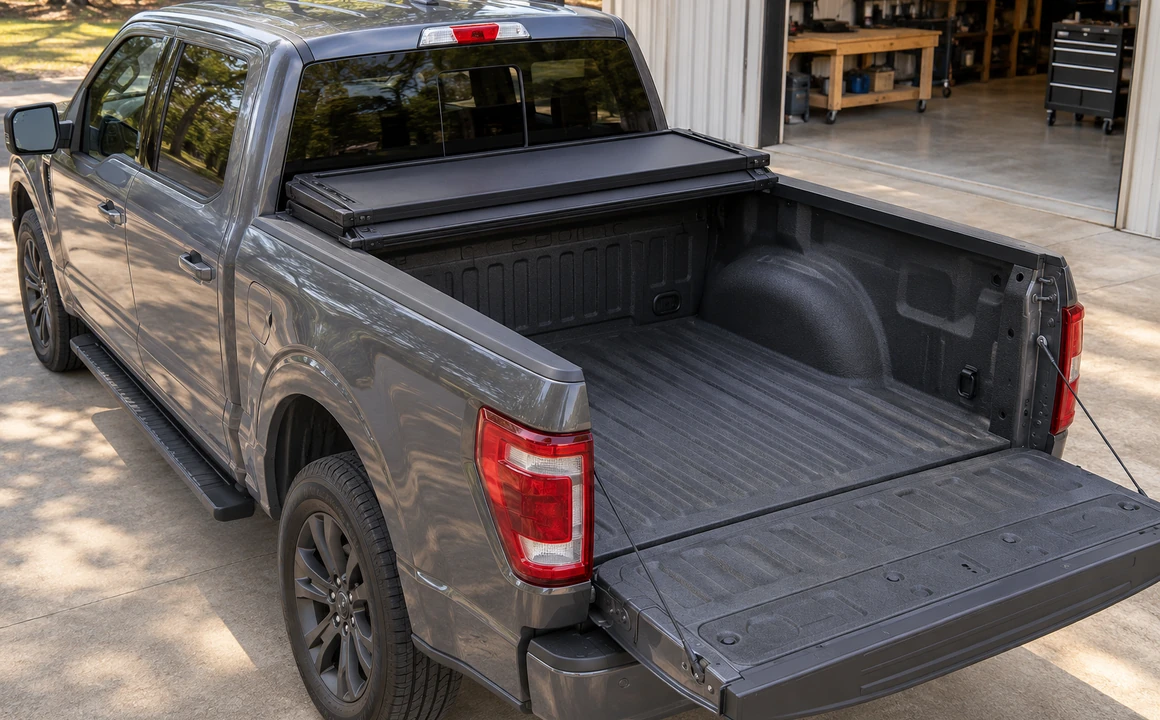
The labels on your cover and order are the best way to confirm the version. These are the hardware features to check when comparing the current options.
The standard rail holds and latches the hard folding panels. Compare it if you want flat and supported upright positions and do not need accessory T-slots on the cover.
Look up a standard part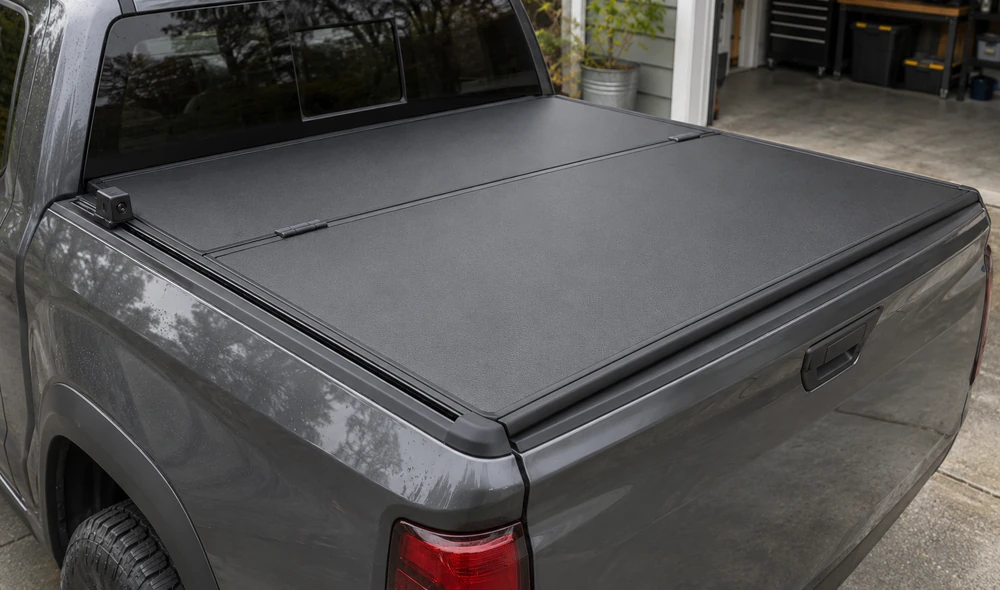
The TS rail adds a T-slot for separately sold rack accessories. Check the exact foot and hardware, room to install them and clearance through every opening position.
Look up a TS part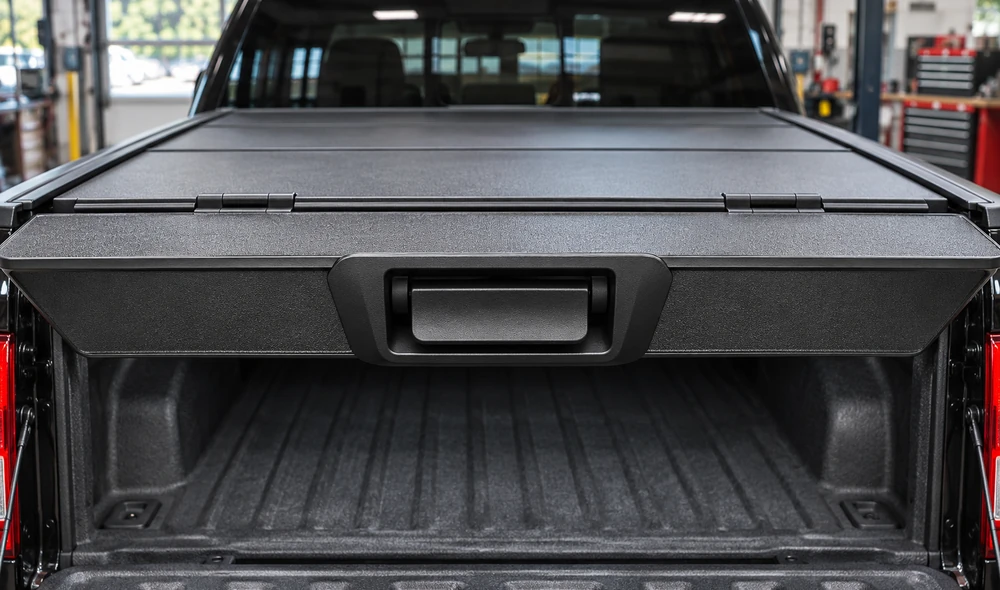
This version adds opening assistance and a larger paddle. BAK describes middle panels that release as they lift. Its comparison of about 10.5 pounds-force measures lift effort in that comparison. The cover's weight is a separate specification.
Verify the EZ-Lift record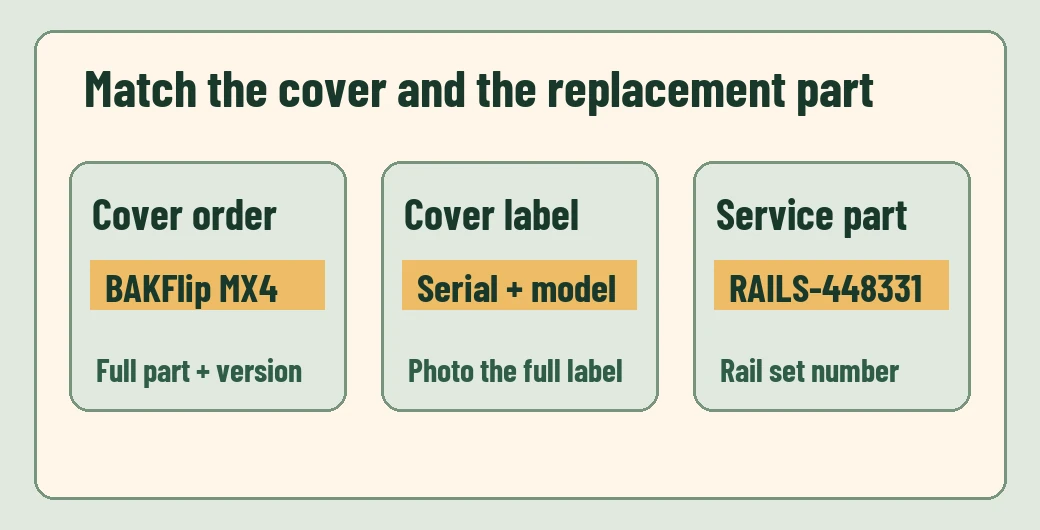
Photograph the full label and the underside hardware, then compare the original order and installation sheet. BAK calls the Gen 3 update model year 2025. That identifies the cover generation. Older MX4 orders can refer to Gen 2, and an unchanged-looking number or plate does not establish the revision.
Keep the entire number, including suffixes and prefixes. A number beginning with RAILS- refers to a service part instead of a complete cover. Match left and right rails to the cover's exact revision and truck.
Read a specific record by typing its label, or start with the truck to see documented applications. Use the nominal bed as written in the applicable catalog. Check the physical rails and mounts before ordering.
Names like 5.5 ft or 4.5 ft can differ from the cover catalog’s label. Use your actual rail-height measurement to confirm the catalog application.
See how to measure between the inside facesMX4 Gen 3
2020–2026 Silverado / Sierra 2500 and 3500 HD pickups · 6 ft 9 in
The HD application excludes factory bed storage boxes. The 6 ft 6 in Silverado or Sierra 1500 bed uses a different application.
MX4 Gen 3
Ram 8 ft · 1500 (2002–2018), 1500 Classic (2019–2023), 2500/3500 (2003–2025)
Use the eight-foot pickup bed record. The listed Ram 1500 Classic years do not cover a newer DT 1500. Check the live catalog for 2026 Ram HD applications.
MX4 Gen 3
2017–2026 Ford F-250 / F-350 / F-450 pickup · 8 ft
Use the factory pickup bed. An F-150 or an upfitted chassis-cab requires its own application. RAILS-448331 names replacement side rails.
MX4 Gen 3
2021–2026 Ford F-150 / F-150 Raptor and 2022–2026 F-150 Lightning · manufacturer 5 ft 7 in
Ford’s nominal 5.5 ft and the manufacturer’s 5 ft 7 in label point readers toward the short-bed application. Match the truck’s exact listing. Confirm any Pro Access tailgate or changed rails with BAK.
MX4 Gen 3
2022–2026 Toyota Tundra · 6 ft 7 in
BAK excludes Trail Special Edition storage boxes. Its listing requires removing any factory tie-down cleats and says they cannot be reinstalled with this kit.
MX4 Gen 3
2020–2025 Jeep Gladiator · 5 ft
The manufacturer lists with or without the Trail Rail System. Its notes advise against use with a soft top. Confirm the application with BAK if that is your roof configuration.
MX4 Gen 3
2021–2026 Peugeot Landtrek · 5 ft 4 in
This Landtrek application has no corresponding Silverado, Ram or Sierra 1500 application here. Ask BAK to confirm the local market and exact bed.
MX4 TS Gen 3
2022–2026 Ford Maverick · manufacturer 4 ft 4 in
Ford lists the Maverick bed in its accessory catalog under a 4.5 ft nominal label. Confirm both the 449324TS suffix and the vehicle application. Check any rack’s feet, slot hardware and folding clearance.
MX4 TS Gen 3
2024–2026 Toyota Tacoma · 5 ft with Deck Rail System
The factory Deck Rail System is required. BAK excludes the Trail Special Edition bed storage boxes. Crossbars and rack accessories are separate.
MX4 EZ-Lift
EZ-Lift catalog entry · check the exact application in the manufacturer’s selector
The current public title identifies the EZ-Lift and part number. Use the vehicle selector at the manufacturer to confirm the truck, bed and hardware before you order.
Check the rail set against the cover serial and application. The complete cover and the rail pair are listed separately.
Pick what you do most often. Check the next position and the opening path on the actual truck.
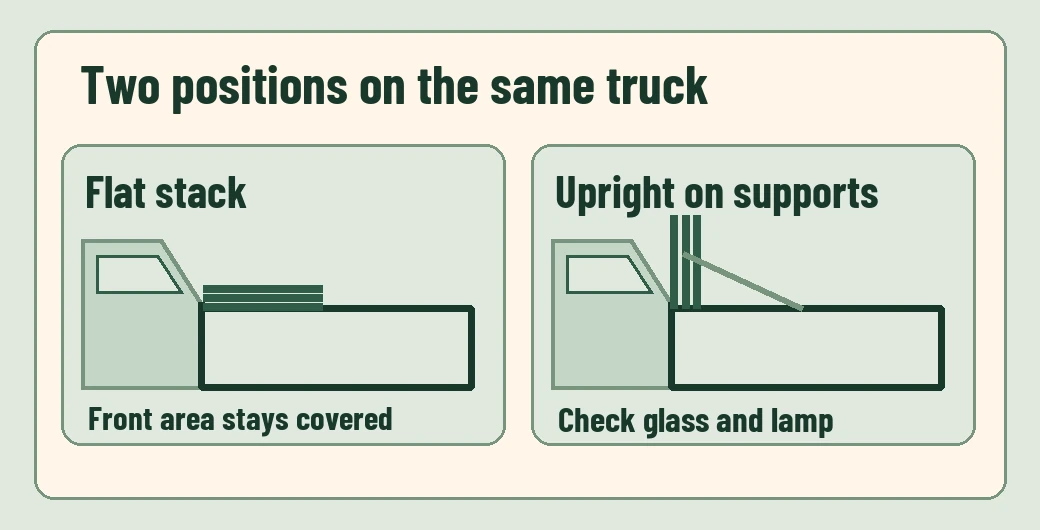
The flat stack leaves room toward the tailgate. When the manual permits it, the supported upright position gives taller cargo more forward room. Check the rods on both sides, the path past the cab and the actual view through the rear glass.
BAK describes third-brake-light visibility for Gen 3. Verify the lamp from behind your truck and the rear-window view from the seat as two separate checks.
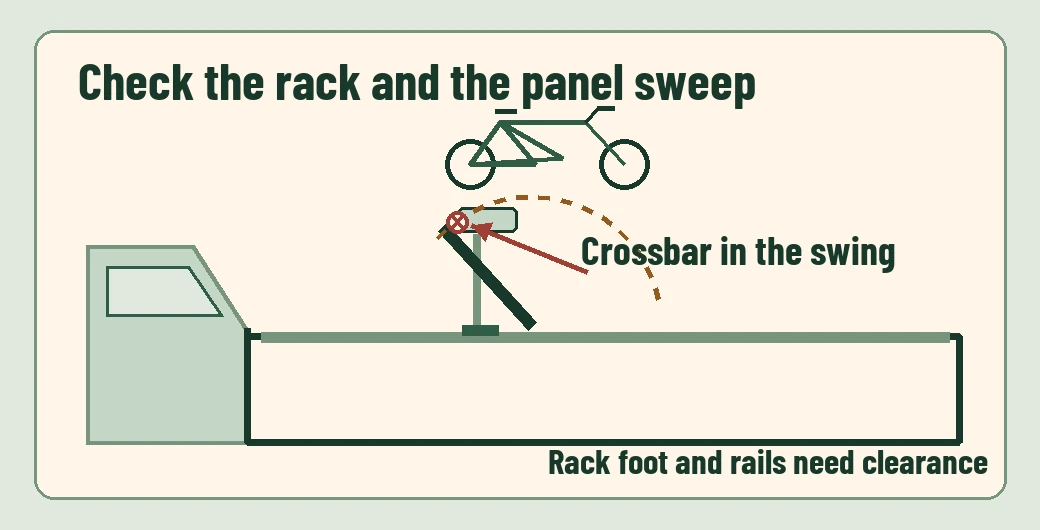
Match the rack foot and fastener to the TS slot and check the mounting instructions for both brands. If you carry a mountain bike, check panel motion with the crossbars and bike carrier in the positions you use.
Even if the folded stack fits below the crossbar, a panel can rise into that crossbar partway through the fold.
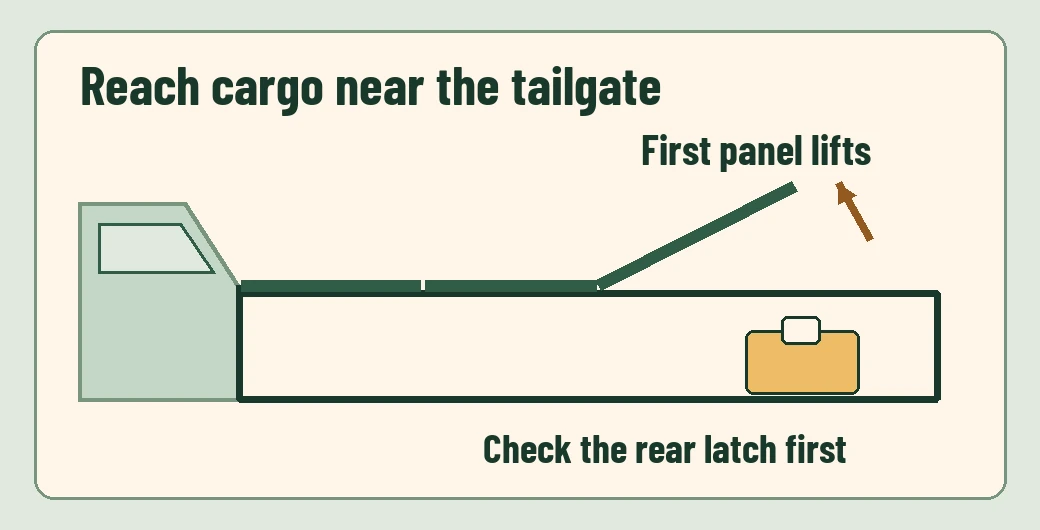
For tools near the tailgate, compare the first release and how the rear section opens. EZ-Lift adds an assisted lift and a paddle release. Standard and TS operation use the latch procedure in their own manual.
Before moving the truck, finish in a position the instructions permit and verify the specified straps or supports. Do not leave a partially lifted panel unsecured.
Use the instructions for your truck and part number to confirm clamp locations, drain pieces, straps and prop rods. Once fitted, unfold each panel and check the latches on both sides. Use the manual’s closing order for the tailgate and rear panel.
Keep latch areas free of dirt and clear the drain paths. Check the seal where the panels meet the gates and rails. Drain paths help manage water, and dry bags help protect gear you cannot afford to get wet.