
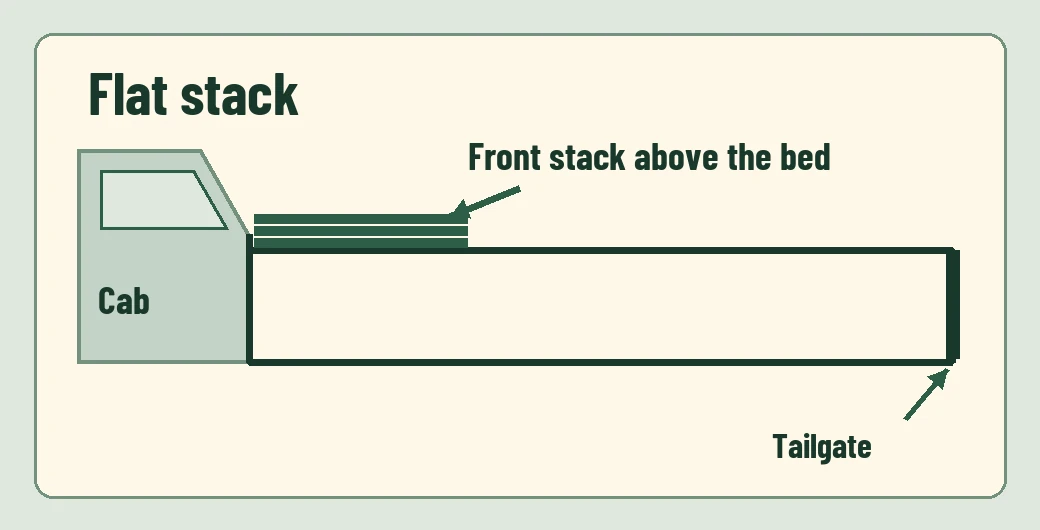
Flat stack
Reach behind the stack
Open the back of the bed for bags, a cooler or gear near the tailgate. A low tote may reach under the stack. Tall gear needs the measured clear length behind it.
A hard tri-fold cover can open in sections. The space you gain depends on where the panels stop: flat at the cab, upright on their supports, or off the truck as an assembly.
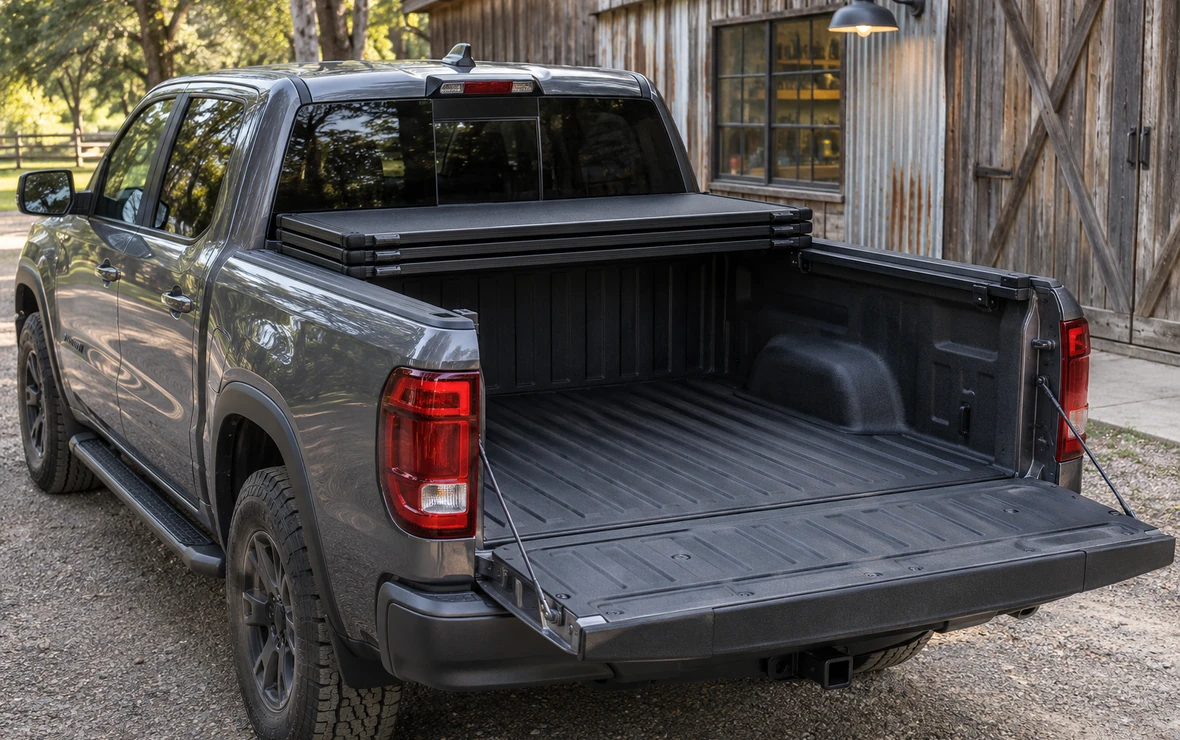
Start with the position you’ll use most often. Your exact cover’s instructions tell you which positions it supports.
Reach behind the stack
Open the back of the bed for bags, a cooler or gear near the tailgate. A low tote may reach under the stack. Tall gear needs the measured clear length behind it.
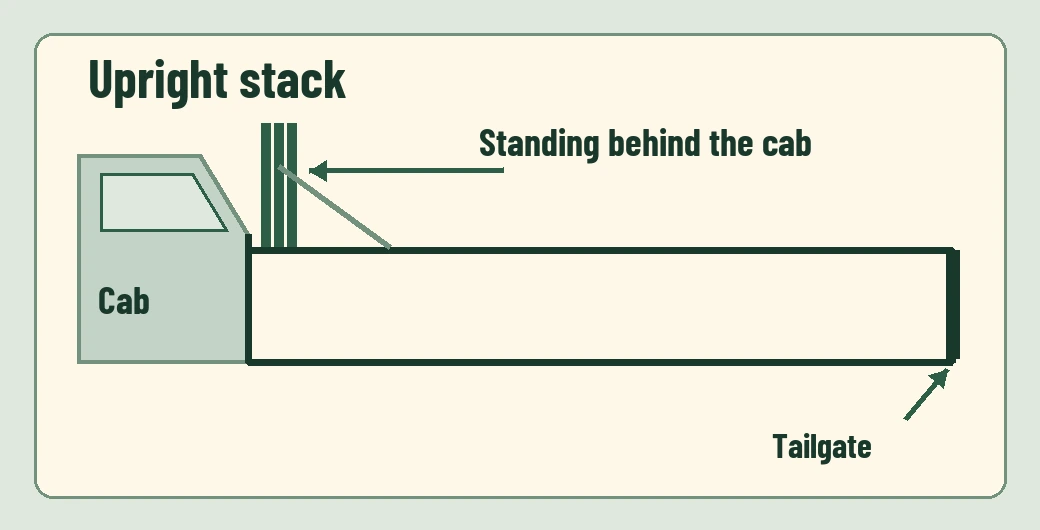
Use more of the front at cargo height
Some models secure the panels upright and free more of the front. Check the travel arc, rear-window view, third brake light and the required support hardware.
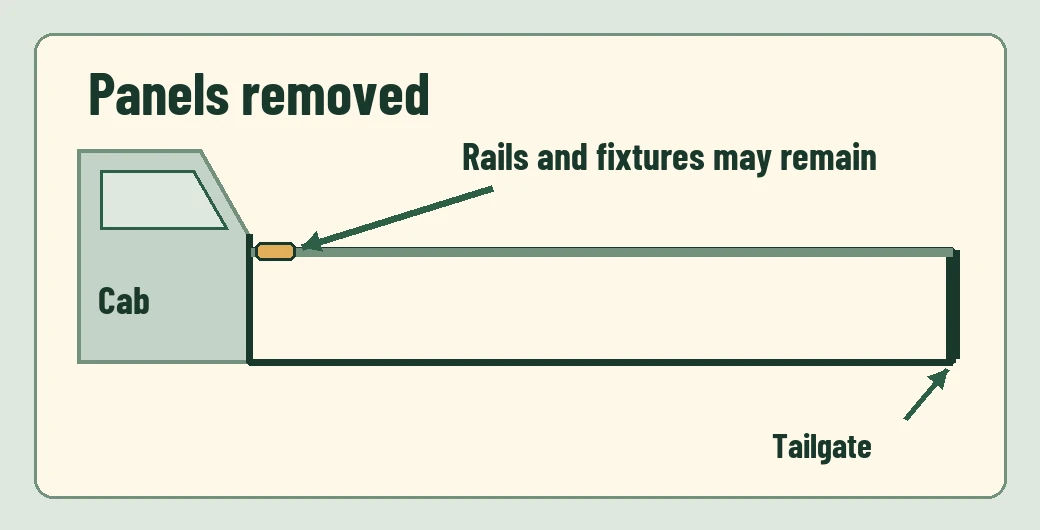
Make room for an occasional bulky load
Some assemblies lift out while the rails, hooks or seals stay. Measure the parts that remain and decide where the folded cover will be stored.
A stack can fit under a crossbar when it is flat, while a panel still hits the bar as it turns. Compare the same cover and rack at rest and partway through the fold.
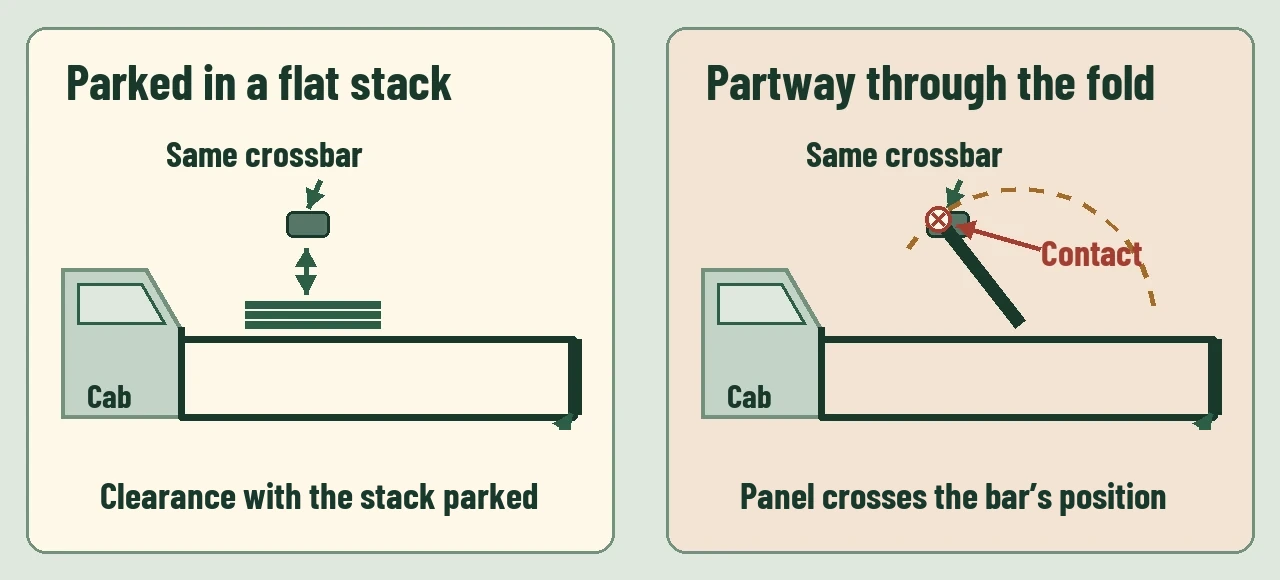
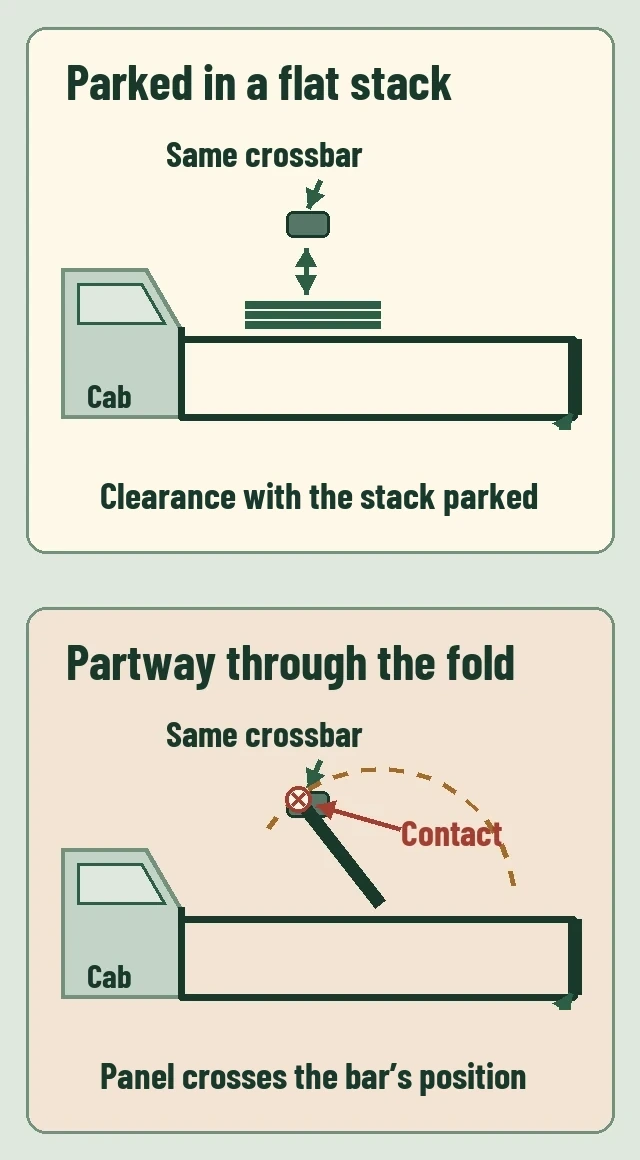
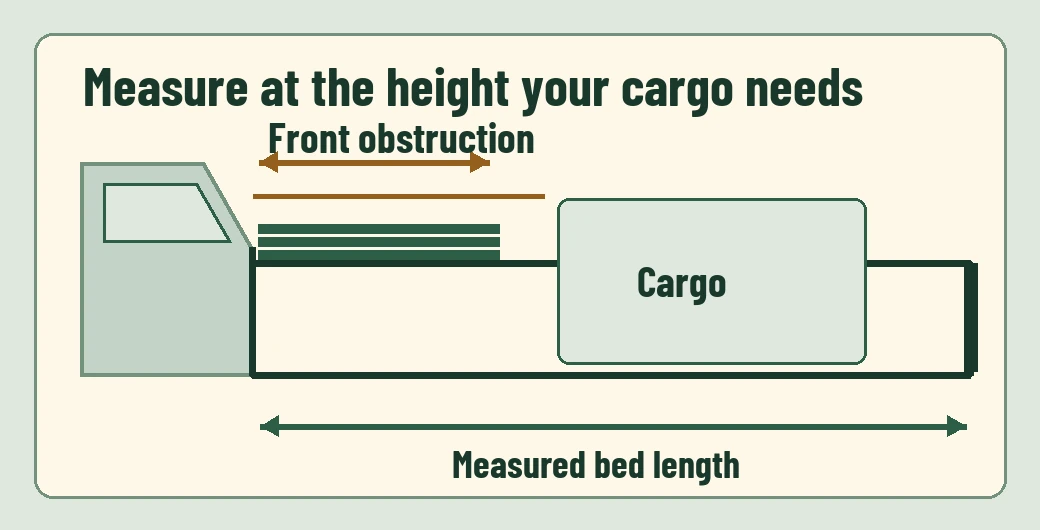
With the tailgate closed, measure the inside bed front to back. Record the extra distance the cover or its hardware projects into the load path at the cargo’s height. Use the inside bed front as your reference for both readings.
Measure the cargo along the direction it will travel. Check wheel wells, bed width, overhead rack height, the loading angle and room to secure the load. A flexible bag and a tall rigid cabinet can take the same length and need different paths.
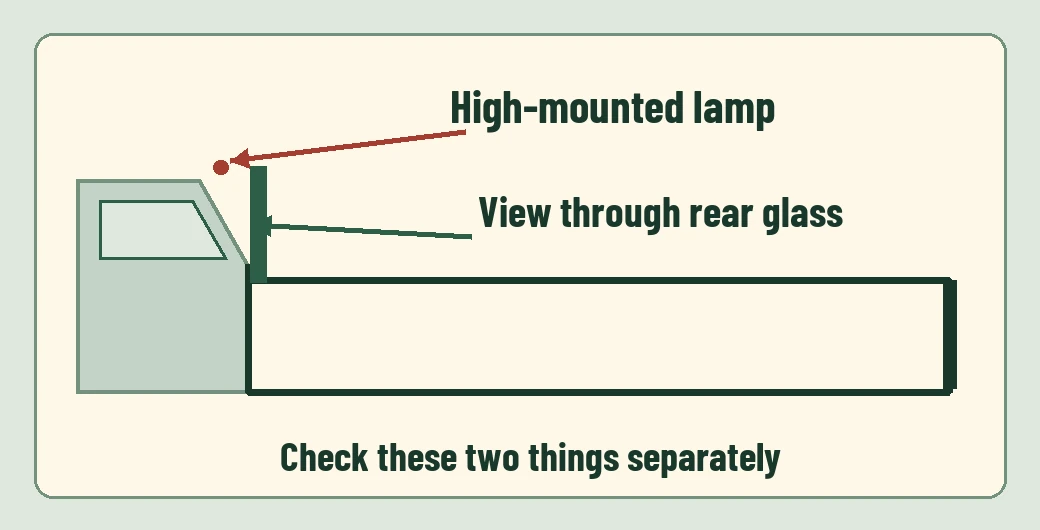
Sit in the driving position to check the view. Look at the truck from behind to check the high-mounted brake light. A stack can leave the light visible while taking away part of the mirror view through the rear glass.
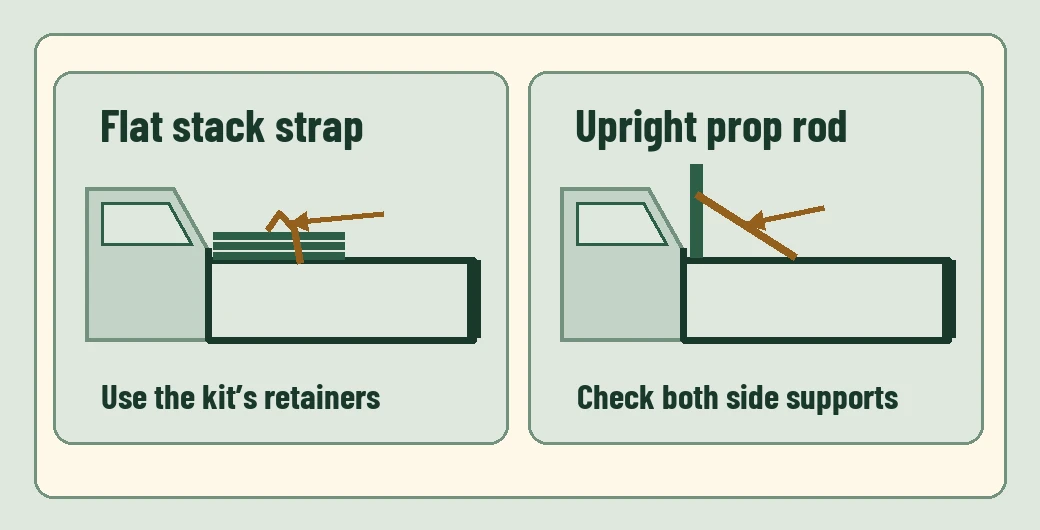
Secure a flat stack with the kit’s straps or clips where specified. Use the manufacturer’s rods or dedicated anchors for the upright position. Carry the cover only in a position permitted by its instructions.
Choose the operating position first. Match the manufacturer’s part number to your truck, model year and bed, then check the seller’s listing for that exact application.
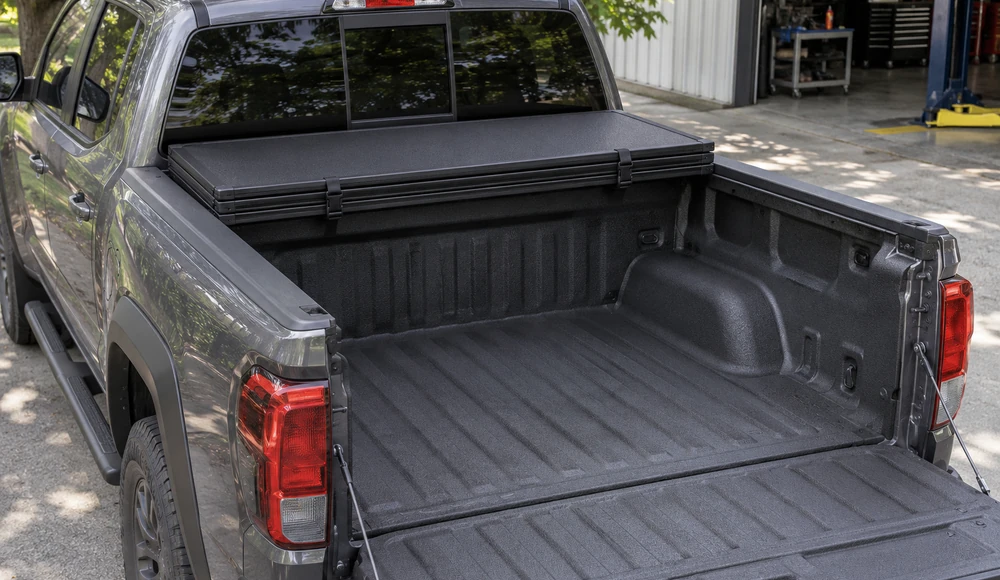
Tailgate access most days
The GC24002 example exposes about two-thirds of the bed when flat-folded. RealTruck shows securing that stack with the bulkhead straps and buckles. For a load that needs the front, look at how the assembly releases and plan where to set it down.
Buy On Amazon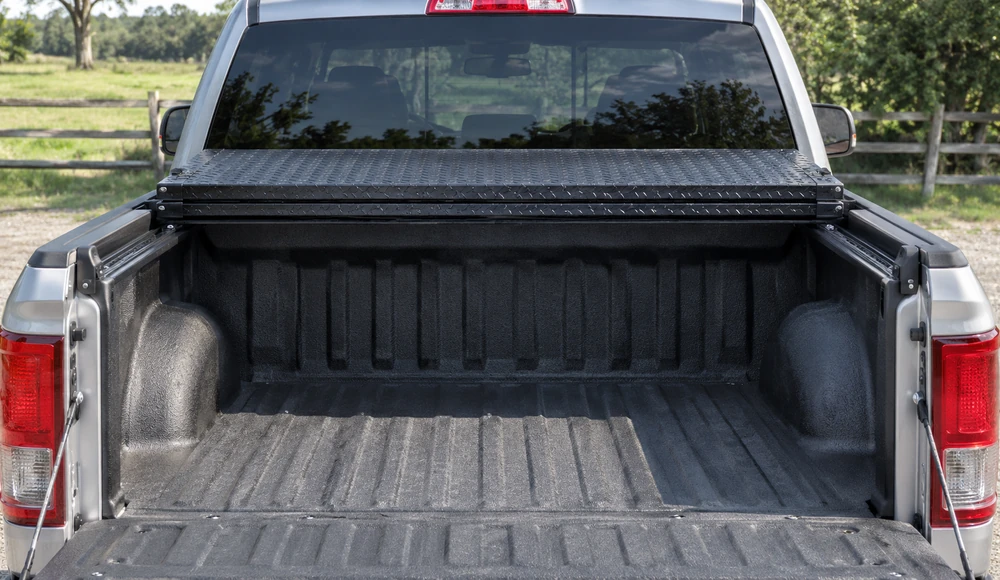
Remove it for occasional bulky cargo
Agri-Cover lists the Original for fully closed or fully open horizontal use. Its front tabs and hooks let the folded assembly release from its rails. Check the fittings left behind where the cargo has to pass, and make room to store the panel assembly.
Buy On Amazon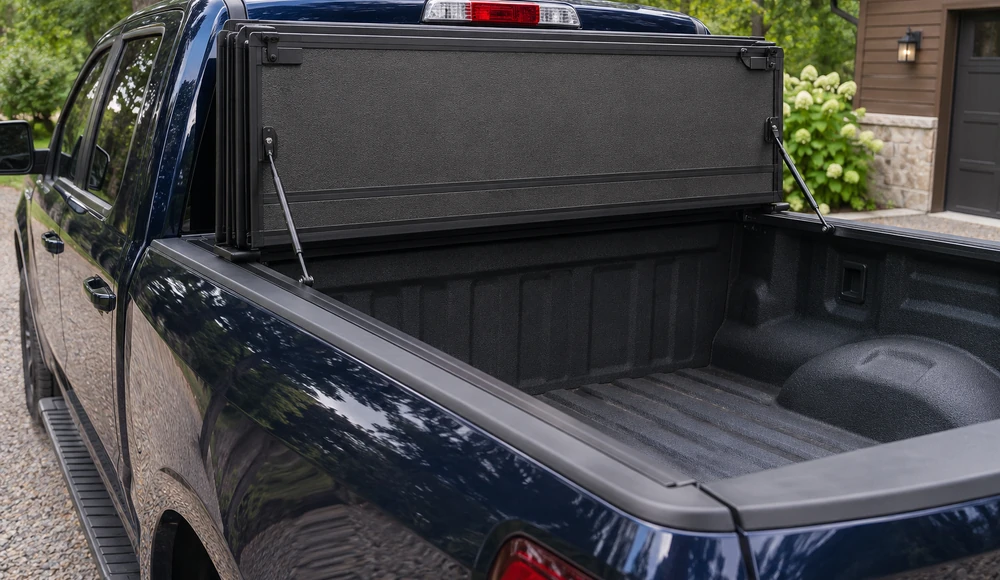
Reach near the cab without taking the cover off
The standard Gen 3 example uses straps for the horizontal stack and two prop rods upright. BAK describes third-brake-light visibility in every position for Gen 3. Look at that lamp from behind your truck and check your rear-window view separately. Verify the specific older generation or cab before carrying the claim over.
Buy On Amazon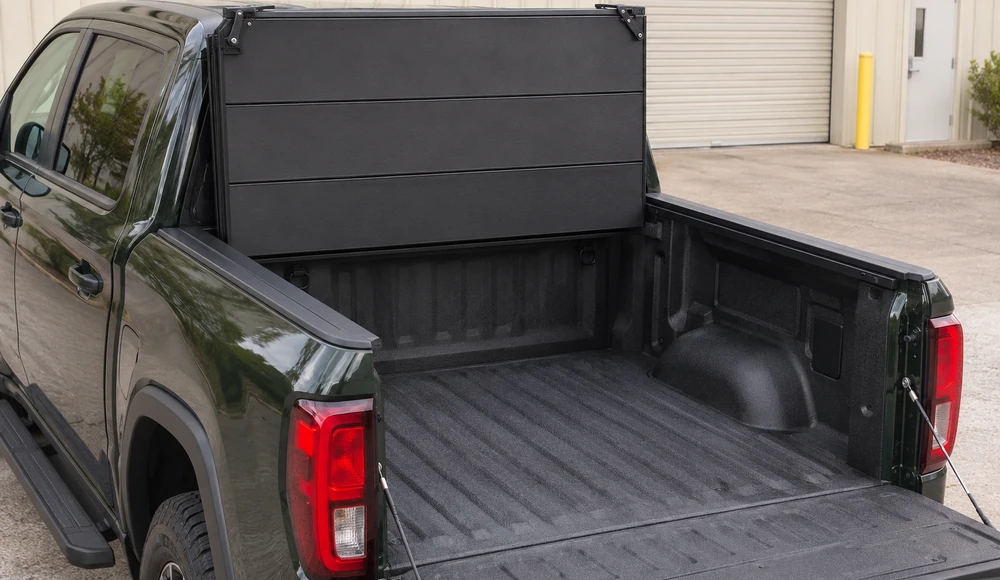
Use its dedicated upright hardware
STANCE uses pivot links and roof anchors to hold the stack close to 90° and away from the rear glass. Agri-Cover says this position blocks the third brake light and that certain racks can limit opening. Check the lamp and the entire swing before choosing how you will use it.
Buy On AmazonLook at how the specific model moves water around the perimeter and out of the bed. Gator EFX uses drain paths. LOMAX describes a water-shedding design that does not use gutters or drains. Keep covers, rear seals and any drains in good condition and protect gear that must stay dry.
Rigid panels hide the bed and can make casual access harder. Check whether all latches engage and whether the tailgate can lock. Take valuables with you when leaving the truck.
Use the limits and loading points for the exact product. A limit for evenly distributed weight does not apply to a person or a heavy object concentrated in one spot. Check the rack’s own ratings when your cargo rides above the bed.
Subtract each position’s front obstruction from the measured bed length. Use readings at the same cargo height. Check the actual sweep and mounting hardware to decide whether you can use that position.
These readings are an example. They assume each position is supported and the panel and loading paths are clear.
For a 35 in load with those same readings, the flat stack leaves 19 in of length before checking width, height and room to load and secure it.