
Model guide
Gator Hybrid Tonneau Cover Guide
Gator Hybrid looks like a soft cover from above but hides rigid sections beneath its vinyl. It folds toward the front and leaves roughly two-thirds of the bed open when stacked.
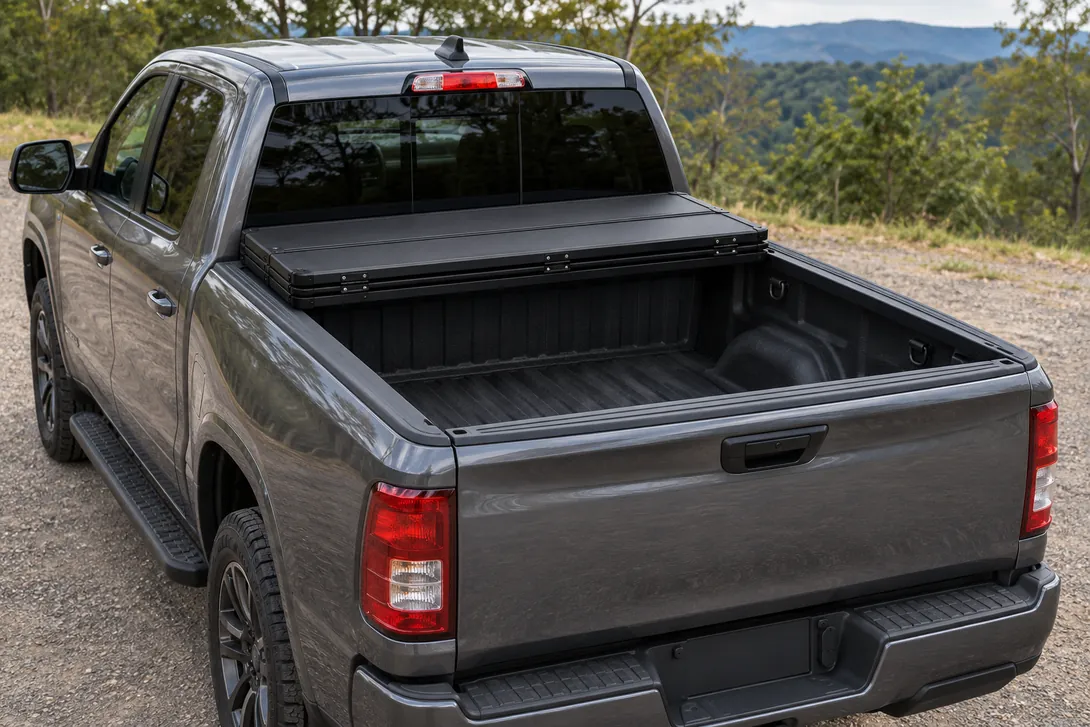
Identify the hard sections under the skin
The flexible-looking outer face covers a folding hard structure with rear latching hardware. Check the underside and the series decal. A generic advertisement for a Gator soft roll-up or a Tailback can look similar in a closed photo yet use quite different parts.
Check GHF hardware and rail profile
Use the GHF application identifier when available. Check the panel underside, rail cross-section, hinge locations and the distance to the tailgate latch before accepting a loose rail or replacement panel. A black vinyl top alone will not identify this model.
Worked example
A tall display stand that must travel forward
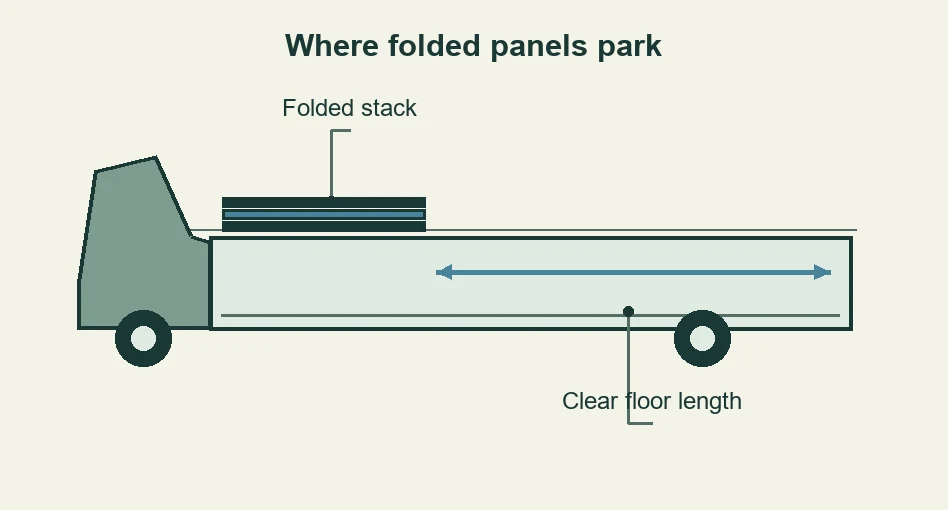
Your display stand has a small base, so it looks easy to fit in a truck. Its upper frame, however, projects forward of the base. Before loading, lay out its footprint with cardboard and mark where the upper frame would reach at rail height.
With the truck parked and the panels folded according to the instructions, check both marks against the remaining front stack. If the stand clears while still attached to suitable anchors, record that position. If only the base fits, plan complete removal if permitted for the kit or transport the stand in a different arrangement.
- Check the GHF identifier
- Compare rail and hinge photographs from any unlabelled listing.
- Account for rear loading
- A stand may fit at rest and still catch the stack while being tilted into place.
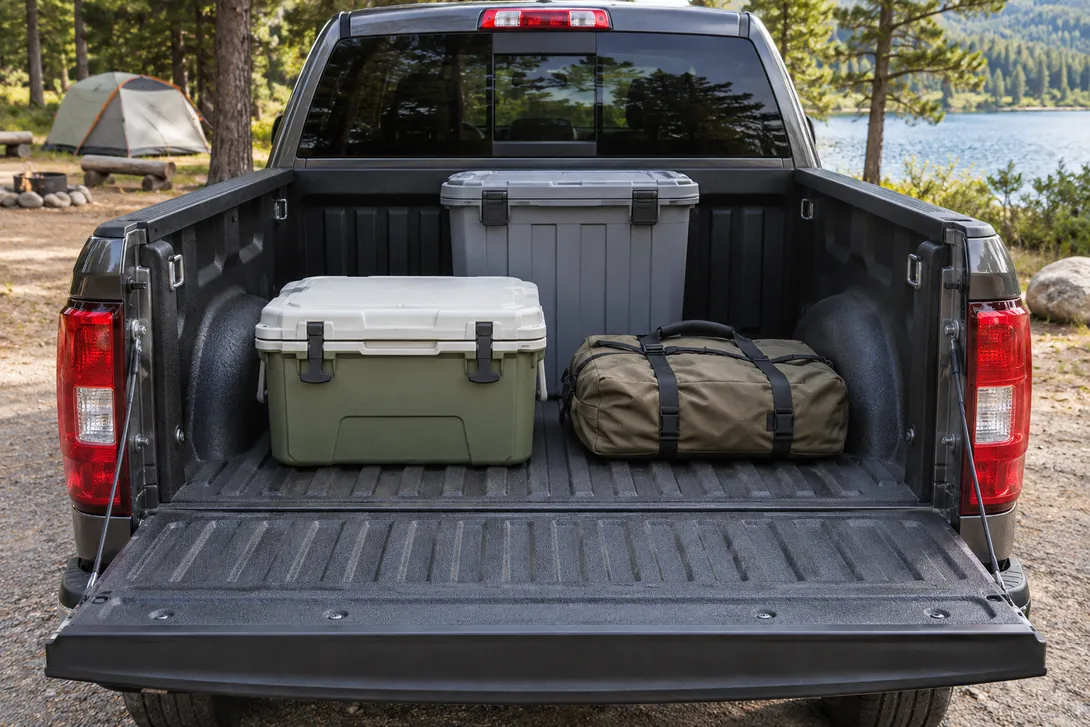
Where the front third stays covered
Decide which feature you value. The Hybrid conceals rigid protection under a continuous-looking skin, but the stack still covers the front third. To carry a tall appliance, lay out its footprint behind that stack and confirm the tailgate can close if needed.
- Measure or identify: Position of front stack relative to tall cargo.
- Decision check: Use the actual folded dimension before treating it as full access.
| Situation or option | What matters | What to check |
|---|---|---|
| Vinyl surface torn | May be cosmetic or may expose a damaged section | Photograph both exterior and underside |
| Panel will not latch | Rail or catch may be misaligned | Use its GHF part identification and hardware drawing |
Diagnose skin, panel or latch damage
For finish damage, distinguish a cut in the exterior covering from damage to the rigid section or latch. Ask Gator whether the affected layer is serviced for that kit. Compare a full-flip model if a permanent front stack is your main frustration.