
Cover styles
Soft Roll-Up Tonneau Covers and Tension Adjustment
A soft roll-up stretches a flexible top across bows or a supporting frame. The rear latch, side fasteners and tension system must work together. A light roll can make frequent access easy, but a poorly seated edge can leave fabric loose or expose a gap.
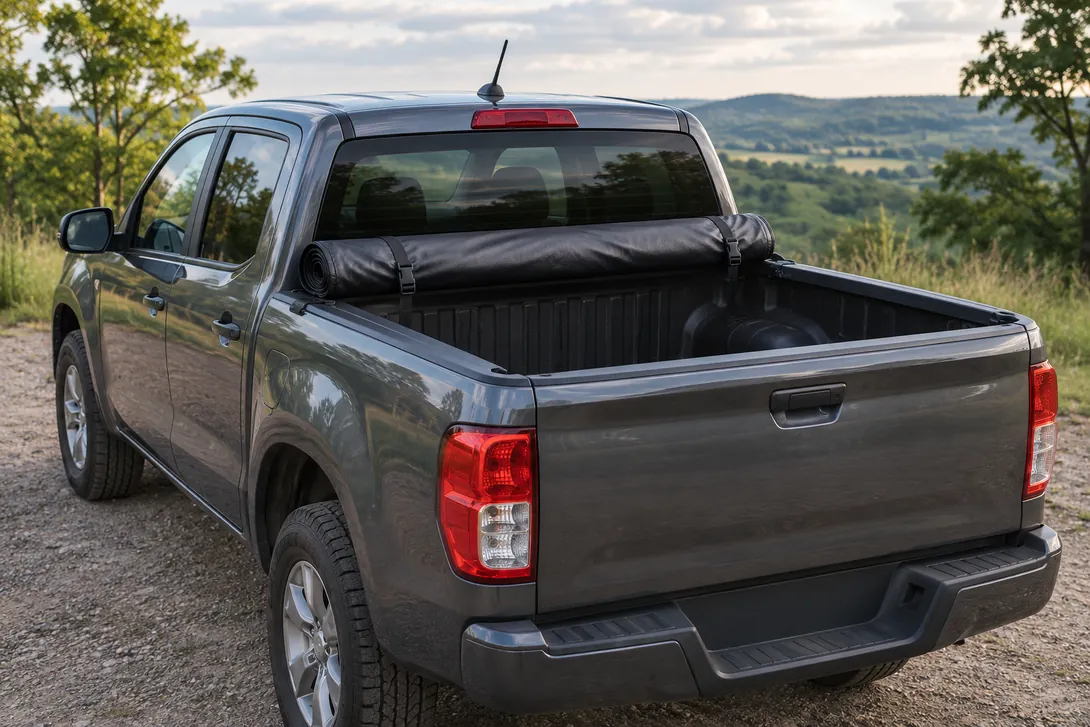
Look at how the edges fasten
Start at the tailgate and follow the attachment to the cab. Does the fabric engage hook-and-loop strips as you close it, or use another edge system? Check how the bows remain aligned and where the storage straps attach. Close the tailgate in the sequence specified for that cover.
Compare the actual tension design
TruXedo Lo Pro uses a floating edge fastening and tension system. TruXport Gen 2 uses a factory-calibrated system. The correct response to a loose edge depends on which system is fitted. More force on a latch is rarely a useful first diagnosis.
| Observation | First check |
|---|---|
| One loose corner | Is the rear bar seated and has that edge been engaged along its whole length? |
| Wrinkles across the width | Check bow orientation, rail alignment and the series-specific tension instructions. |
| Roll leans to one side | Unroll while parked and start again evenly to avoid a bulky offset bundle. |
Worked example
One corner lifts after an otherwise normal close
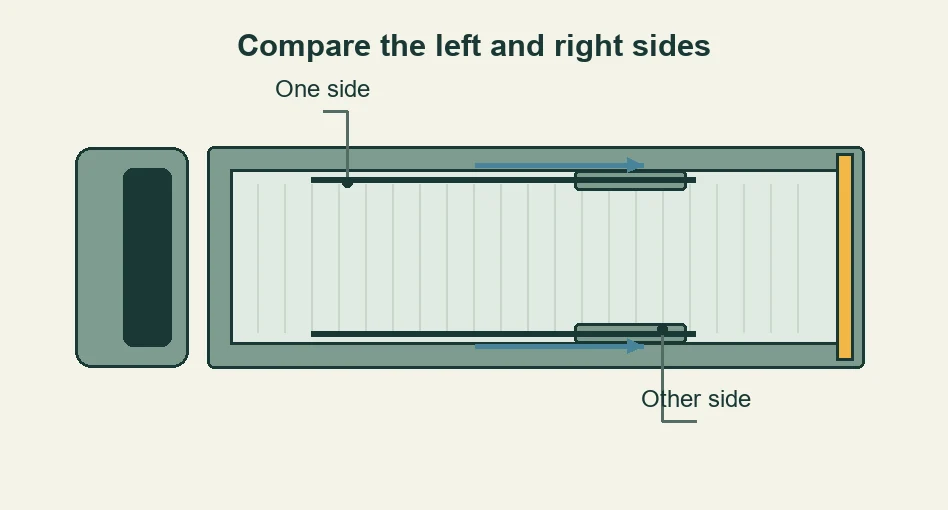
A roll-up owner sees a wrinkle on one corner after unloading groceries. Before changing any tension setting, park the truck and reopen the back according to its instructions. Check whether the rear bar sits in the same position at both sides and whether a section of fabric has folded back onto the edge fastener.
Reseat the cover using the prescribed sequence and inspect the same corner. A wrinkle that disappears points to uneven seating. A persistent wrinkle in the same spot warrants a check of the bow, rail or series-specific tension system. A Lo Pro adjustment and a factory-calibrated TruXport setup need different instructions.
- Compare the rear ends
- A rear bar that sits higher on one side can pull the fabric diagonally.
- Identify the finish
- Woven fabric and vinyl-covered material can have different cleaning and care requirements.
Choose the action that fits the trip
Measure the roll near the cab and decide whether it can remain there when carrying your tallest regular load. Pay attention to the straps and to any tools or gravel that could rub the underside of the fabric.
| Situation | What to check |
|---|---|
| Open it every day | Try reaching the release and the cab-side straps from your normal position. Confirm how to secure the roll for driving. |
| Restore a loose edge | Identify the manual before moving an adjuster. Factory-calibrated and manually adjusted covers have different procedures. |
| Protect the finish | Check the surface material and maker's care instructions before applying cleaners or dressings. |
Keep a simple closure check
With the truck parked, verify both edges, rear latches and any required strap storage. A snug-looking top that missed a latch can still lift. Keep the model information handy if the fabric or side fastener strip later needs replacement.