
Accessories
Tonneau Cover Cleaners and Protectants by Material
Choose care products for the surface you touch, not the material below it. A hard roll-up may have a vinyl outer skin, while a rigid panel can have paint or powder coating. A cleaner removes contamination. A protectant is a separate treatment and may not be appropriate for that finish.
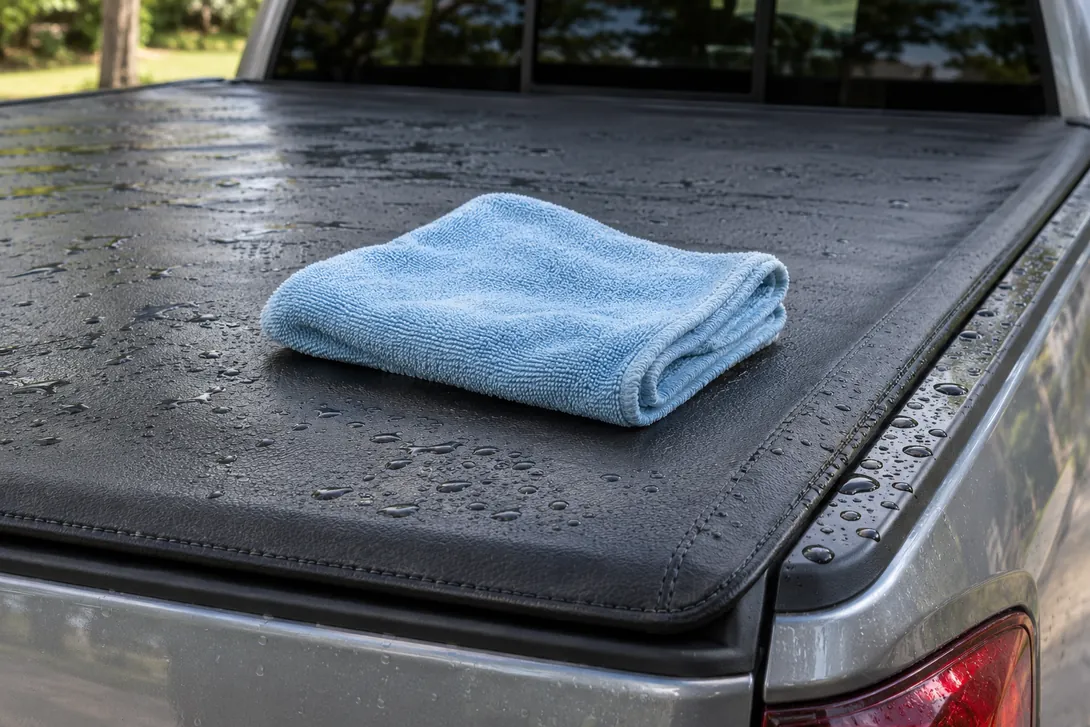
Check the cover maker's care instructions
Find the model and identify the top surface, seals and moving rails separately. Look for permitted soap, brush or cloth and any restriction on dressings, solvents or wax. For a product sold under the 303 name, read the specific formula and material label. The brand sells different treatments for different jobs.
Clean a test area first
Rinse loose grit according to the manual, work on a cool surface and avoid letting cleaner dry in direct sun unless the instructions say otherwise. Use the cleaner dilution and rinse method on its label. Keep residues away from hook-and-loop edges and mechanical rails where the cover maker advises.
| Surface or component | Which instruction governs |
|---|---|
| Vinyl outer skin | The cover maker's vinyl-care directions and the cleaner's current compatibility label. |
| Woven surface | Fabric-specific instructions, including whether a water-repellent treatment is allowed. |
| Painted or coated panels | Finish-specific washing guidance rather than generic vinyl treatment. |
| Rails and seals | The model's maintenance instructions, particularly any lubrication restrictions. |
Worked example
A bottle labeled for vinyl lands on a woven top
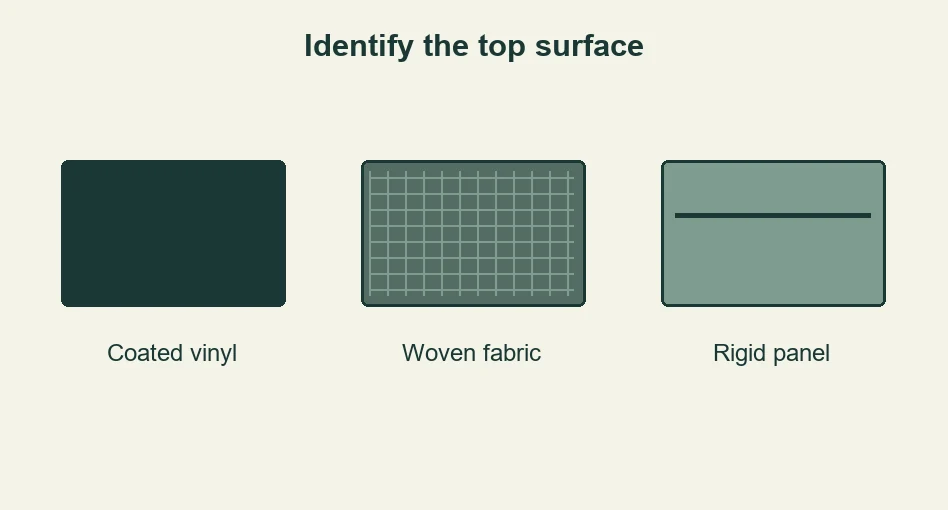
An owner buys a familiar 303 product because a previous truck had a vinyl tonneau. The replacement cover feels woven and has a different care sheet. Read the cover label and compare the exact cleaner or protectant formula with its list of permitted materials.
If the instructions allow it, test a small inconspicuous area using the stated preparation and rinse method before treating the whole surface. Keep runoff away from mechanisms that have separate lubrication rules. If the discoloration remains or the fabric becomes tacky, stop and ask the cover maker for guidance. Brand recognition is no substitute for matching the exposed finish.
- Separate cleaning and protection
- Removing dirt does not automatically call for a dressing or water-repellent finish.
- Check the rail instructions
- A spray suited to a vinyl face can be inappropriate inside a track or on an edge fastener.
Match the task to the right bottle
A shiny result does not demonstrate UV protection, material compatibility or proper rail operation. Avoid using a dressing to disguise brittle skin, a cracked seal or stretched attachment material.
| Situation | What to check |
|---|---|
| Ordinary dirt on vinyl | Use a manufacturer-approved cleaning method and let the surface dry before deciding whether a compatible protectant is needed. |
| Faded or stained fabric | Identify the material and check a small inconspicuous area. Ask the cover maker before using bleach or aggressive solvent. |
| A sticking retractable rail | Use the model's operating and maintenance instructions. A surface protectant is not a cure for misalignment or a damaged track. |
Check the cover after cleaning
Look for loose seals, worn attachment strips and debris near drains. Open and close it while parked to confirm normal operation. Record the exact formula used if you see discoloration, softening or a change in surface texture.