
Accessories
Tonneau Cover Patch Kits for Vinyl and Fabric
A patch is a candidate for a small tear in a compatible flexible surface. It does not repair a bent bow, damaged hinge, load-bearing seam or latch pulling out of the skin. Identify the material on the face where adhesive will actually touch.
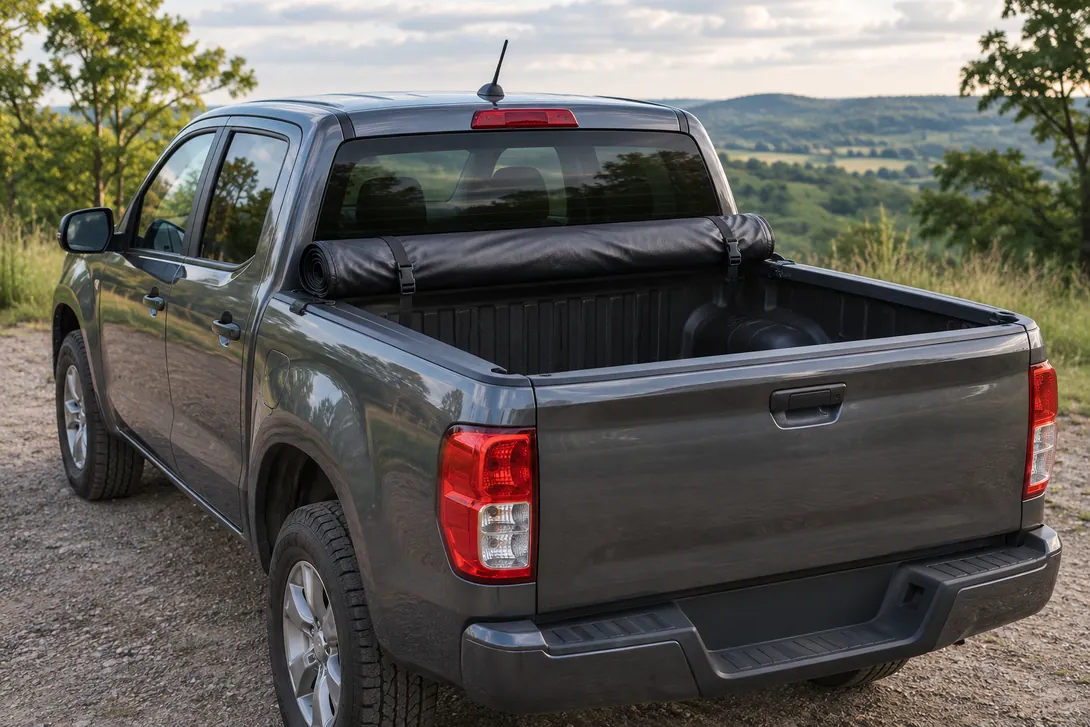
Check the substrate and tear location
Some covers have a vinyl exterior with a different textile underside. The inner and outer faces can need different adhesive systems. TEAR-AID specifies Type B for vinyl or vinyl-coated surfaces and Type A for a different list of substrates. Check the cover maker's repair and warranty terms too.
Inspect the surrounding material
Place the cover in the maker's safe parked position and examine the whole area. Brittle material that cracks outside the visible tear suggests a wider skin problem. A tear next to a seam, bow pocket or rail fastener can continue growing even if a patch initially sticks.
| Observation | Repair path to investigate |
|---|---|
| Small puncture in sound material | Compatible patch, proper preparation and the patch maker's application and cure instructions. |
| Damage across a seam or attachment | Cover maker's service procedure or fitted skin replacement. |
| Many cracks or long stretched slit | Check whether a full replacement skin and matching mounting method exist. |
Worked example
A small hole in the center and a similar one at the edge
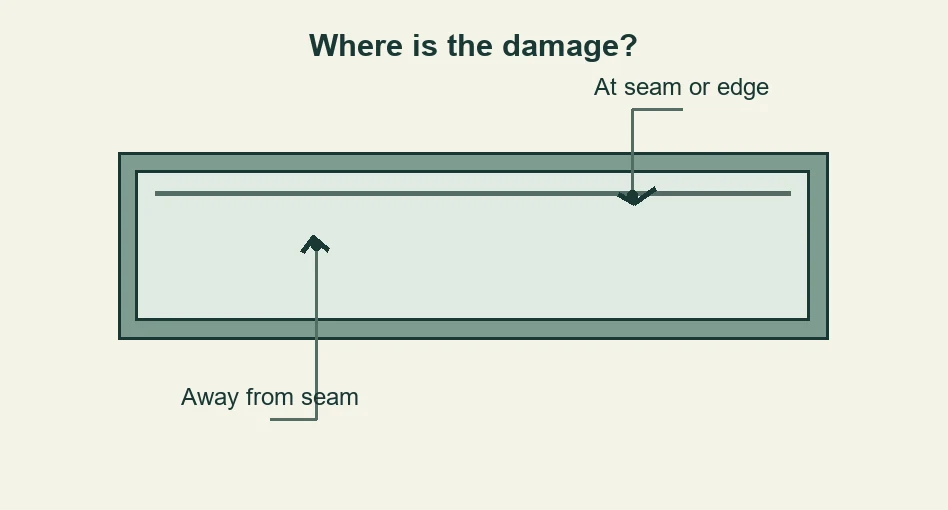
Two marks on a soft cover are the same length. One is a clean puncture in flat, flexible vinyl, well away from a support. The other is beside the stressed edge fastener, with fraying visible underneath.
Identify the actual outer material and check the cover maker’s repair terms first. For the center puncture, check a compatible patch and its preparation and curing directions. Send the edge damage to the maker for assessment of retained strength or a fitted skin replacement. A patch that seals the center spot against water would not automatically restore a damaged attachment under tension.
- Identify the uppermost layer
- A textile backing does not mean the exterior is suitable for the same adhesive as the underside.
- Inspect beyond the visible opening
- Brittle material surrounding the tear can fail outside a securely bonded patch.
Choose a repair by the failure mode
Use the patch manufacturer's directions for cleaning, edge shape and overlap, and verify cleaning compatibility with the cover. Do not assume a solvent recommended for one substrate is acceptable on a coated tonneau.
| Situation | What to check |
|---|---|
| An isolated puncture away from load points | Identify the exposed substrate and test compatibility as directed. Check the opposite face for hidden damage. |
| Beside a seam, latch or stretched edge | Contact the cover maker with photos before patching. Retention or load transfer may be affected. |
| The whole top is brittle | Request a fitted replacement-skin quote by series and production code, and inspect the supporting frame. |
Check the repair in use
After the specified cure period, inspect patch edges while gently opening and closing the cover in an approved position. If the tear spreads or the retention system is affected, stop relying on the repair. Document the material and kit used.