
Accessories
Fishing Rod Holders for Tonneau-Covered Truck Beds
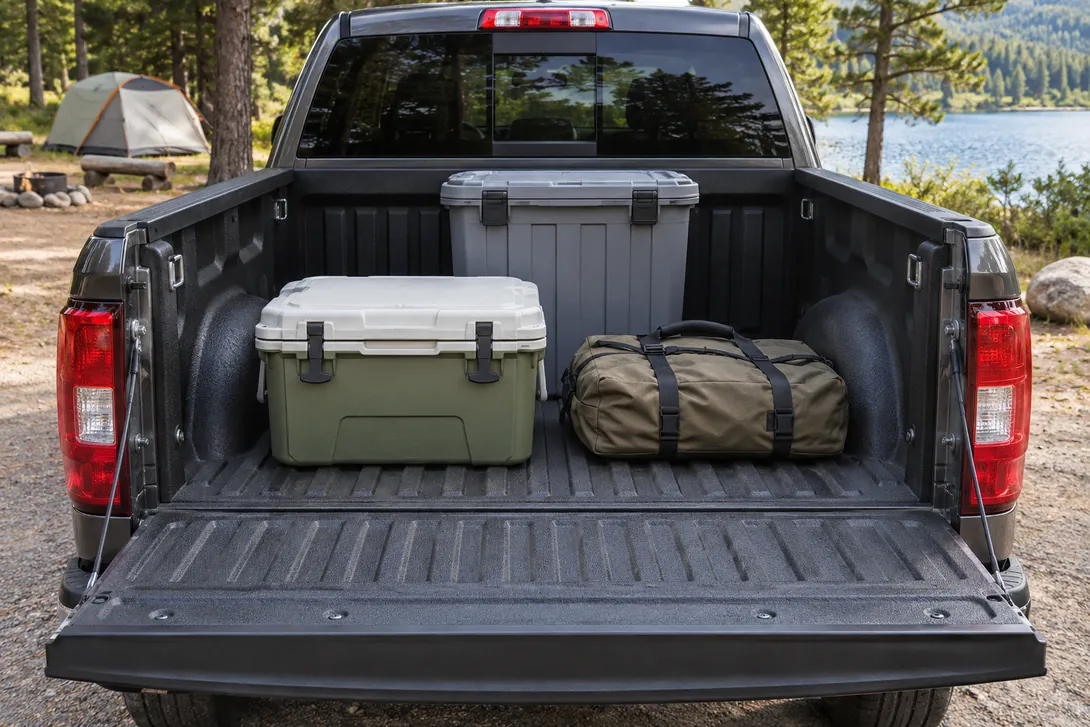
There are two useful places to carry rods on a covered pickup. Shorter equipment can go beneath the cover if it fits without bending or rubbing. Longer or fully rigged rods may need a dedicated carrier on an approved rack above the bed.
Measure the rod with its reel attached
Measure total transport length and the space the reels need side by side. For under-cover storage, check the diagonal inside the closed bed and its minimum height under bows and latches. Keep rod tips clear of tailgate travel, cargo movement and release straps.
Compare the support points
A carrier such as Yakima ReelDeal is intended to mount to compatible crossbars and supports rods at defined locations. Use the carrier's fit and restraint instructions. A tonneau accessory slot is only one step in connecting the carrier to the truck.
| Location | Clearance and fit check |
|---|---|
| Inside the bed | Rod length, reel height, protected tips and suitable secure mounts. |
| Above crossbars | Bar compatibility, spread, carrier weight and loaded rod overhang. |
| Near a moving panel | Rod tips, reels, holder brackets and latches through the complete opening arc. |
Worked example
A rod fits tip to butt until the reel goes on
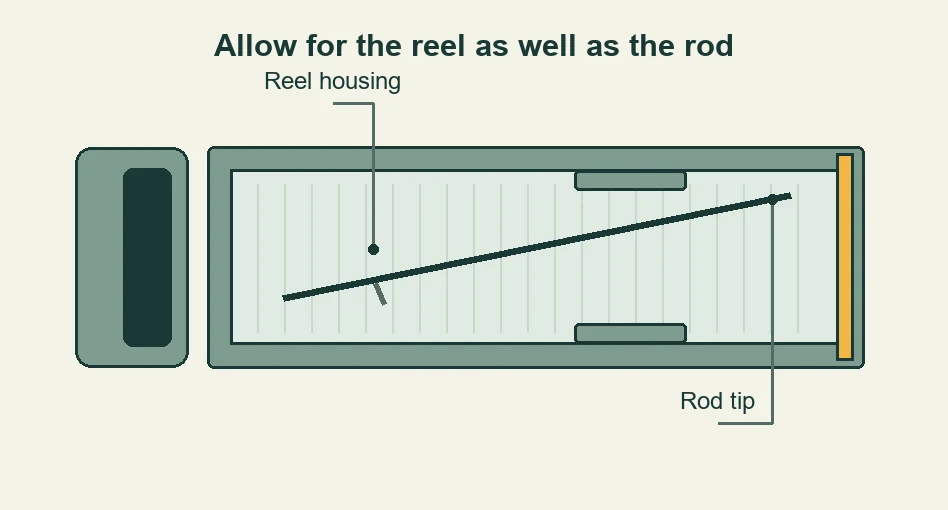
An angler tests an empty bed with a string cut to the assembled rod length. It fits diagonally, so the rod appears usable under the tonneau. Add a cardboard block for the reel and mark the chosen case or supports.
Now close the tailgate and check clearance against the lowest latch or bow without putting pressure on the rod. If the reel contacts the cover, try a different supported orientation, a suitable sectional case or a documented above-bar carrier. Include a plan to restrain the rods away from sliding tools. A bare diagonal dimension alone does not protect a delicate tip.
- Check the path out
- A rod that fits under the closed cover may be awkward to extract through a partly open tailgate area.
- Mark overhead gear height
- A rod carrier, reels or protective tube can project higher than the truck cab.
Choose the transport position
Paper or a piece of string cut to rod length helps test bed diagonals without pressing a real rod under a cover. Above the bed, a protective tube or approved carrier may work better for fragile tips depending on what you carry.
| Situation | What to check |
|---|---|
| Short rods broken down in cases | Check case length and the path out of the tailgate. Restrain the cases so heavy cargo cannot slide into them. |
| Long one-piece rods with reels | Compare an overhead carrier's stated fit with actual reel spacing. Check cab and roadway overhang. |
| Need the bed open during the trip | Operate the empty cover through its full range and inspect where the mounted carrier and rods will sit. |
Check for hidden contact
Recheck a fully loaded arrangement while parked. A handle, hook or reel can occupy clearance that the bare rod did not. Secure the equipment according to the carrier instructions and protect other cargo from exposed hooks.