
Accessories
Truck Bed Racks That Work With Tonneau Covers
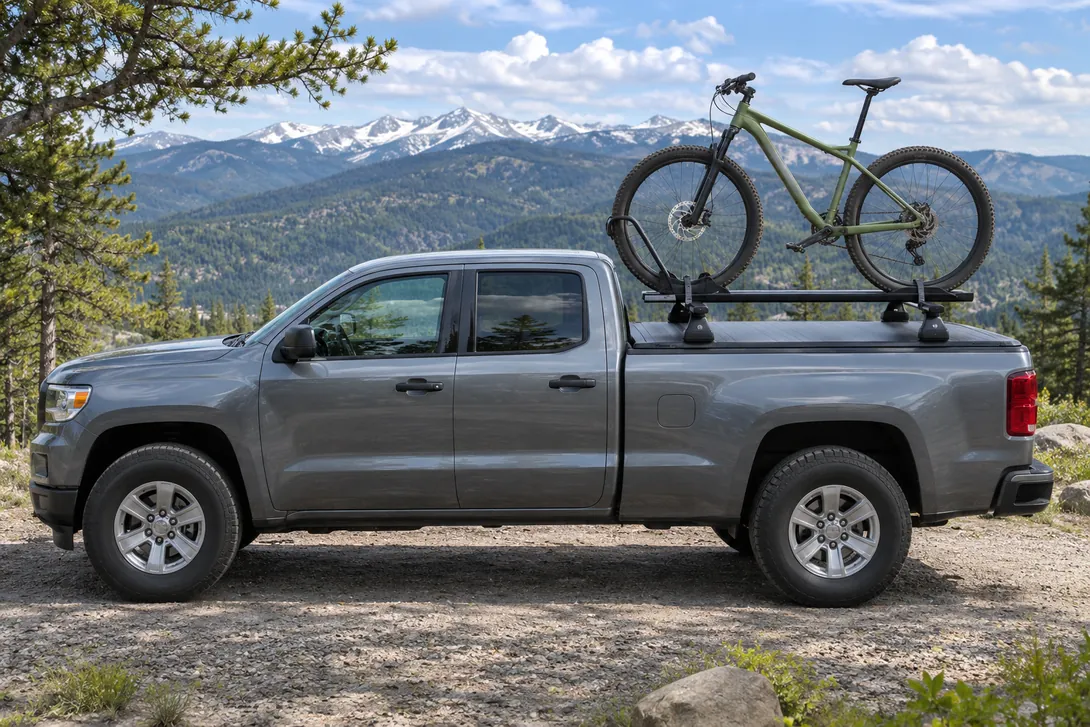
The shortest reliable route to a rack-and-cover pairing is to identify which surfaces are already occupied. A rack can attach through stake pockets, to a rail on the bed, or through a manufacturer-approved track in the cover. Each asks a different fit question.
Trace three layers of fit
Find the listing for the truck's bed and any factory management rails. Then find the precise cover, including rail variant. Finally identify the rack feet, adapters and bars. Yakima Tonneau Kit 1 is one documented pathway for named systems. Match the current list rather than assuming every tracked cover accepts it.
Verify mechanical and operating clearance
A rack that bolts down correctly can still prevent a cover from folding or block the tailgate release. Walk the full opening movement and include the equipment hanging below the crossbars.
| Layer | What can collide |
|---|---|
| Truck and cover | Factory tie-down rails, plastic caps, side bins or special tailgate hardware. |
| Rack foot and cover | Clamp jaws, stake-pocket plates, shutters, seals or drain connections. |
| Rack and load | A low bike tray or kayak bracket can intersect a folding arc. |
| User access | Controls or straps may become unreachable even without a hard collision. |
Worked example
A rack marked Tacoma meets an unnamed tonneau
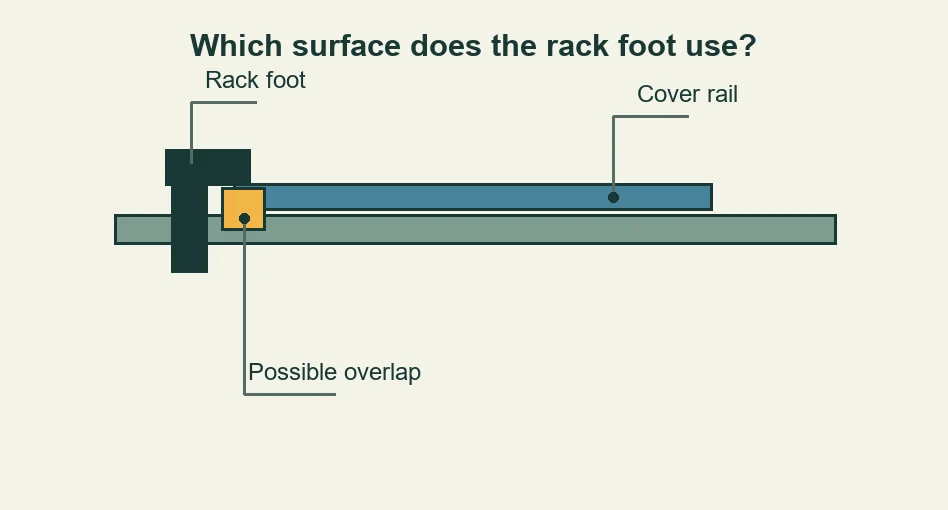
A buyer finds a rack advertised for a Tacoma and a used cover advertised for the same model year. Before assuming they work together, write down the truck bed length and factory rail package, the cover SKU and rail version, and the rack-foot part number. Search the rack maker’s instructions for the named rail and adapter.
If the correct foot is listed, mock up the bar and any downward-projecting carrier clamp above the moving cover. If the foot is not documented, the separate vehicle listings have answered only two independent questions. Send the three identifiers to the manufacturers before purchasing.
- Check built-in truck features
- A cargo-management track, side bin or special tailgate can change which bracket an otherwise correct kit needs.
- Include attached carriers
- A rack can clear the lid while a bike-tray clamp underneath the same bar catches it.
Start from the equipment that stays
Record actual vehicle configurations for Tacoma, Gladiator, Ridgeline, F-150 or other candidates. Two model years or bed packages can use different mounts even if the body looks the same.
| Situation | What to check |
|---|---|
| My current cover | Find its label and rail type, then identify a rack listing that expressly supports it. |
| My current bed rack | Get the rack-foot diagram and preserve every required attachment surface. Find covers documented to coexist with that mounting scheme. |
| No equipment yet | Choose the load carrier first, then a verified bar, tower, adapter and cover combination, checking load limits throughout. |
Document the combination
Save the truck year, bed length, cover SKU, rack and adapter numbers, bar spread and applicable on-road or off-road ratings. That record allows a future bike tray or replacement rail to be checked without starting over.