
Accessories
Ladder Racks That Work With Tonneau Covers
Both a ladder rack and a tonneau can fit a truck individually and compete for the same rail flange when installed together. Start at the front and rear feet, identify the rack's load path and then check the full movement of the cover under the ladder.
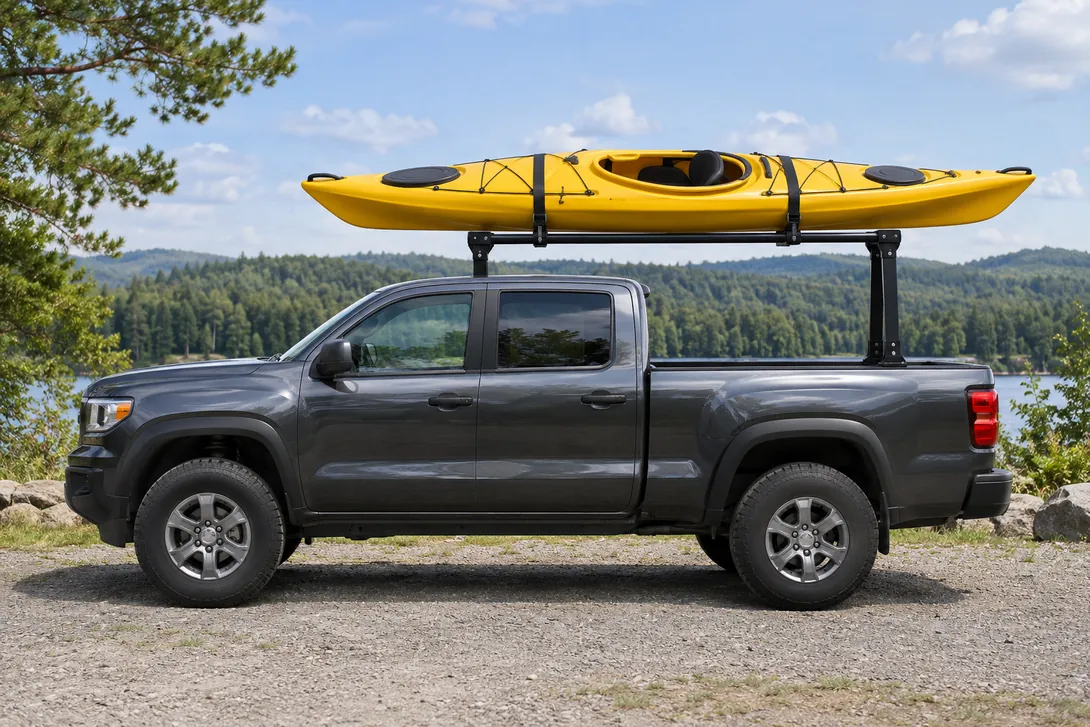
Identify the mounting system
Some racks use stake pockets or external rails. Others use feet approved for accessory tracks in a specific cover. Rail shape, approved anchors and the spacing of the uprights govern the combination. Thule TracRac and Yakima OverHaul instructions illustrate different systems. Their hardware is not interchangeable.
Draw a side view with the ladder loaded
Mark the feet, clamps, crossbars, ladder rungs and the highest point reached by a folding panel. Compare the available clearance during opening as well as when closed. Include room to attach and inspect the ladder restraints.
| Interface | Evidence needed |
|---|---|
| Rack to truck or track | Truck application and exact mounting kit. |
| Cover to rack | Compatible foot shape, clamp separation and opening arc. |
| Ladder to bars | Bar spacing, approved tie-down points and permitted loads. |
| Complete truck | Overall loaded height and remaining payload. |
Worked example
The ladder clears when the cover is closed
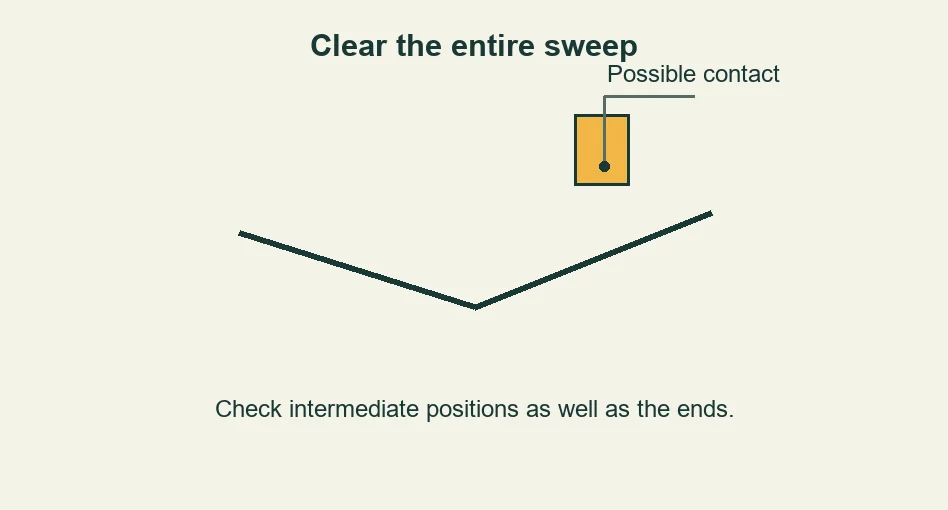
A tradesperson wants to leave a ladder on the rack while retrieving tools. The feet fit an approved mounting kit, and with the cover closed the ladder clears easily. Park the truck and use a cardboard panel outline at the hinge to check the movement beneath the rear bar.
A folded cover can hit the bottom of a bar mount before it opens far enough to reach the tools. Also mark where ladder straps normally hang and whether they obstruct the release. If the opening fails, ask about a documented alternate bar position; do not change the prescribed rack-foot spacing on your own.
- Count the adapter separately
- The rack’s bare-truck fit listing may specify different components from its cover-compatible installation.
- Measure the loaded height
- Ladder rails can extend above the crossbars or other equipment the driver is used to clearing.
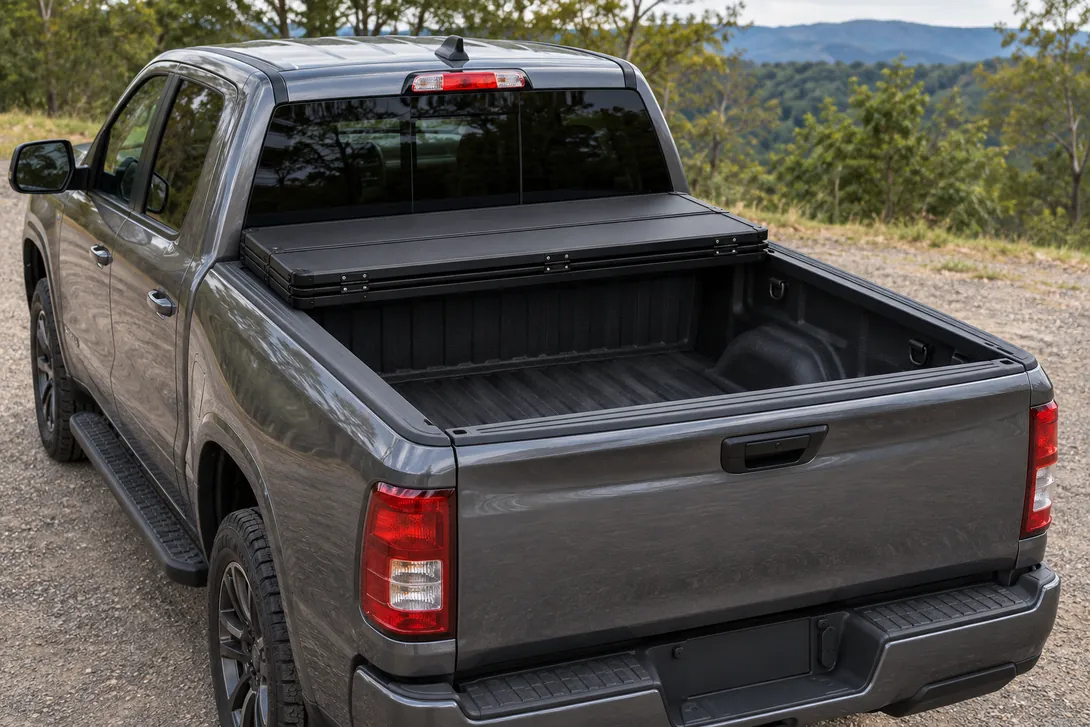
Choose the mounting question to solve first
A rated rack may have a lower limit on a specific cover or when used off road. Keep the instructions for each interface together instead of transferring the rack's best advertised figure to the finished truck.
| Situation | What to check |
|---|---|
| I already have a ladder rack | Record the rack and mounting kit numbers and ask which cover structures retain their required clamping surfaces. |
| I already have a tracked cover | Look up supported towers and adapter kits by the cover's exact rail version. |
| I need both and often open the cover on jobs | Choose a documented pairing, then test panel movement with the ladder secured in its normal position. |
Inspect the completed load
Verify all required retainers and follow the carrier and ladder securing instructions. Measure the new total height and record it in the vehicle. A cover does not restrain a ladder or protect the roof from a loose load.