
Accessories
Headache Racks and Tonneau Cover Adapters
A headache rack stands behind the cab, where many tonneaus also need a front rail, seal, clamps or a roll of fabric. Compatibility depends on the exact mounting brackets and the actual cover. A cab guard that fits the truck with an open bed may interfere once a cover is fitted.
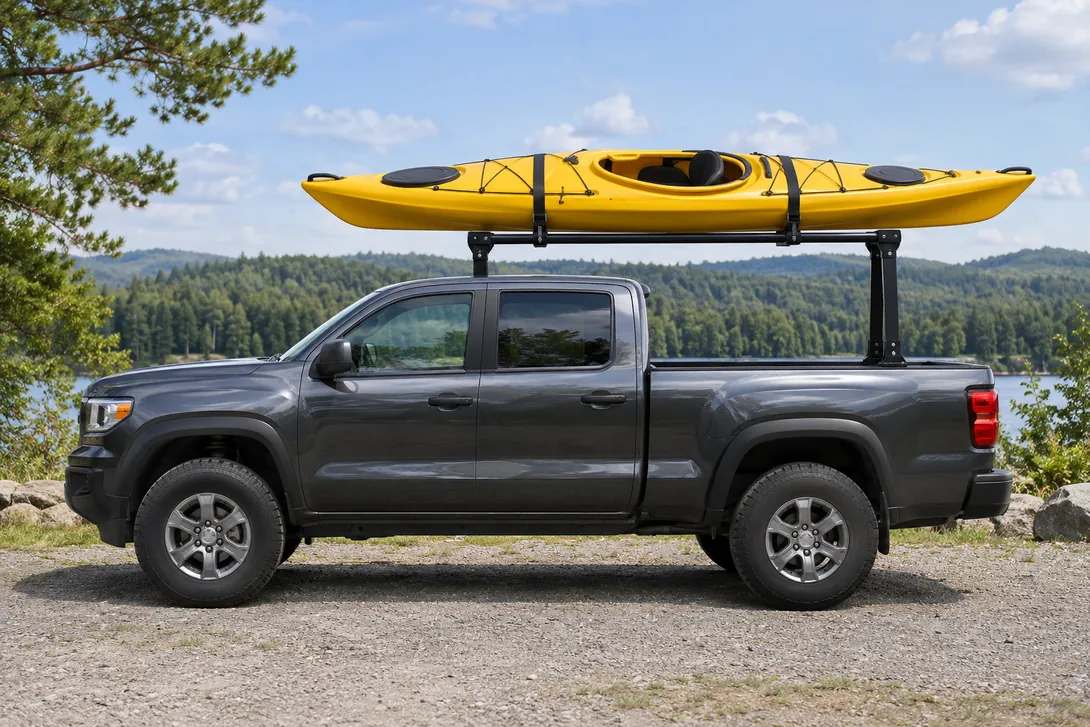
Focus on the front bed corners
Find the rack's mounting feet and the footprint of the cover. Photograph the inside and top of both corners. Open a folding panel or roll the cover fully toward the cab while parked. The top can hit an upright even when the two static mounting plates clear.
Use the adapter chart as an application list
BACKRACK publishes a tonneau compatibility chart and separate adapter installation sheets. Read the cover brand, specific type, required adapter and any qualification together. A bracket with a similar bend or slot is not evidence of equivalent loading or fit.
| Front corner check | What can interfere |
|---|---|
| Mounting plates | Stacked plates can move a clamp off its specified bearing face. |
| Bulkhead seal | A foot can create a gap, compress the seal or block a drain. |
| Stored cover | Front panel, rolled fabric or straps can touch the guard. |
| Cab-facing components | Lights, wiring or brackets can occupy the same space. |
Worked example
A guard clears the skin but crushes the front seal
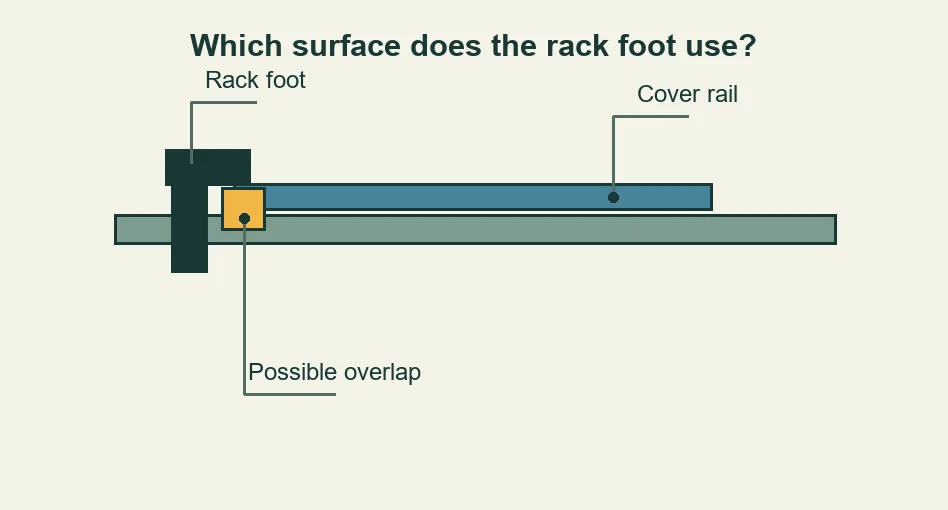
A driver adds a cab guard and notices water in a previously dry front corner. The rail and guard look separate from above, but the foot changes the height at which the cover seal meets the bulkhead. Photograph the corner and identify the guard base kit, adapter and exact cover series.
Compare the stack and application with the BACKRACK chart and its corresponding installation sheet. If the combination or stacking order is different, ask the installer to correct it. Adding foam before correcting the attachment can conceal a mounting problem and leave the cover improperly restrained. Recheck the corner after the approved installation is restored.
- Check the bundle at the cab
- The closed top can clear a guard that a rolled or fully folded assembly later contacts.
- Document wiring separately
- Lights or cable brackets can occupy the same front corner as the cover mount and drain.
Find the unknown before buying
For a generic cab guard, obtain its own compatibility and load documentation. The BACKRACK chart concerns BACKRACK equipment and the combinations it identifies.
| Situation | What to check |
|---|---|
| A BACKRACK cab guard | Locate the guard and base-kit identifiers, then find the listed adapter for the cover and truck configuration. |
| A full-length tonneau | Give the rack maker the exact cover series and rail shape. Confirm the original clamps remain usable. |
| A guard and a cover that now rub | Document the contact point through the whole motion. Have the installer check the specified adapter rather than trimming a structural foot. |
Confirm the complete installation
Verify every prescribed fastener, the cover's front seal, cab clearance and normal opening. Follow the rack maker's instructions on carrying and restraining loads. A guard by itself does not secure loose cargo.