
Accessories
Kayak Racks for Trucks With Tonneau Covers
Keeping the bed covered while carrying a kayak normally calls for a compatible rack above the bed. The cover surface is not itself a kayak carrier. Verify the bed-to-rack attachment, bar spacing, boat carrier and restraints as one supported system.
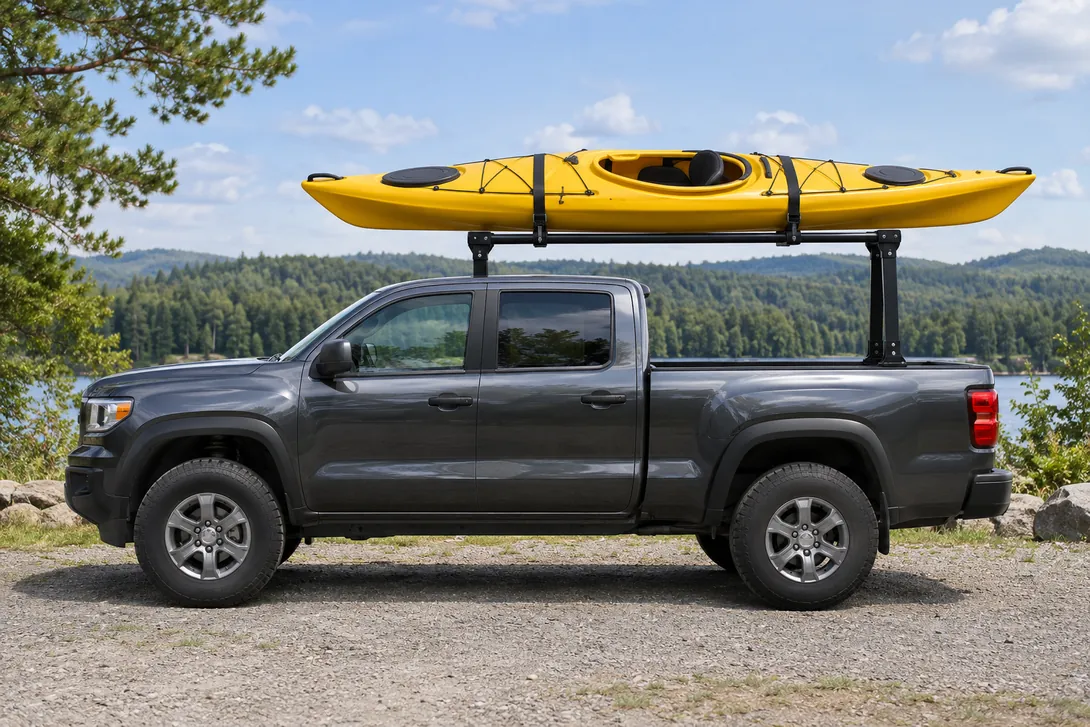
Begin with the boat
Record kayak weight, length, hull shape and width. Include the carrier hardware when calculating load on the rack. Measure how the boat will project beyond cab and tailgate and whether tie-downs can be fitted according to the carrier instructions.
Check distance between the bars
The US Yakima JayLow listing specifies a minimum crossbar spread of 27.5 inches. Treat that as a requirement of that carrier, not a universal kayak spacing. Your rack or boat can add different constraints. A short bed with fixed bar positions may rule out a particular carrier.
| Interface | What to verify |
|---|---|
| Cover rails to rack | Manufacturer-listed foot and adapter, vehicle application and load limits. |
| Rack to carrier | Crossbar section, spread and carrier attachment instructions. |
| Carrier to kayak | Boat weight, width, orientation and approved straps or lines. |
| Cover opening | Clearance beneath boat and brackets through the full travel. |
Worked example
A short bed limits where the kayak supports can sit
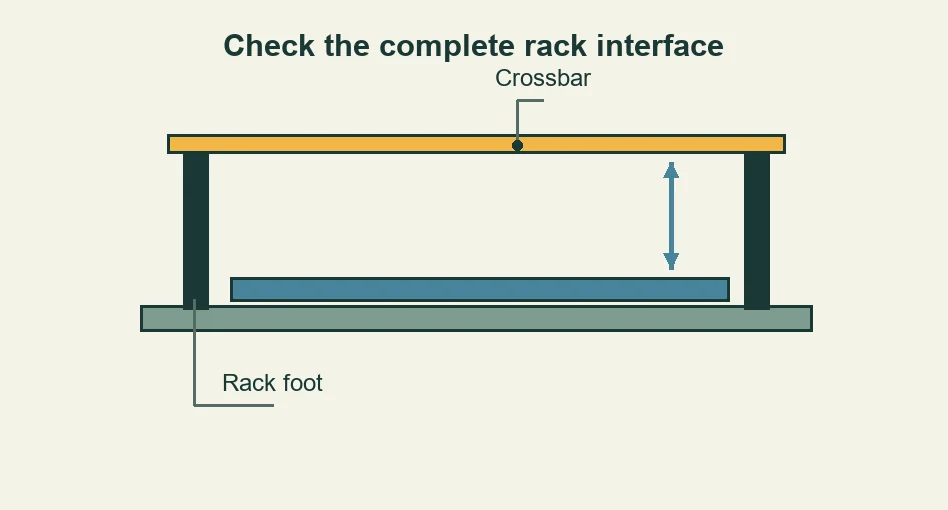
Suppose a pair of fixed bars is 25 inches apart, measured center to center. The US Yakima JayLow listing specifies a minimum spread of 27.5 inches, so that proposed carrier does not meet its stated requirement on the present layout.
Instead of separating the truck mounts beyond their approved range, check whether the rack maker allows a different bar position or choose a carrier documented for your available spread and boat. Then verify that the cradles, straps and hull remain clear through the cover’s permitted opening path. A boat that fits the cradles can still block access to gear under the cover.
- Use the market-specific carrier sheet
- A similar product name from another region may have a different published configuration.
- Check the loaded overhang
- Both ends of a long boat can extend beyond the mounting footprint and affect clearance.
Choose by the tightest dimension
Look at the J-cradle or other carrier in both loaded and folded states. Consider where the operator will stand to lift and restrain the boat, especially on a tall pickup.
| Situation | What to check |
|---|---|
| A short bed and fixed bars | Measure actual center-to-center bar spread and compare with the specific carrier's minimum and maximum. |
| A tall truck | Evaluate side loading reach, lifting assistance and loaded overall height before choosing upright storage. |
| Need dry gear access with the kayak on | Check that the cover can open below the loaded carrier and that straps do not obstruct latches. |
Finish with a documented loading setup
Secure the kayak as the boat, carrier and rack makers instruct. Follow any bow and stern line requirements and choose approved attachment locations. Record loaded height and overhang and check restraints during travel as directed.