
Model guide
BAKFlip F1 Tonneau Cover Guide
BAKFlip F1 is a rigid folding choice with a fiberglass-reinforced top surface. It appeals to buyers who like the cab-side opening of the G2 and want to compare panel construction.
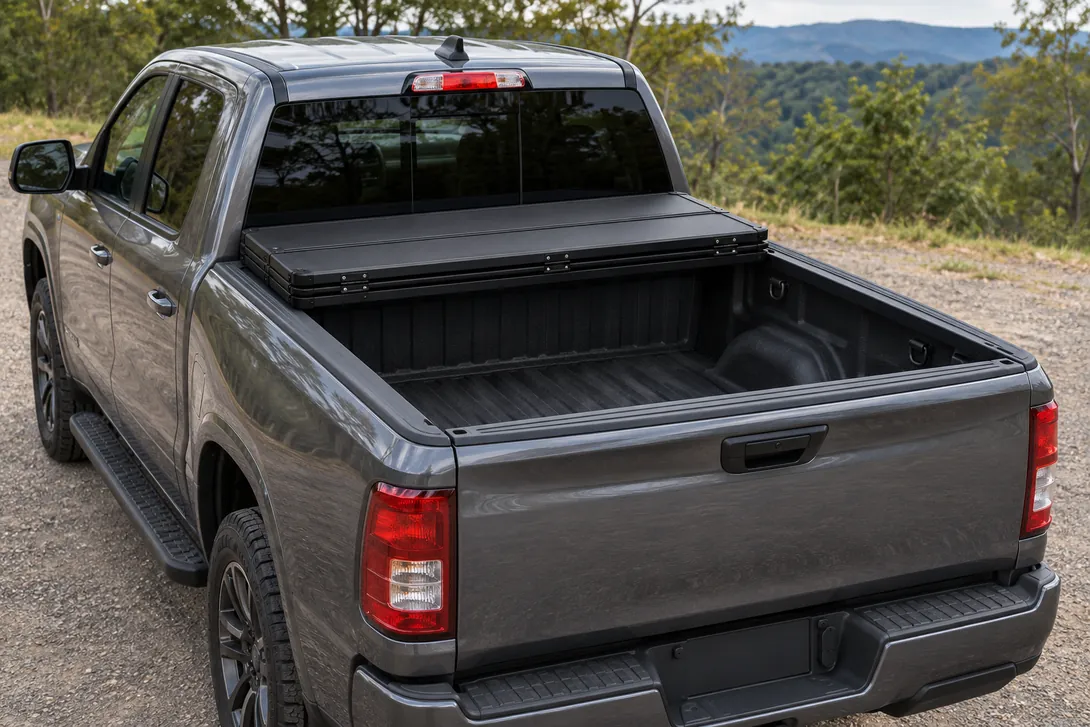
Identify the reinforced panel face
The F1 uses a reinforced-polymer outer panel face and an aluminum underside. The folding sections latch to the side rails. Check the label on a used top, since the overall folding shape resembles several BAK models with different skins and rail kits.
Match rails, supports and drain exits
Check the F1-specific part number and the truck configuration. Follow the rail drains from their collection channels to the truck exits. A cover that arrives without tubes, front seals or the correct clamp set is incomplete even if the panels themselves fit across the box.
Worked example
Moving a tall display without soaking the next load
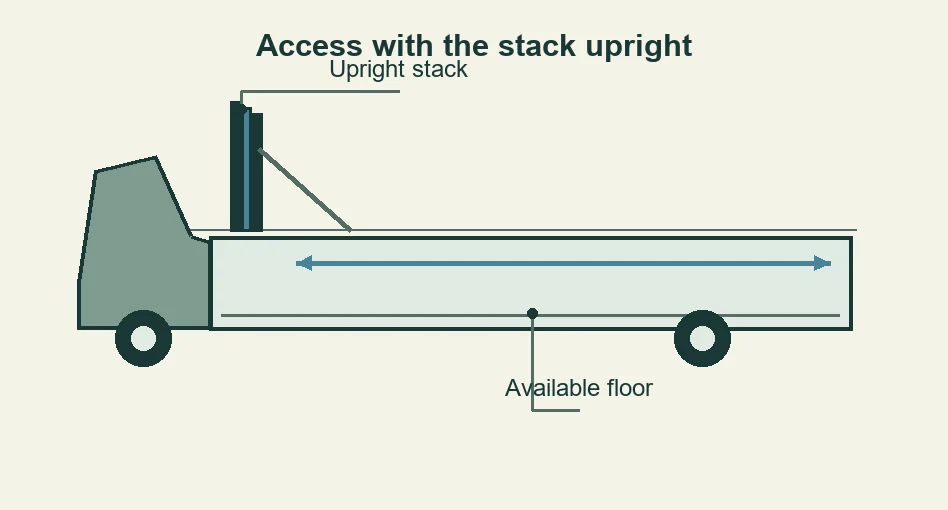
You use the bed for bagged inventory most weeks and a tall display on event days. Before loading the display, park and bring the panels upright as instructed. Use an empty footprint to check that the display can be secured without leaning on the stack or pressing the drain tubing at either side.
If the support and hose remain clear, mark the usable corners for packing. If a hose must be flattened to fit the stand, reposition the stand or follow the approved alternative drain routing for the truck. After unloading, check the channels before the next wet trip.
- Inspect the panel edge
- A damaged edge or folded seal can change where runoff enters the rail.
- Confirm the F1 number
- Match the truck and bed on the application-specific listing.
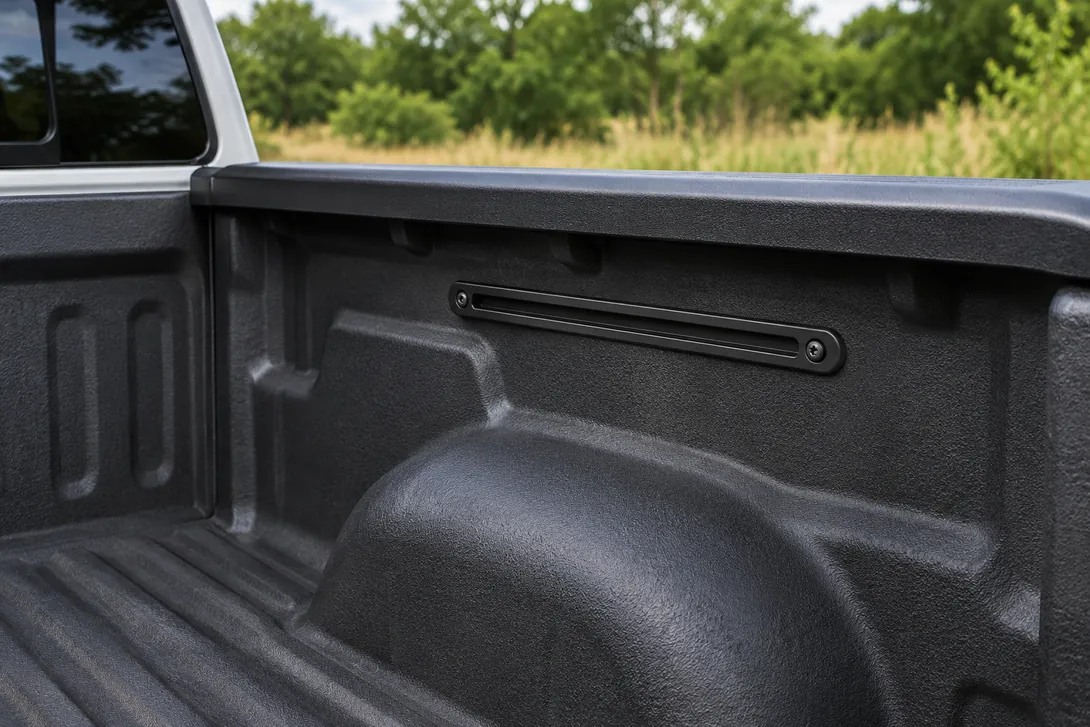
Allow for the open panel stack
For tall cargo, bring the stack upright using the designated supports. Then consider the location of the rear window, a headache rack and the tallest part of the load. Look for rubbing at the front bumpers if inspecting a previously installed kit.
- Measure or identify: Surface material and front support hardware.
- Decision check: Confirm both against the F1 series and vehicle kit.
| Situation or option | What matters | What to check |
|---|---|---|
| F1 | Reinforced-polymer outer panel face | Check coating and top edges on a used kit |
| G2 | Aluminum panel surfaces | Compare the actual hardware and mounting notes |
Compare F1, FiberMax and G2
Compare G2 for an aluminum-faced alternative and FiberMax for another polymer-faced option. Evaluate the thickness, finish and condition of the actual parts instead of assuming one material makes every cover more dent-resistant in every situation.