
Cover styles
Folding Tonneau Covers and Panel Layouts
A folding cover sets the usable opening in stages. Panel count tells you how many sections articulate. It does not tell you which one stays on the truck, whether the stack can stand upright or how securely it travels open.
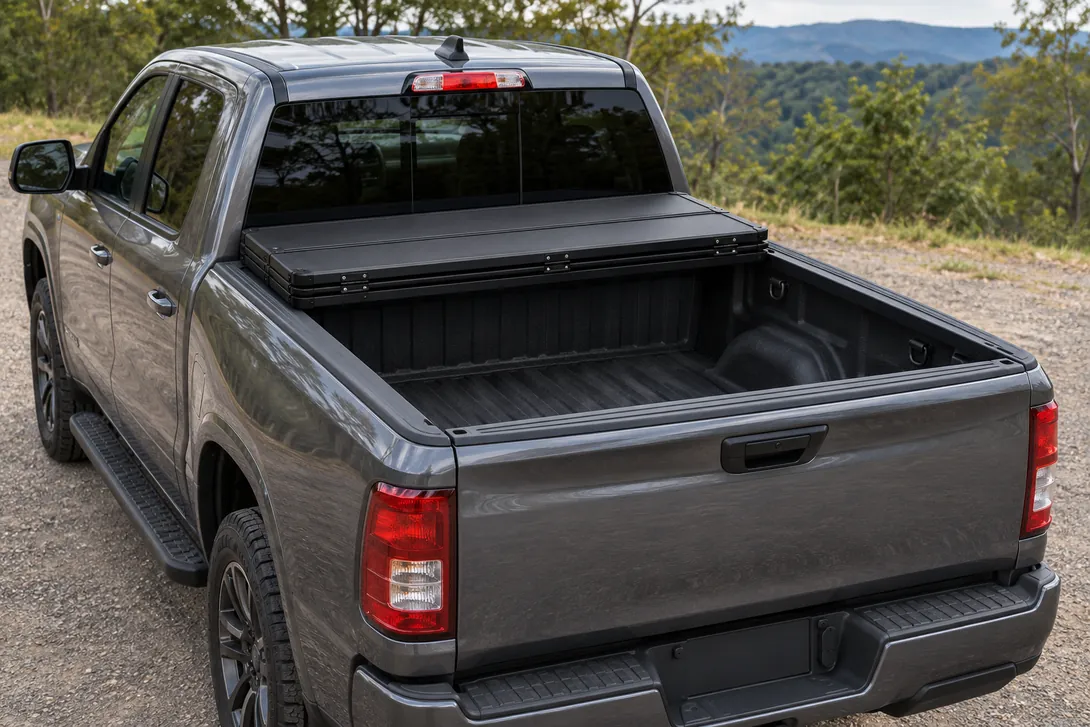
Follow the panels toward the cab
Look at the underside of the first and final hinges and the shape of the front mounting assembly. A soft fold can lift off as one light frame on some applications. A hard fold can require separate rails and props. Note any part left behind if you remove the panels.
Compare three mechanisms side by side
The Trifecta 2.0 illustrates a soft framed fold, the MX4 a hard fold with an upright position, and the LEER HF650M a quad-fold layout. Use each model's diagram to compare the open length on the truck you own.
| Dimension | Why it changes the answer |
|---|---|
| Clear opening at rail level | Tall cargo must pass through this footprint. |
| Stack height | Can obstruct the rear view or a low crossbar. |
| Final-panel position | Determines whether the front bed remains covered, upright or fully clear. |
| Release effort | Influences whether you will actually remove the cover for a short trip. |
Worked example
Opening only far enough to reach a tool
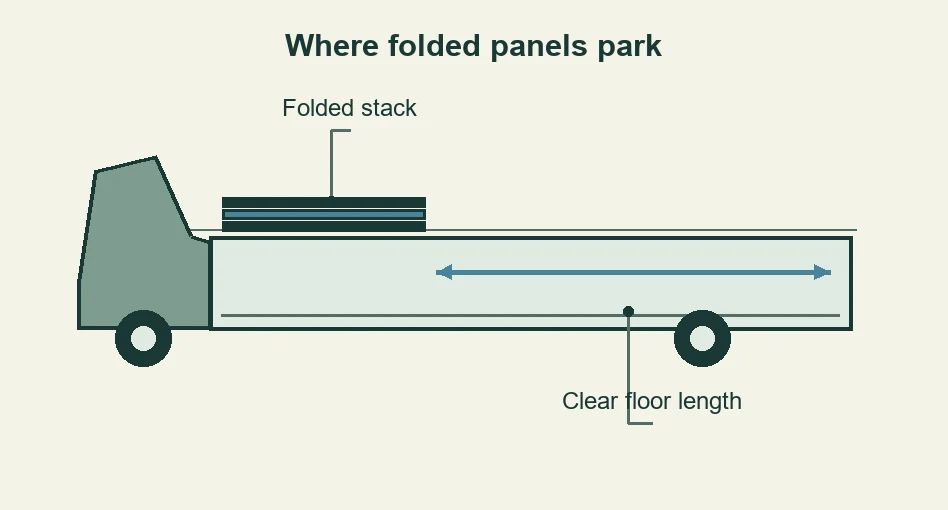
An electrician carries small cases behind the tailgate and a larger unit at the cab end only once a month. A four-panel design may expose an everyday case with a short first opening. A different three-panel cover might give better full-bed access on the occasional large haul.
Mark both cargo outlines on the same bed sketch, then compare the actual panel divisions and final support positions of each model. Count the movements and releases needed on a normal workday as well as on the monthly job. Choosing solely by panel count misses the difference between frequent convenience and occasional maximum access.
- Watch where the stack lands
- A folding stack positioned above a front toolbox can stop its lid opening.
- Record the authorized restraints
- Some driving configurations need a buckle, prop or another model-specific support.
Choose the opening you really use
Pretend you are loading the same tall object three times and shutting the bed for the drive home. Observe every place you would have to reach around a panel or store a removed part.
| Situation | What to check |
|---|---|
| Rarely, for a single large purchase | A removable frame may be convenient if you have storage and the ability to lift it safely. |
| Weekly, without storage at the destination | Prioritize a documented full-access travel position and check window and rack clearance. |
| Never, most gear stays at the rear | Compare the easiest rear-panel release, rain seal and latch check instead of paying for extra opening stages. |
Verify open-travel approval
The instructions govern how a folded stack is restrained and which positions are permitted while driving. Put those steps into your loading routine before considering cosmetic differences.