
Cover styles
Hard Roll-Up Tonneau Covers and Slat Design
A hard roll-up uses rigid sections that articulate as the cover rolls. This gives you a hard closed surface and avoids a stack of wide folding panels. The roll still needs room near the cab and the slats must engage their side hardware correctly.
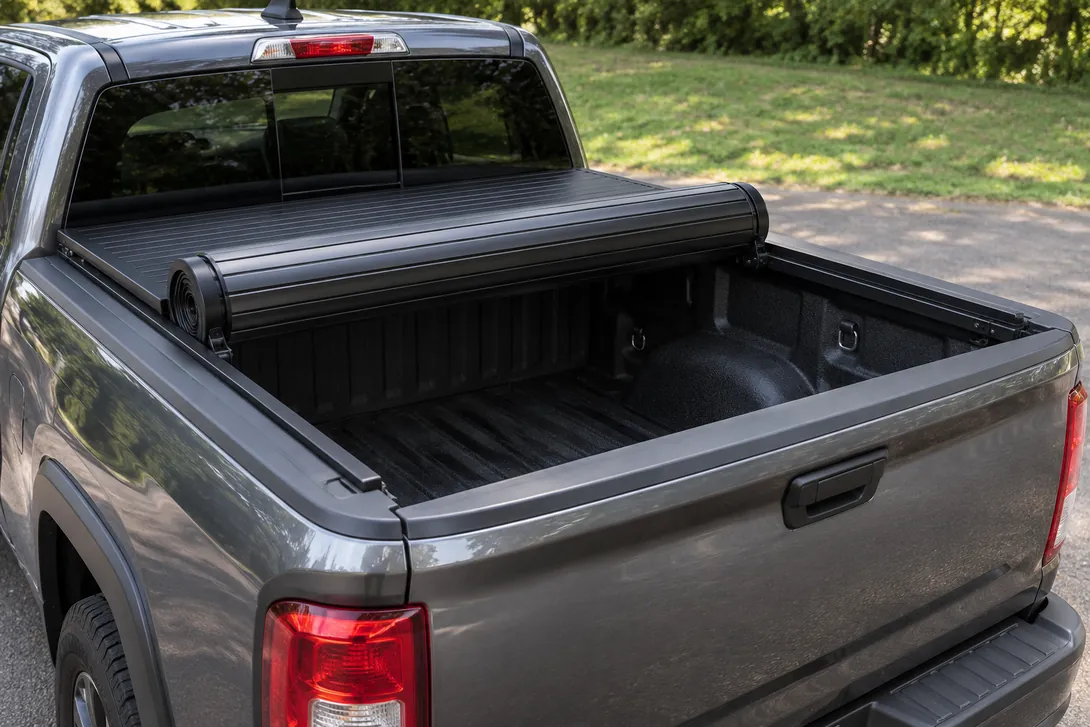
Inspect where the slats lock
Look under the rear edge and along both rails. On a BAK Revolver X4s, the rail and slat system is part of the closed-cover security design. Ask how the tailgate affects access to the release. Compare the fully closed position with the position in which the roll is restrained for travel.
Measure at the height of the bundle
The cylinder can interfere with a toolbox hinge or upright cargo while leaving space underneath for boards. A retractable canister stores in a different volume. Draw both shapes in side view before deciding which consumes less useful space in your truck.
| Point of comparison | What to check |
|---|---|
| Slat core and outer surface | How to clean the top and which surface can contact cargo. |
| Side rails | The remaining width, lock engagement and location of clamps. |
| Fully open roll | Diameter, window clearance and exact strap location. |
Worked example
A hard roll above a low front toolbox
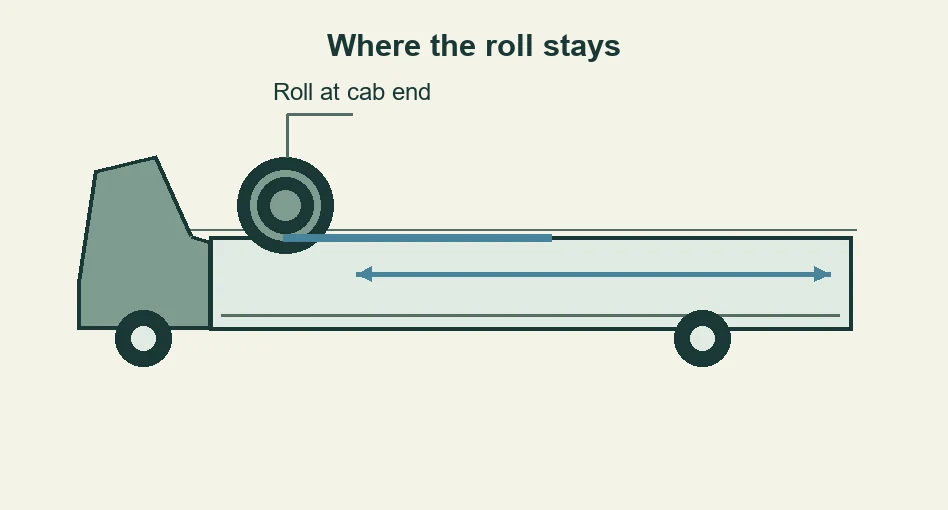
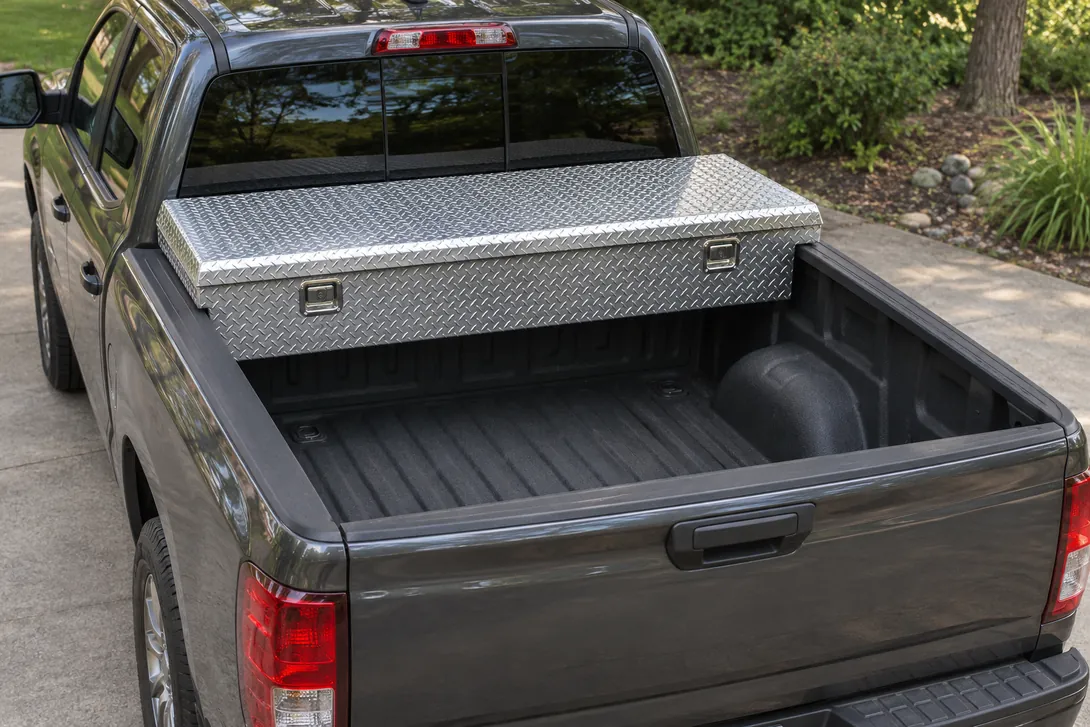
A driver wants a rigid cover without a front canister because a shallow toolbox already uses the bulkhead floor. Draw the proposed roll in its open position above the toolbox, then add the toolbox lid as a second hinged cardboard piece. The closed chest may fit beneath the roll, yet the lid can meet it long before the user can reach the bottom tray.
Try the same layout with the chest a little farther rearward. If that move takes away space needed for normal cargo, compare a different stowage pattern. Repeat the test with the hold-down straps in the positions the manual requires.
- Check the support surface
- Avoid letting a toolbox lid or handle rub the outer skin of the stored roll.
- Check the rail version
- A replacement roll and a set of side rails still need a matching series and generation.
Choose a comparison you can use
If your regular load is tall, use its outline at rail height. If the problem is valuable tools, start with the closed lock chain and tailgate. Those two checks can point to different models.
| Situation | What to check |
|---|---|
| A folding stack blocks my load | Try a roll outline at the front. It saves space only if the bundle lies outside that load's path. |
| A canister steals floor-level room | Check the underside of the rolled hard cover. Measure the actual clearance beneath it for your long equipment. |
| I want a partly open driving position | Use the operating manual for that model. A roll can sit partly open while parked without being approved for travel. |
Check the exact truck listing
A series name identifies the mechanism, not the application. Verify the year, bed length, tailgate type and rails. A used top needs its matched rails and restraints as much as it needs intact slats.