
Cover styles
Locking Roll-Up Tonneau Covers Explained
When a seller says a roll-up locks, ask what locks to what. A rear latch, full-length locking side rails and a key-operated stop at an intermediate position are different functions. The truck's tailgate may be the barrier that keeps a person from reaching the release.
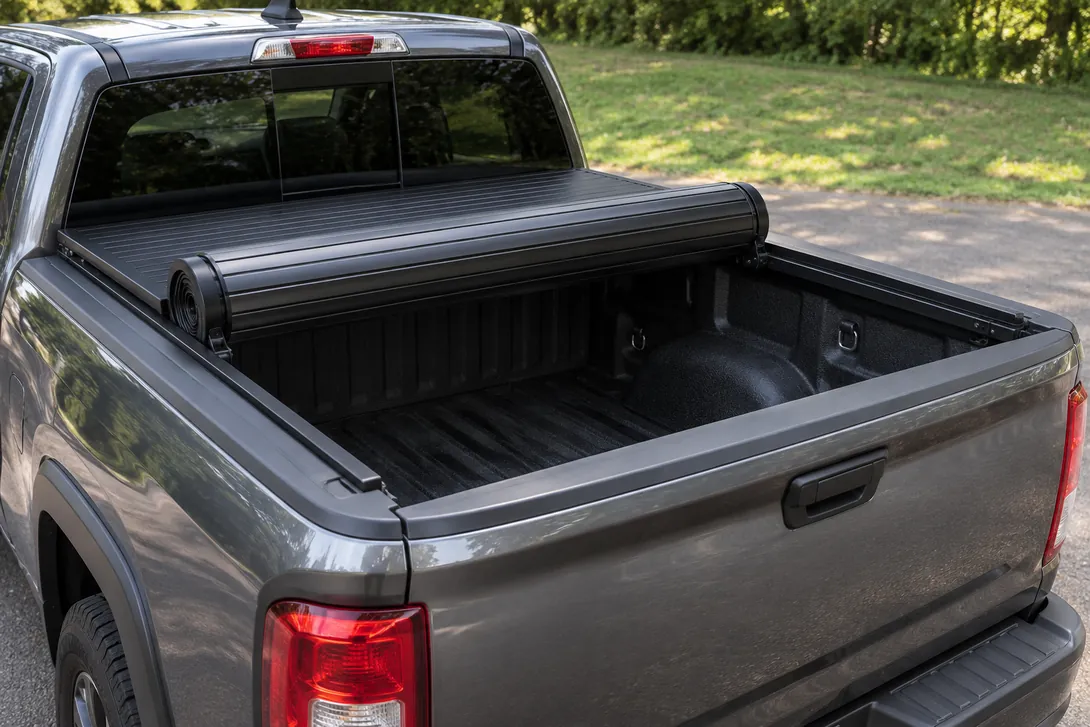
Trace the closure from one side to the other
Close the cover as the maker directs. Identify where the rear bar latches, how the edges are held down and whether an open tailgate exposes a cable or lever. A soft roll can latch firmly while still having a flexible surface. A rigid roll can engage its rails along the sides when fully closed.
Check the words against the diagram
The BAK Revolver family illustrates rigid slats with rail engagement. TruXport illustrates a soft roll with rear latching and edge fastening. A RetraxPRO XR is a retractable design to consider when lock position along the bed is the actual question.
| Claim | Evidence to request |
|---|---|
| Locks when shut | Instructions showing the cover latched on both sides and the required tailgate state. |
| Locks partly open | Manufacturer confirmation of the exact travel positions and permitted use. |
| Secures valuables | A description of the surface, edges, lock access and the remaining tailgate exposure. |
Worked example
A lock claim conceals two different requests
Imagine a landscaping truck that carries a tall object at the rear and locked tools farther forward. The owner asks for a roll-up that locks. One candidate secures the side rails when fully closed, with its release concealed by the locked tailgate.
That arrangement can serve the parked tools, yet it does not establish that the cover can lock halfway open or travel above the tall item. Write those functions as separate questions and ask for the manual page that describes each. If partial-open retention is essential, compare a system with published stop positions and confirm its approved road configurations as a second step.
- Use the owner’s closing sequence
- The position of the tailgate can affect access to the rear release.
- Ask what is secured
- Locking the handle, locking a closed rail and restraining a rolled bundle are separate functions.
Which lock function do you need?
Write down the failure you are trying to prevent. A tailgate that can be opened from outside defeats some cover-release arrangements regardless of what the cover is called.
| Situation | What to check |
|---|---|
| Hide the rear release when parked | Verify the truck has a working tailgate lock and that the closed cover prevents normal access to the release. |
| Secure the cover at a partial opening | Check the locking and driving-position instructions separately. A movable latch is not permission to travel with the cover there. |
| Replace a broken key cylinder | Identify the cover model and lock assembly. Determine whether the cylinder, complete handle or rail latch is the replaceable part. |
Test the whole closure
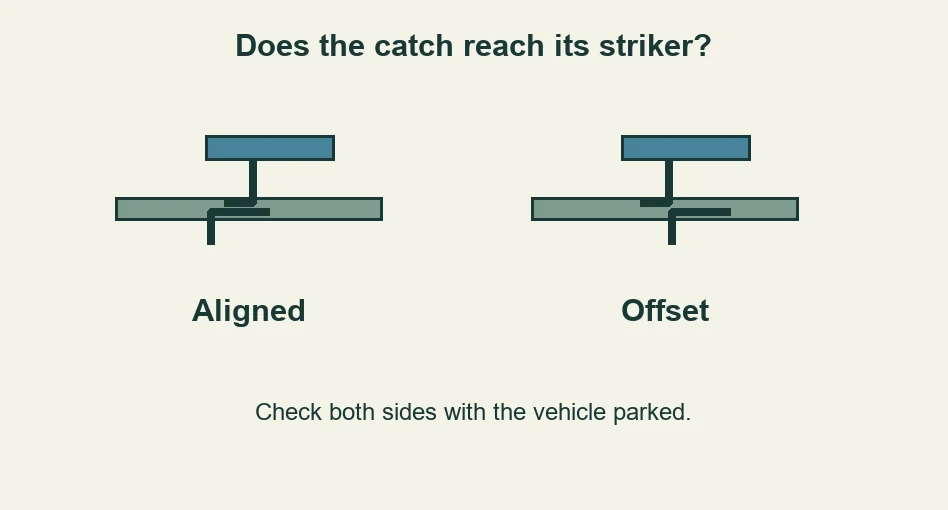
After installation, close and lock the tailgate in the specified sequence, then inspect rail engagement on both sides. An incorrectly positioned rail can leave a gap the rear lock cannot correct. Keep the manufacturer's instructions and a record of any key code in a private place.