
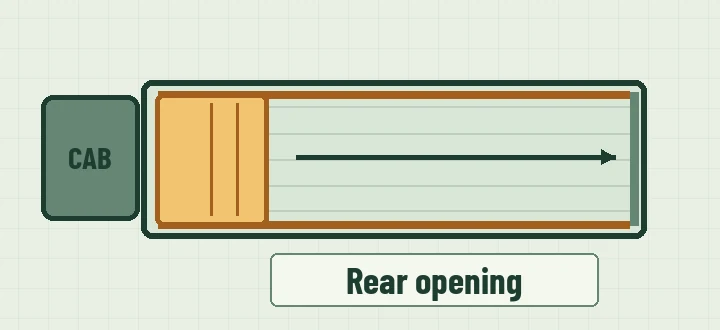
Open the cover
Load into the exposed rear area. Check how much room the folded stack takes near the cab and where the manual says to secure the cover for driving.
A removable tonneau cover lets you lift the cover assembly off the truck, although rails or brackets can stay behind. If tall cargo fits behind the folded stack, you may only need to open the cover. If it needs the full length or width at rail height, check which parts have to come off.
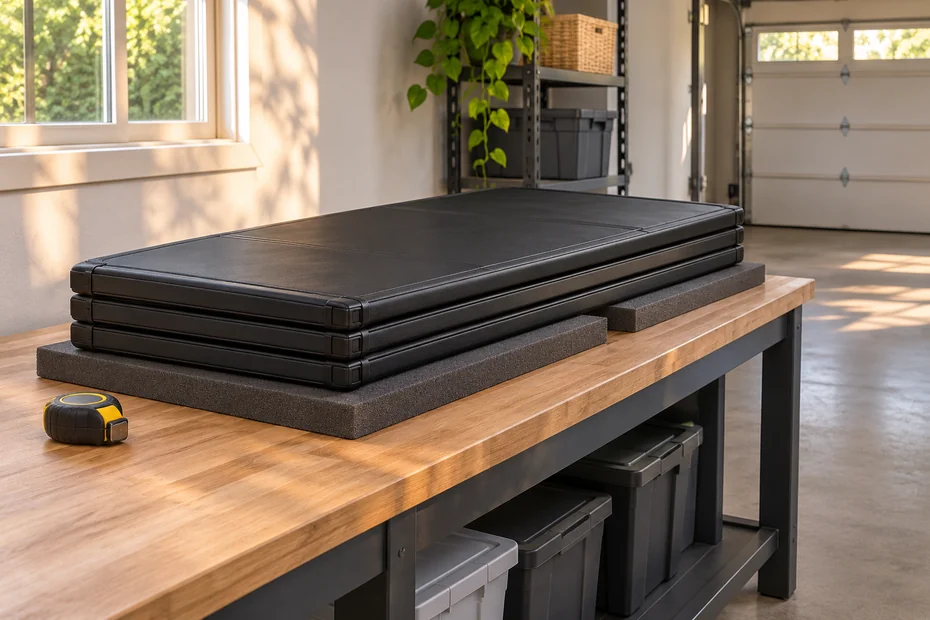
Load into the exposed rear area. Check how much room the folded stack takes near the cab and where the manual says to secure the cover for driving.
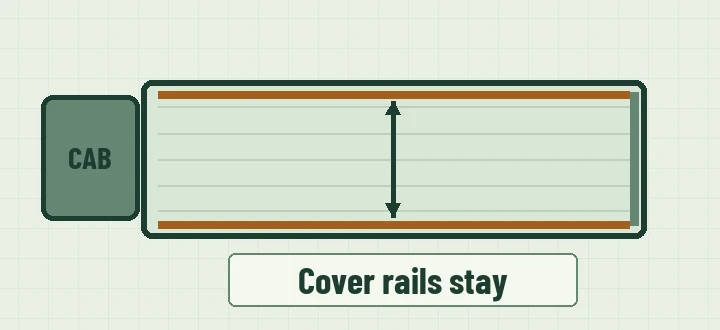
Free the area above the front of the bed. Measure the usable width between any rails, brackets or clamps left on the truck.
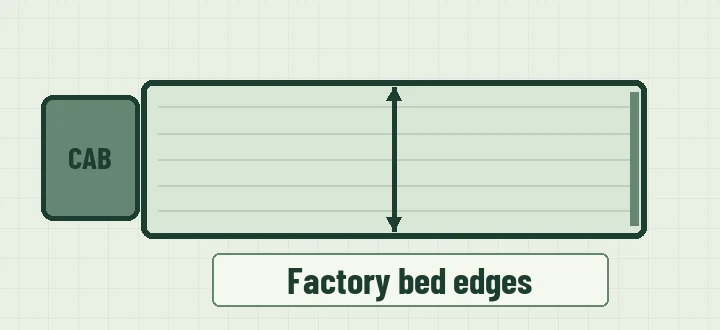
Use the model’s rail or bracket removal instructions if mounting parts block the load. Check how the work affects racks, seals or drain tubes.
Read the directions for your part number before loosening anything. Make room beside the bed, plan who will support each end, and record clamp positions when the hardware will come off too.
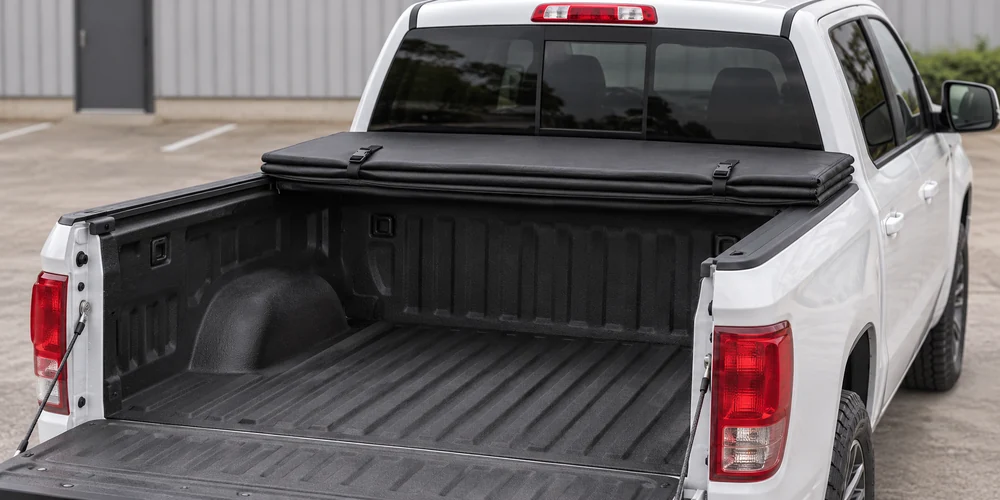
Soft tri-fold · Framed assembly
Release and stow the rear EZ-Lock clamps, then fold the cover and secure the sections per the instructions. With the folded frame supported, loosen the front Jaw-Grip clamps by hand and lift off the frame and soft cover together.
This kit clamps to the truck bed and uses no separate cover side rails. Any existing truck accessories still occupy their usual space.
Hand-operated clamps simplify release. Confirm the folded frame’s dimensions, weight and grip points before deciding how to carry it.
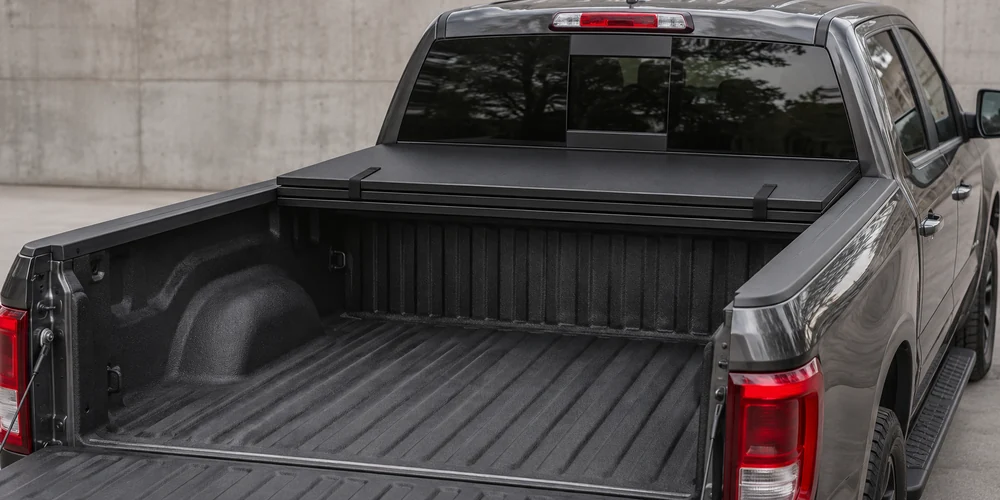
Hard fold · Panels release from rails
Release the rear latch and fold the panels toward the cab. Support the folded assembly and release the front retainer clamps as shown for your version. Gator describes taking off the panel assembly as tool-free.
Side rails, rail clamps and fitted drain tubes can stay. Removing those rail clamps is separate. The linked revision lists a wrench or socket for the rail hardware.
Measure the widest panel edge and account for handles or latches. Use the travel position and restraints specified for the kit if leaving the cover on the truck.
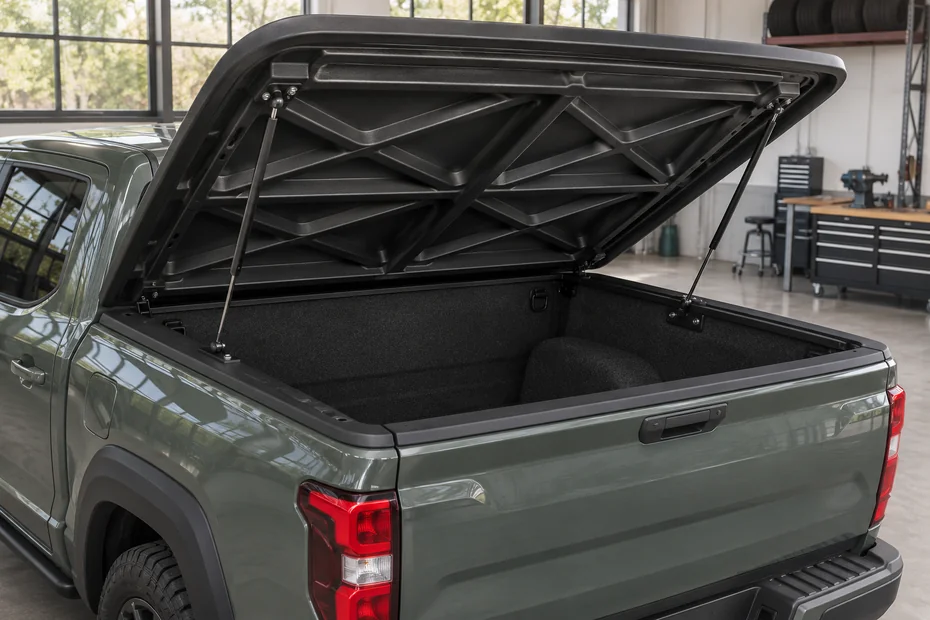
One-piece hard cover · Full-size shell
Support the shell as you disconnect and stow the struts. Loosen the hinge knobs by hand, move the lid back and lift it from the front mounting brackets as shown in the guide. Remove and store it before hauling cargo that requires the lid to stay raised.
The mounting brackets stay on the truck when the shell comes off. Check whether they cross the path of a wide load.
UnderCover lists an average of about 58 lb and recommends a second person for positioning. Plan for two people, confirm your kit’s actual weight and measure the full shell.
Measure along the actual route to storage, in the orientation you will carry the cover. Use the widest part of the assembly, including a handle, clamp or protective padding that travels with it.
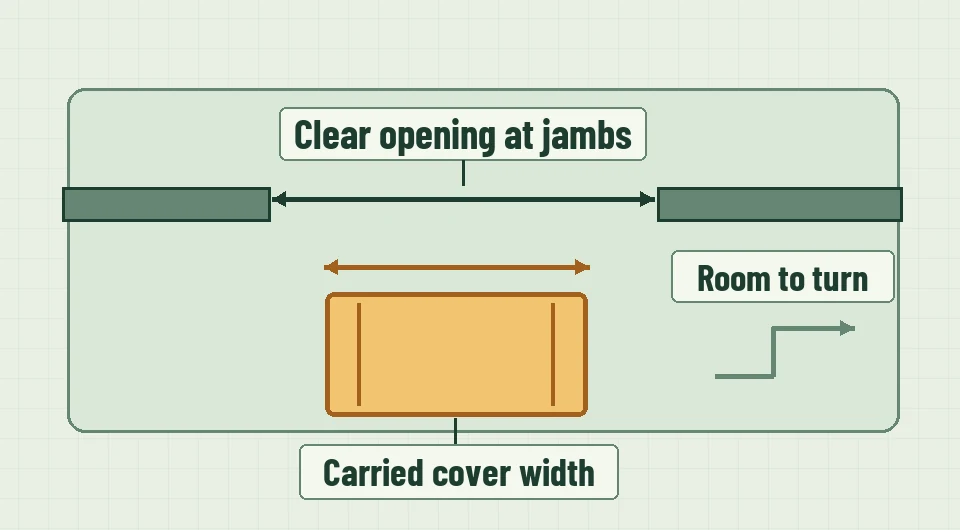
Also measure the cover’s length, route height and clear floor area at corners. Compare both length and width with the usable depth and width of the storage surface. Use stable supports where the manufacturer permits them. For wall storage, confirm its specified hooks, fasteners and mounting surface.
64 in cover, 52 in opening. The path is 12 in too narrow in that orientation. Measure another route or orientation.
64 in cover, 74 in opening. There are 10 in extra in width. Check height, turns, grip space, weight and support before moving it.