
Accessories
Transfer Tank Clearance Under a Tonneau Cover
A tank fitting beneath a closed tonneau is only a dimensional observation. Transfer tanks, in-bed auxiliary fuel systems and fuel/toolbox combinations perform different jobs. Confirm the tank is approved for the actual liquid, vehicle and installation before trying to combine it with a cover.
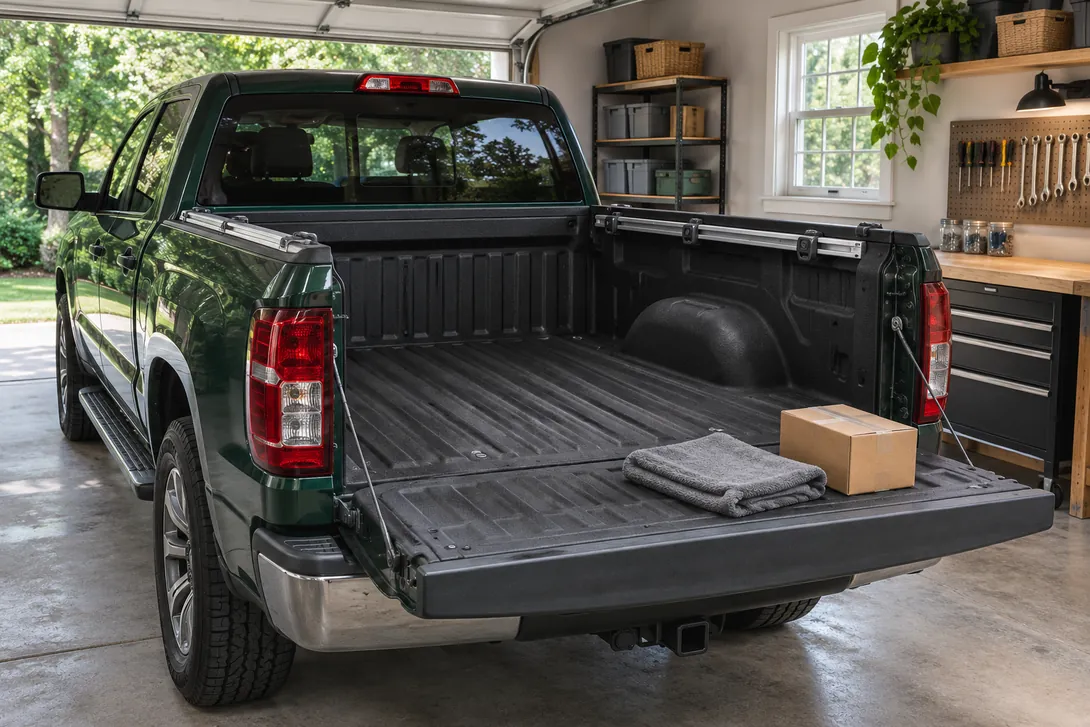
Identify the complete tank assembly
Find the manufacturer, model, approved fuel or liquid and installation instructions. Measure the tank with its pump, filler neck, cap, vent, hoses, mounts and any protective enclosure in place. Record the cover's lowest latch or crossbow above those components. Check filling and service access as well as closed height.
Make the cover part of the manufacturer's review
Transfer Flow publishes vehicle and product applications for its systems. Ask the tank maker whether your enclosure and vent conditions are approved. Do not change vents, cap height, line routing or pump locations simply to shorten the stack.
| Constraint | Whose specification to use |
|---|---|
| Liquid and intended use | Tank manufacturer and applicable vehicle or transport requirements. |
| Ventilation and filling | Tank and pump installation instructions for the exact system. |
| Mounting and service | Approved bed attachment, clearances, line protection and access. |
| Weight when full | Truck payload and axle ratings with tank, liquid and other cargo. |
Worked example
The shell clears and the pump does not
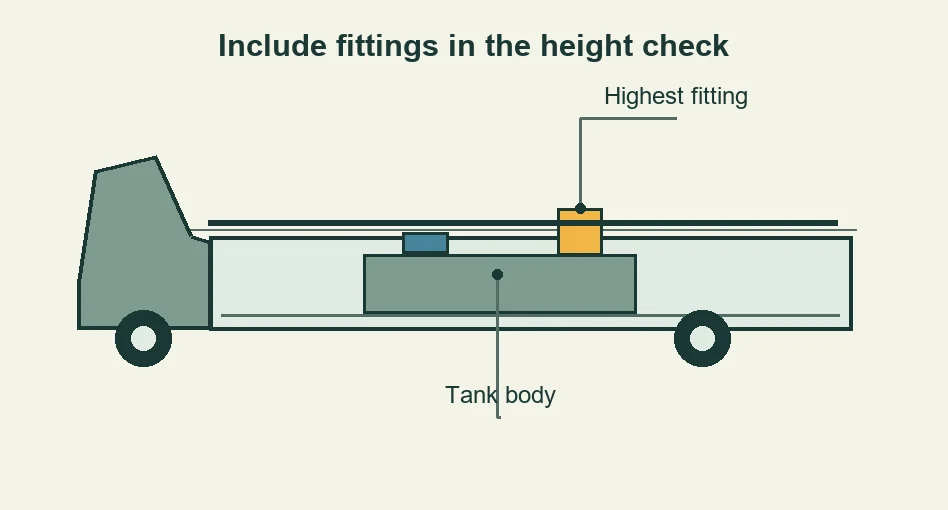
A low-profile tank shell fits below a closed bed cover in a brochure drawing. On the proposed truck, the installed pump and filler cap rise above the shell and the cover’s lowest latch projects downward. Draw those components in their installed positions, including the space needed for normal filling and inspection.
Even if the dimensions clear on paper, send the tank model, intended liquid and enclosure details to the tank manufacturer or qualified installer for confirmation. If the cap or vent collides with the lid, choose an approved alternative. Altering vent, cap or hose positions to gain clearance can invalidate the installation requirements.
- Use full operating weight
- Tank, pump, liquid, tools and people all contribute to vehicle loading.
- Distinguish tank purposes
- A transfer tank and an auxiliary fuel system can have different approved fuels, hardware and operating requirements.
Decide what remains unverified
A cover calculator can help screen height, but it cannot approve a fuel installation. Use the full model numbers when asking the tank manufacturer or qualified installer for written guidance.
| Situation | What to check |
|---|---|
| The tank fits but the cap touches the lid | Treat the setup as incompatible in that position. Seek an approved alternative without modifying the cap or vent. |
| The pump clears but becomes inaccessible | Verify fill, shutoff, inspection and service access with the cover configuration before considering purchase. |
| Enclosed operation is unspecified | Ask the maker whether this fuel, tank and enclosure combination is allowed. Keep approval unresolved until answered. |
Check the closed space
Recheck with the vehicle fully configured
Include full liquid weight, mounts, pump, cover, tools, occupants and any trailer loads in vehicle capacity checks. Use a qualified installer where required by the equipment maker or applicable requirements. Keep the approved drawings and operating instructions with the truck.