Tonneau Atlas

Fifth-wheel clearance with a tonneau cover

You can use a bed cover with some fifth-wheel setups. The best choice for your truck leaves room for the trailer to turn and tilt, keeps the hitch usable, and has a stowed or removed position allowed by the cover’s manual.

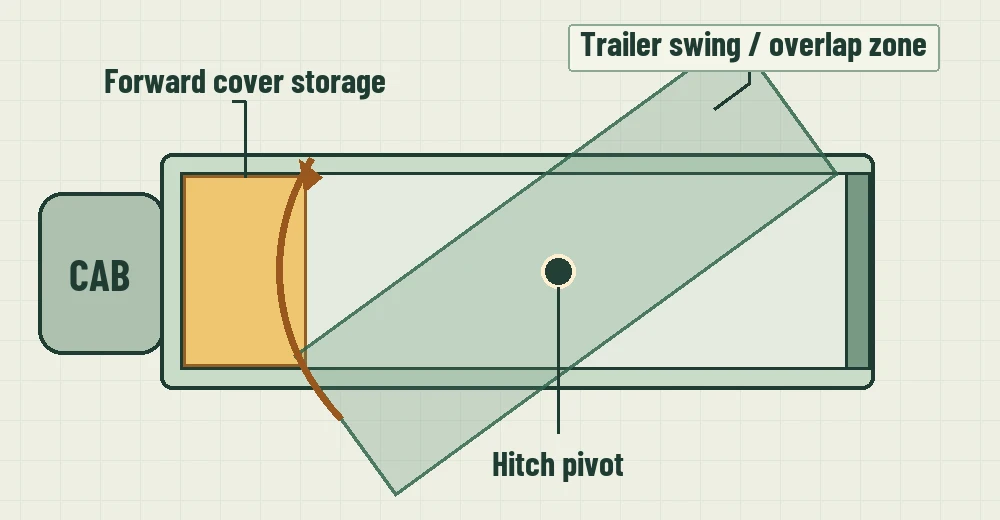
Plan view of a pickup cab and bed with the hitch pivot, front cover storage area and the part of a turning trailer that can cross over the bed.
Plan view. Follow the trailer nose around the hitch pivot and compare it with the cab and stowed cover. Schematic, with no clearance dimensions.

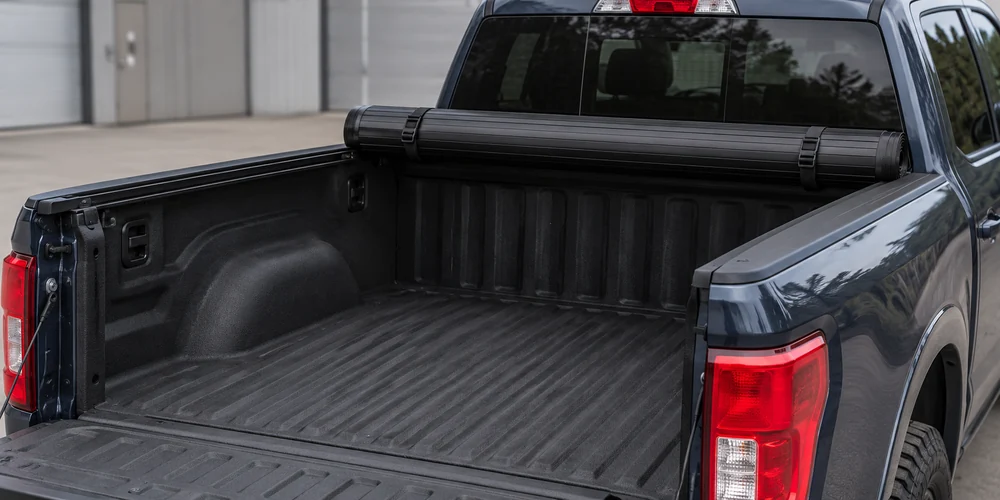
Start with your tightest spot. Above the rails, compare the height of a rolled bundle or upright panels. Inside the bed, check how far a fixed canister extends. If you need both spaces clear, compare removable covers and find out which rails or clamps remain.

Check turning, tilting and hitch access.

Straight and level shows only one position. Shorter beds, a sliding hitch, a different trailer nose or a change in grade can alter where the trailer passes the truck, cover and tailgate.

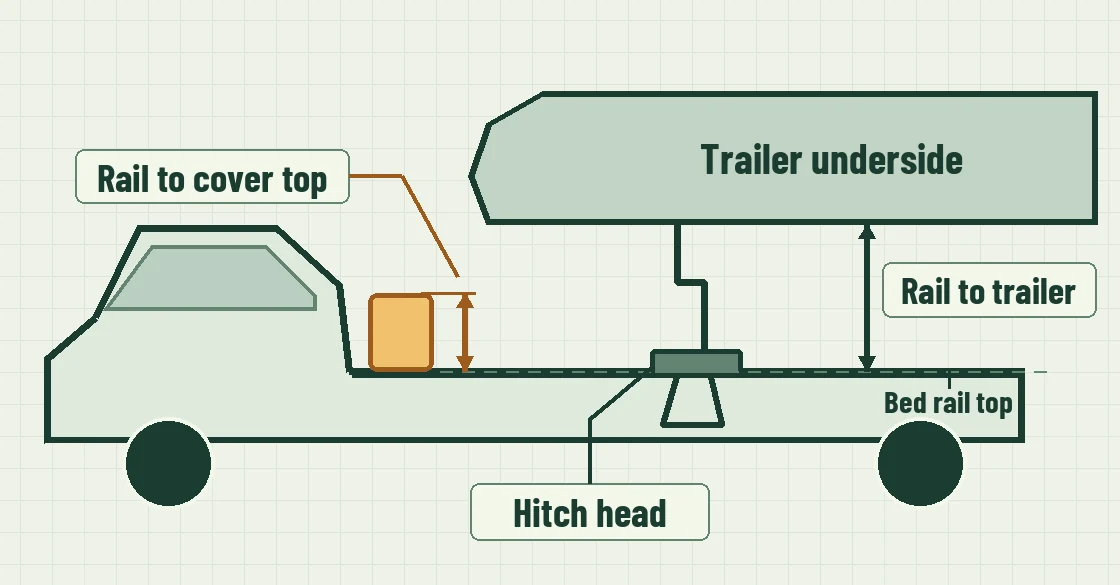
Side view of the truck and trailer front with one arrow from the bed rail up to the trailer underside and another from the bed rail up to the top of the stowed cover.
Side view. Check both heights from the same rail-top reference. Ask how the spaces change as the trailer pitches or tilts.

Compare two heights from the rail.

Identify the closest underside of the trailer over the rail, then the highest stowed cover part, including supports and latches. Review how your hitch head articulates and where the truck and trailer sit under towing load. The vertical gap can change at a driveway or on uneven ground.
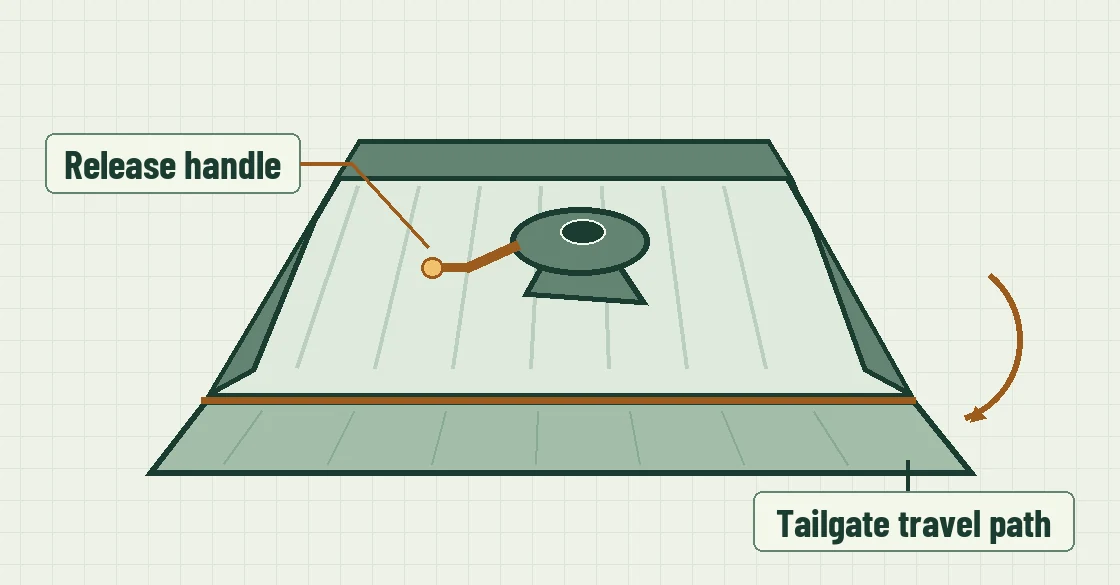
Oblique illustration identifying the example hitch release handle and the tailgate swing path at the rear of the bed.
Operating space. Find the access path for the real handle and lock, plus the opening path of your own tailgate.

Leave room to couple and uncouple.

Check that you can operate the hitch release, see or reach its lock or pin, and open the tailgate as required without fouling the trailer. Cover rails, supports and folded panels can affect access even if the trailer clears them when parked.

A fifth-wheel hitch uses a kingpin and hitch head. A gooseneck uses a ball and coupler. Take your measurements from the actual system’s manual. Have the installer or equipment manufacturers verify your setup before towing if any position or movement is uncertain.

Fit-check worksheet

Write down what you’ve observed and what the exact manuals allow. Keep the worksheet with your hitch and cover information for the installer or manufacturers.

Compare where the cover goes.

These designs put the hardware in different places. Check the exact kit, its approved driving position and your truck and trailer clearances before choosing a cover.

BAK Revolver X4s with its rigid slats rolled into a bundle beside the pickup cab.

Bundle above the rails

BAK Revolver X4s

The slats roll together behind the cab without a fixed below-rail box. Measure the stowed bundle at its highest point and check where the retainers fasten. Follow the kit’s instructions for securing the roll before driving.

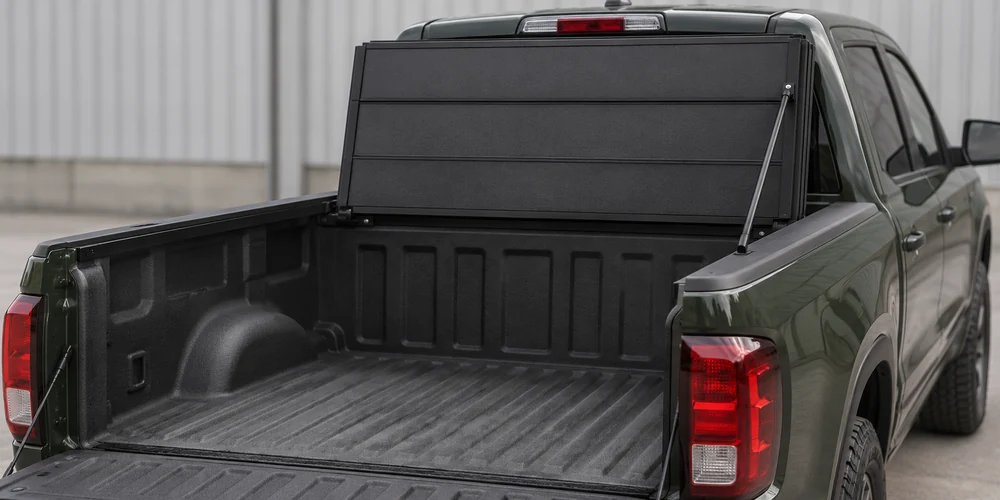
BAKFlip MX4 Gen 3 rigid panels supported upright near the pickup’s rear window.

Panels upright near the cab

BAKFlip MX4 Gen 3

The raised panels and their prop rods occupy space above the rails. Mark the highest corner and check where the trailer nose moves across it. Confirm the supported open position allowed for your exact cover.

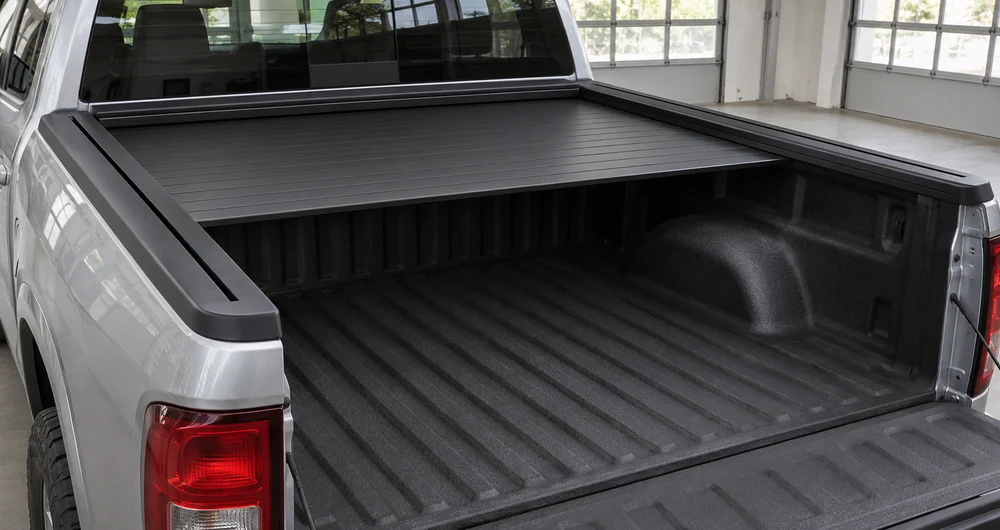
RetraxPRO XR with its slatted cover partially open and its fixed canister at the front of the bed.

Fixed box at the front of the bed

RetraxPRO XR

The slats retract into a fixed front canister. Its depth and the attached hardware still matter with the cover open. Check the exact kit’s box and rail dimensions, plus any rack feet added to its T-slots.

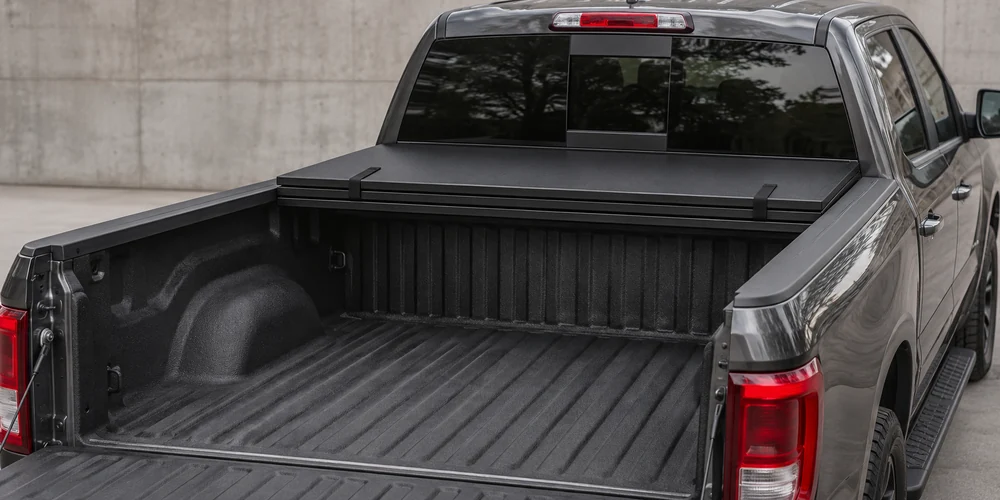
Gator EFX hard panels folded flat over the front part of the pickup bed before removal.

Removable panel assembly

Gator EFX

The panels stack flat, and the assembly can be removed following the kit instructions. Check which clamps or side rails remain installed. When hauling the detached assembly, secure it in the place you plan to store it.

Take four model numbers to the installer.

Bring the cover model and part number, truck year and bed, hitch model and mounting position, and trailer model and year. Include measured gaps, the cover’s secured or removed position, and the truck and trailer’s load state when you took the measurements.