Hard Tonneau Covers by Material and Opening Style

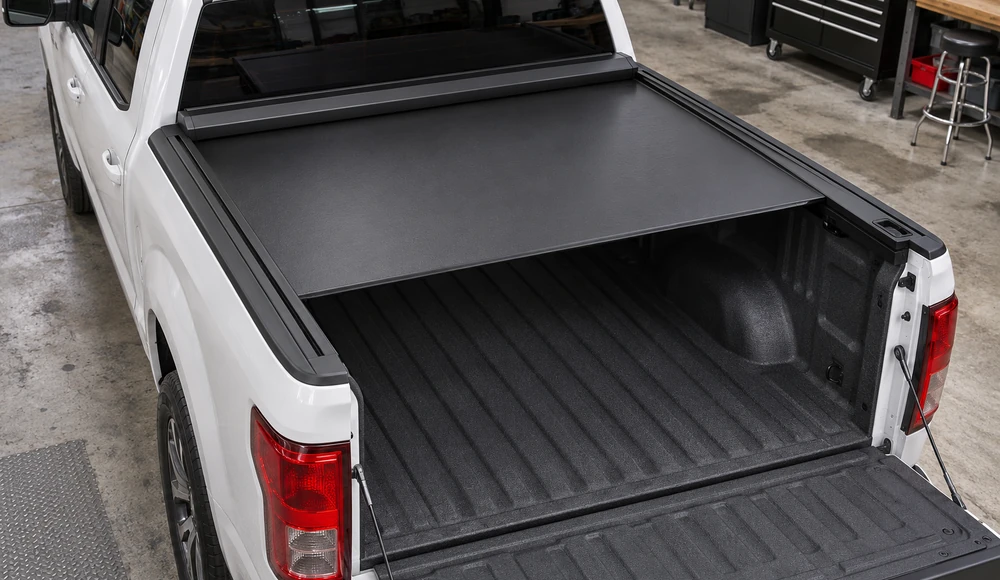
A hard tonneau cover uses rigid panels, slats or a solid lid. The deck can be metal or a rigid plastic or composite. Check the exact product’s instructions before putting a load on top.

A hard cover is worth comparing if you regularly reach for gear at the tailgate and want a rigid barrier when parked. A soft cover may cost less and be easier to handle. Check how the harder cover locks, what you would need to move it, and how much of the bed it occupies when open.

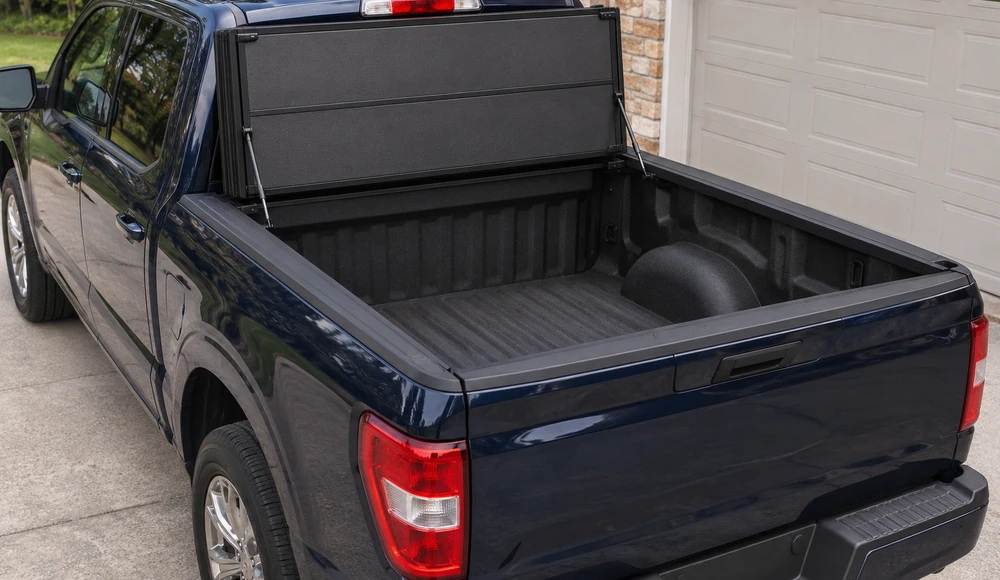
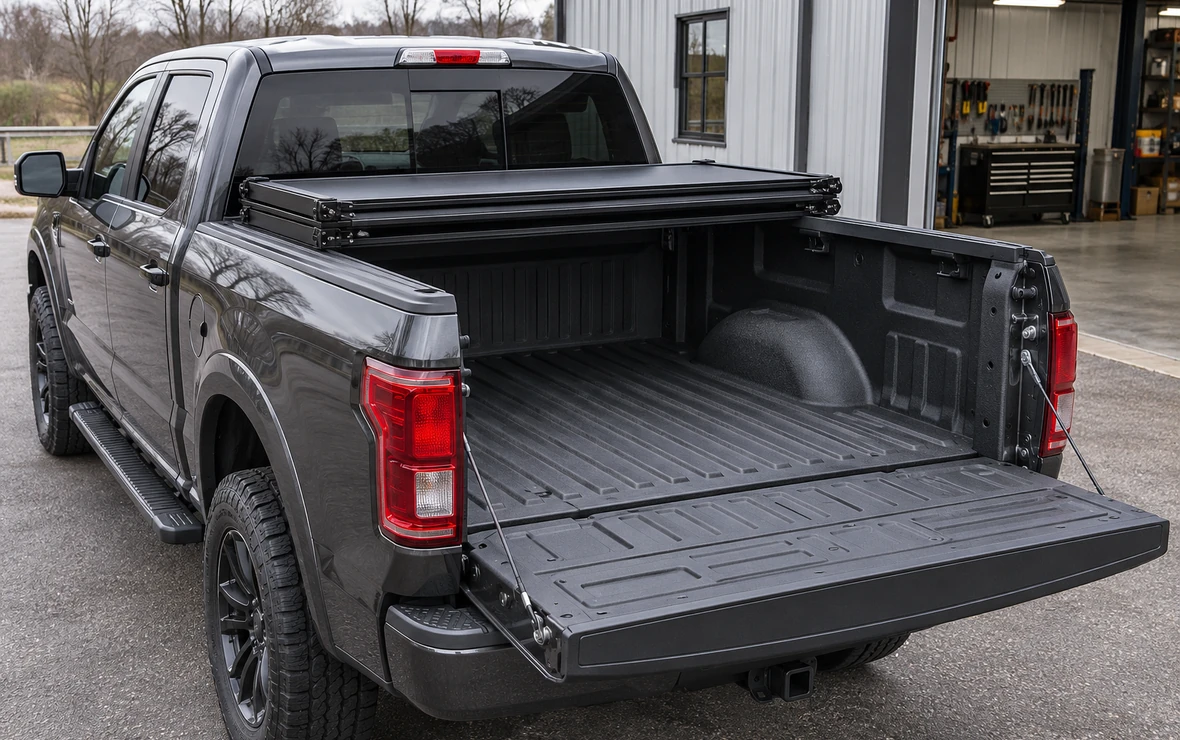
Hard black folding tonneau panels partly open, with their rigid stack near the cab and clear access by the tailgate.
How the cover stores when open changes the space you can use.

A rigid tonneau sits near bed-rail height. A camper shell or truck cap extends enclosed space above the rails for taller cargo or a truck-bed sleeping setup.

Find where the cover goes when open.

All four diagrams show the cab on the left and tailgate at the right, so you can compare the space each design occupies.

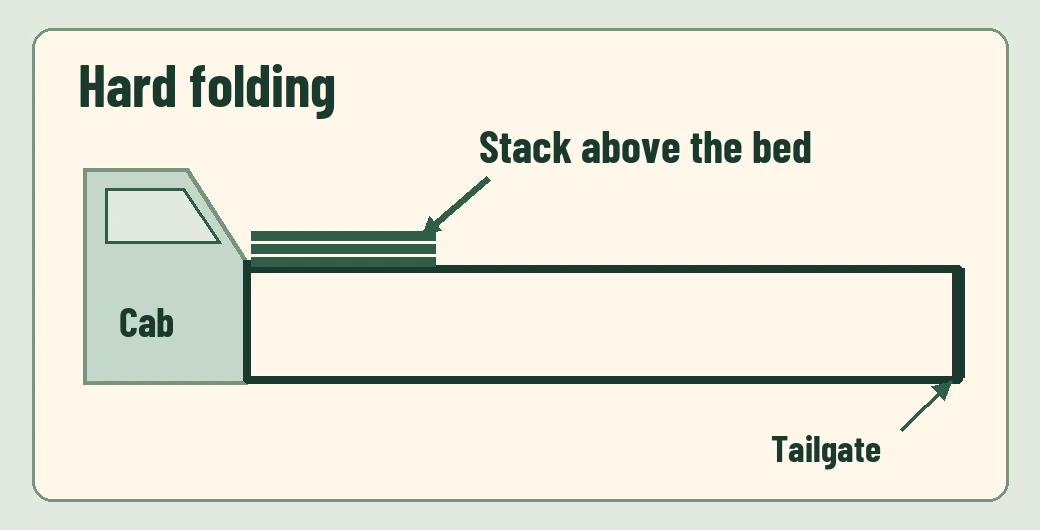
Pickup side view with several short hard folding panels stacked horizontally above the front portion of the bed.

Hard folding

Front stack above the bed

Rigid panels pile up toward the cab. A supported upright position is available on some models, with more access near the front and a different rear-window view.

What to measure. Measure how far a flat stack reaches into the bed. If the maker allows upright use, check both supports, sightlines and rack clearance.
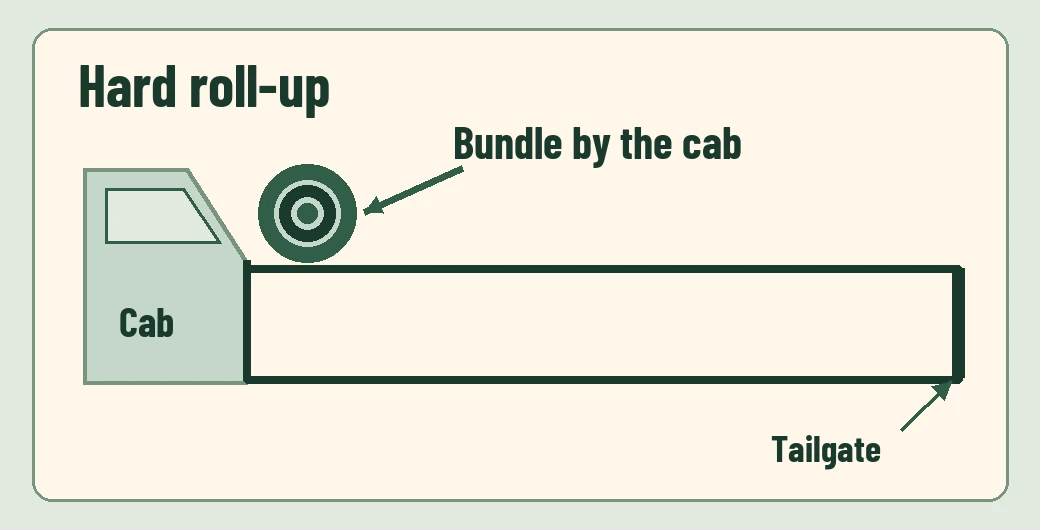
Pickup side view with a compact hard slat roll above the front bed wall near the cab.

Hard roll-up

Roll above the front of the bed

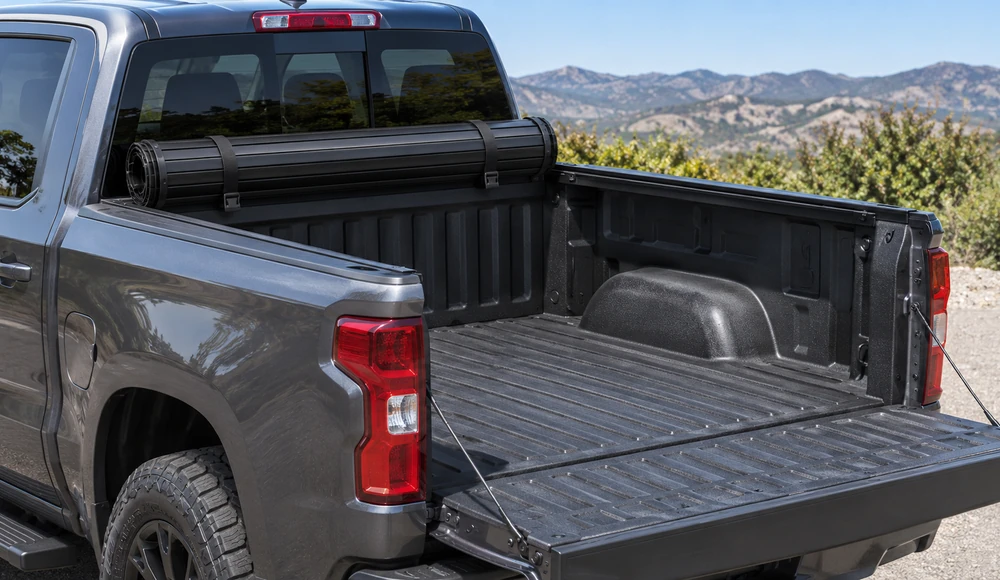
Rigid slats or linked pieces turn into a bundle at the cab. The roll stays above the front bed wall, and the box behind it opens for loading.

What to measure. Measure the roll height and depth. Locate its straps or retainers and check the view and the space beneath a crossbar.

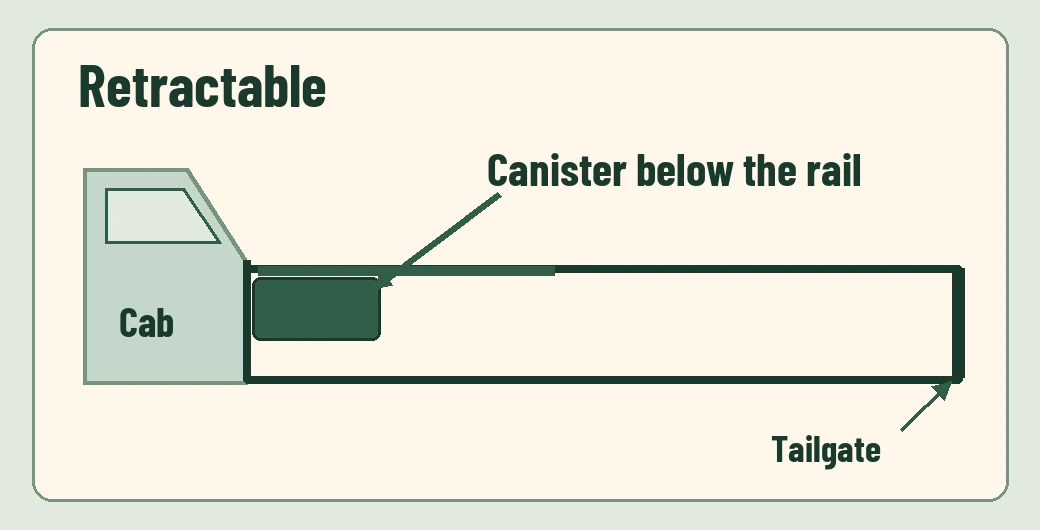
Pickup side view with a fixed canister below the front rail and a thin retracting deck.

Retractable

Canister inside the front of the bed

The deck slides through side rails into a fixed housing. Some models can stop partway. The canister and any drains take up space inside the bed.

What to measure. Measure the depth and front-to-back footprint of the canister. Check the rail width, drain placement and operating stops in the manual.

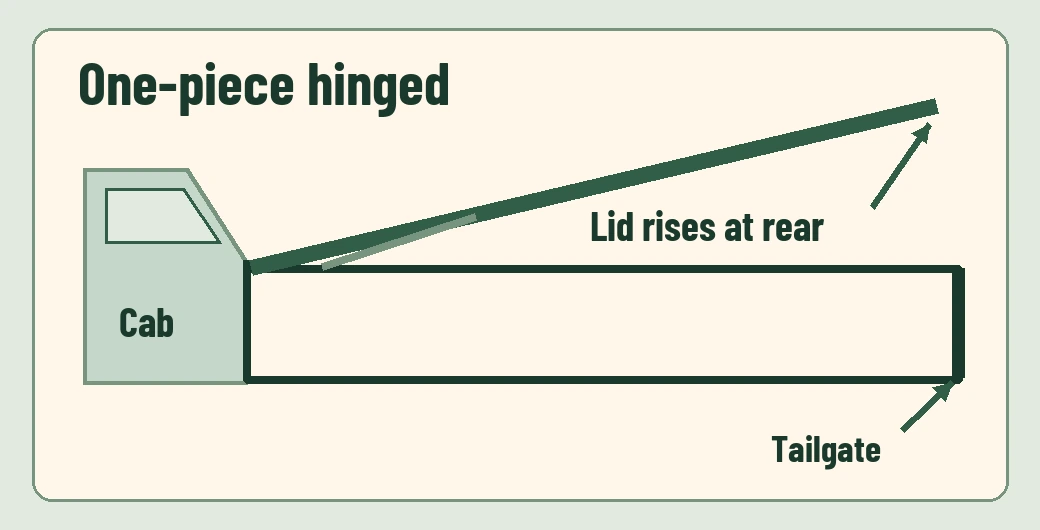
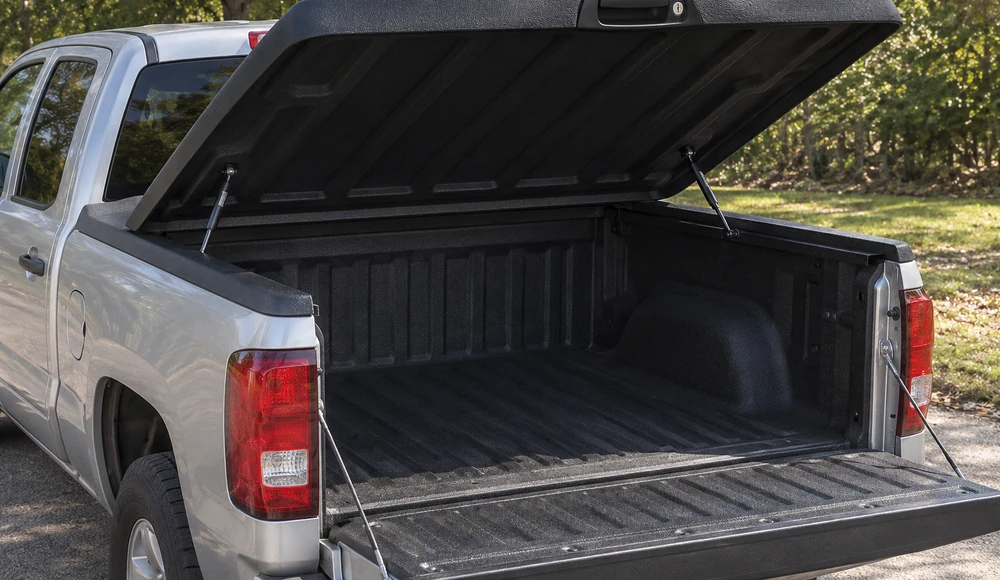
Pickup side view with an entire single lid lifting at the tailgate end from a hinge at the cab.

One-piece hinged

Whole lid rises from the rear

A rigid lid hinges near the cab, like a trunk lid. When it’s open it sits over the bed, so cargo height and the overhead path both matter.

What to measure. Measure from the raised rear edge through its full swing. If you need the bed open for tall loads, ask how the specific lid comes off and where it can be stored.

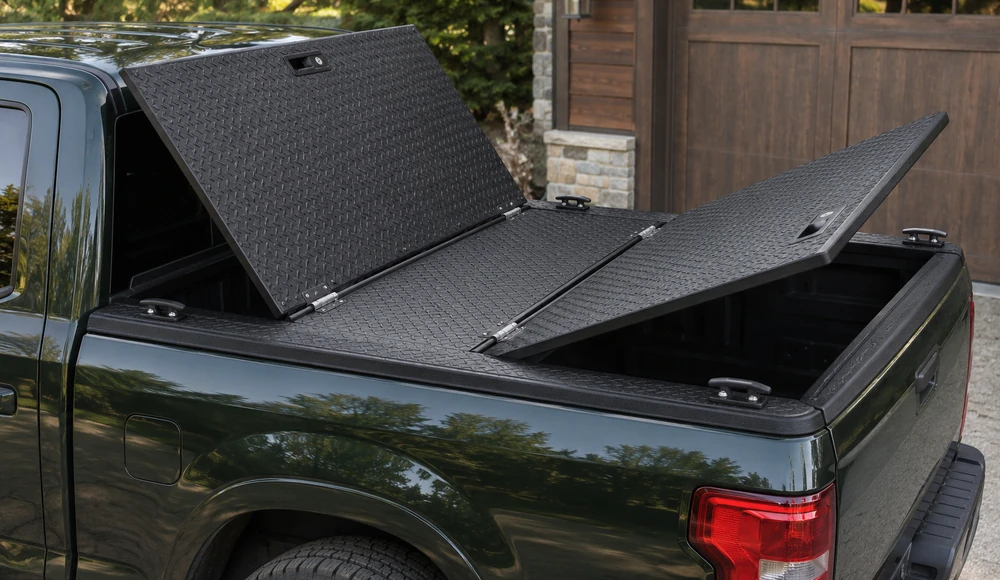
Some hard covers open from two ends. The DiamondBack SE uses a fixed center section with separate end panels, a different layout from a single full-bed lid.

Check what the deck is made of.

Terms like hard top, hard shell, rigid and metal describe different features. To verify a steel deck, look for steel in the manufacturer’s material specification for the deck skin, panels or slats. Treat steel lock rods and hinges as separate hardware specifications.

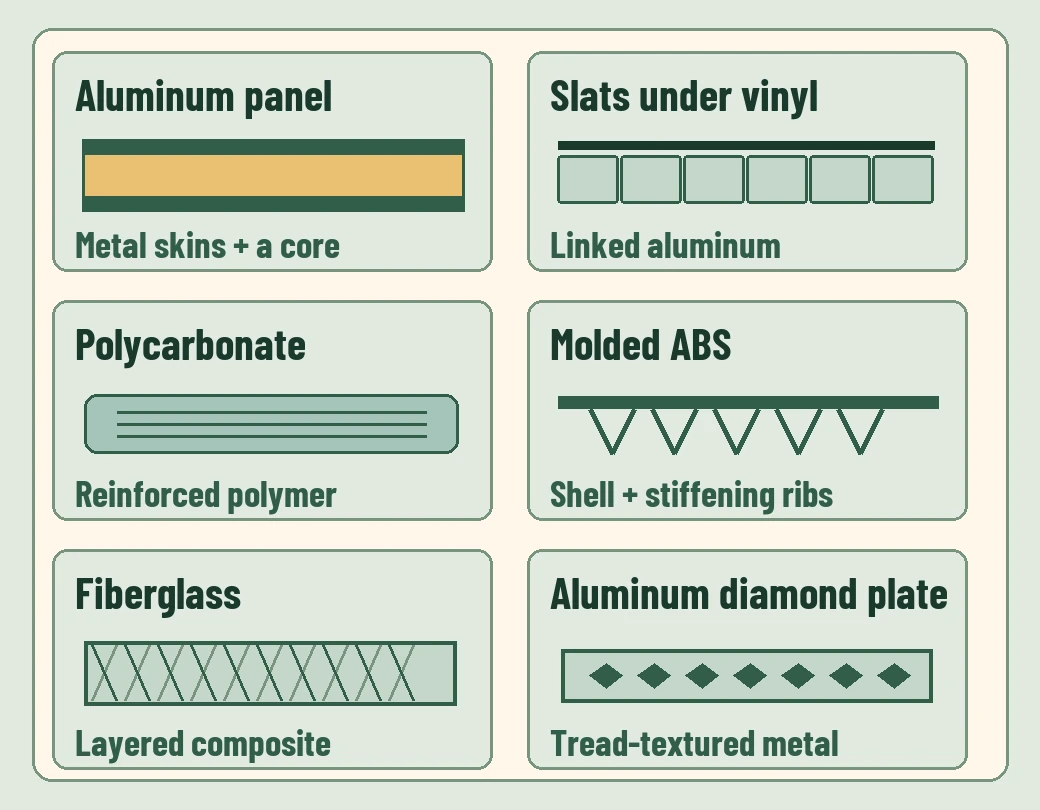
Six material sections show a layered aluminum panel, aluminum slats with vinyl, polycarbonate, molded ABS, fiberglass and tread-pattern aluminum.
A raised diamond pattern gives a surface texture. Check the material as a separate specification.
Aluminum skins and a core
A rigid folding panel can use thin aluminum faces bonded to a dense core. Inspect the edge and hinge details.
Aluminum slats under vinyl
The vinyl surface can conceal a rigid linked deck, as on the X4s. Read the slat material and how the sides lock.
Polycarbonate
Some retractables use a continuous rigid polymer deck reinforced with metal. RetraxONE XR is one example.
Molded ABS
A one-piece lid can be molded with ribs for stiffness. UnderCover Elite uses a textured ABS composite shell.
Fiberglass
A painted one-piece lid can be a fiberglass composite. A.R.E. identifies LSII as a fiberglass cover.
Aluminum diamond plate
Raised tread describes the texture. DiamondBack SE uses aluminum for the deck and steel for certain locking hardware.

Four checks before you spend.

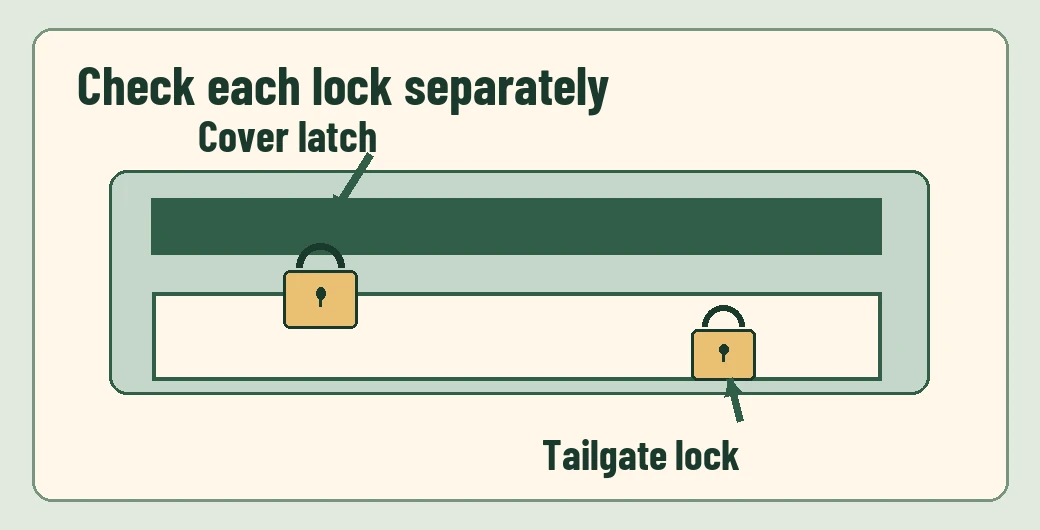
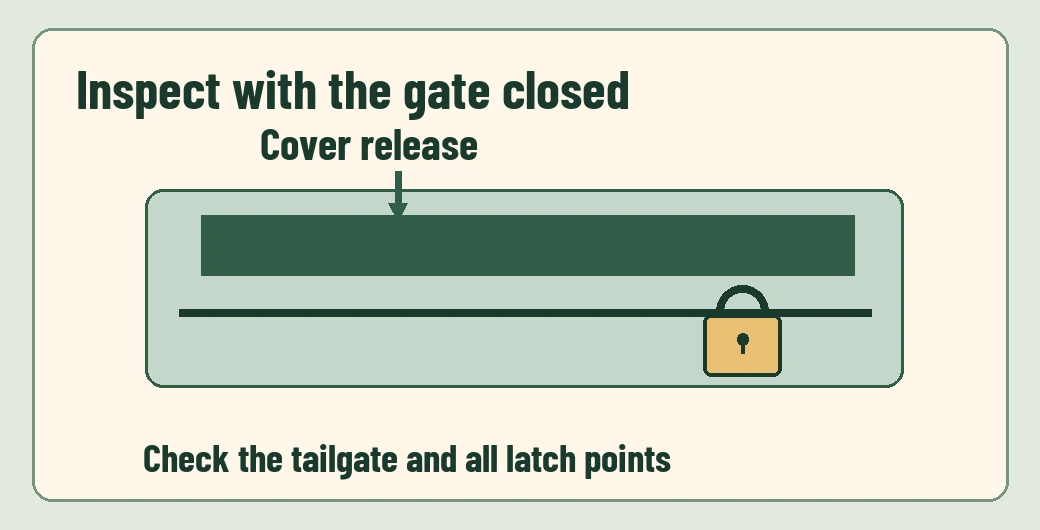
The outside of a locked tailgate below independent cargo cover latch points.

Check the closed tailgate and the cover latch

Some covers depend on a locked tailgate to restrict access to the release. Others have their own key cylinder. Ask which latches engage, whether the tailgate locks and whether the release can be reached with the gate closed. Hard panels hide gear and can slow casual access. Take valuable equipment with you when the truck is unattended.

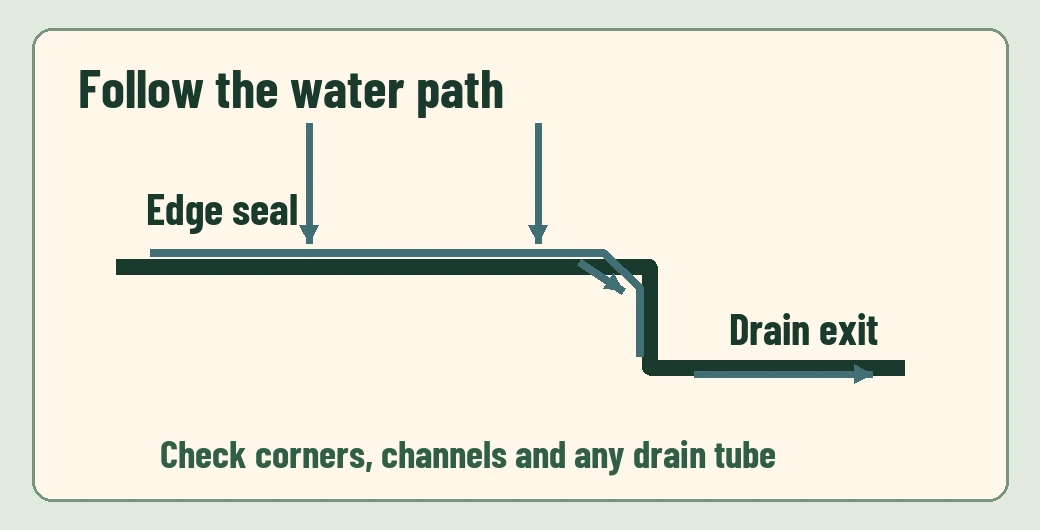
Side and rear corner view of a rail seal, runoff channel and optional drain tube.

Follow where the water goes

Trace the perimeter seals, corners, hinges and any drain tube outlets. A retractable cover may drain from its canister, while other designs shed water outside the box. Storms or a pressure wash can send water around seals. Use a dry container for gear that must stay dry.

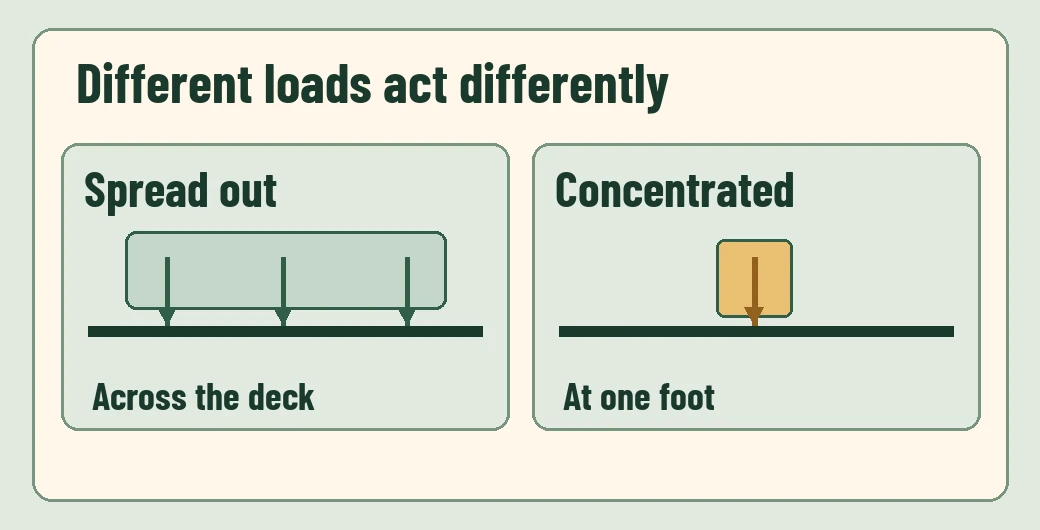
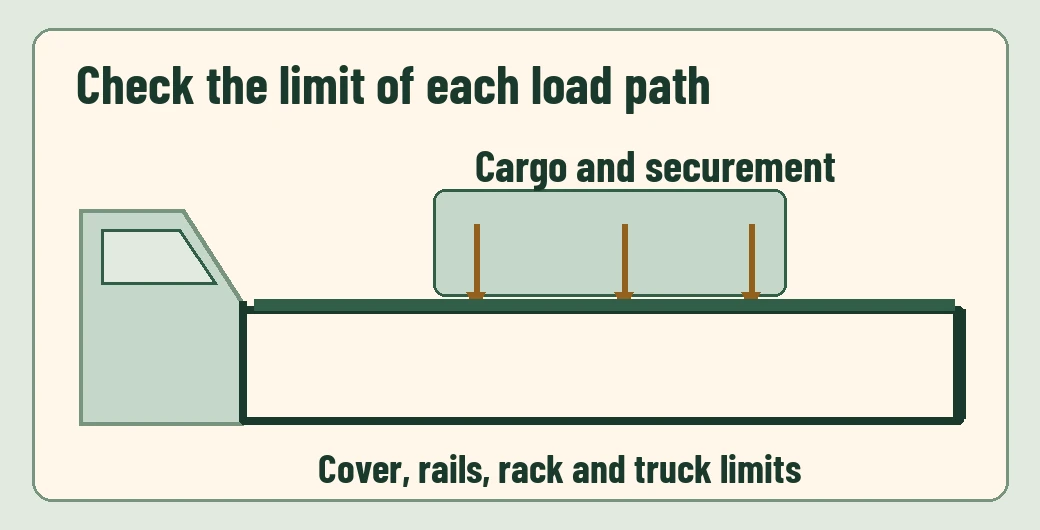
A wide spread load, a small concentrated foot and a rack with a separate load path.

Find the rating for the way you’ll carry it

Track loads on the cover, rack, bed rails and truck separately. Check the manual’s moving limit, load distribution and tie-down requirements. A parked rating cannot substitute for the road rating, and a supported rack foot is a different load path from a load directly on the cover. Keep the complete setup within its lowest applicable limit.

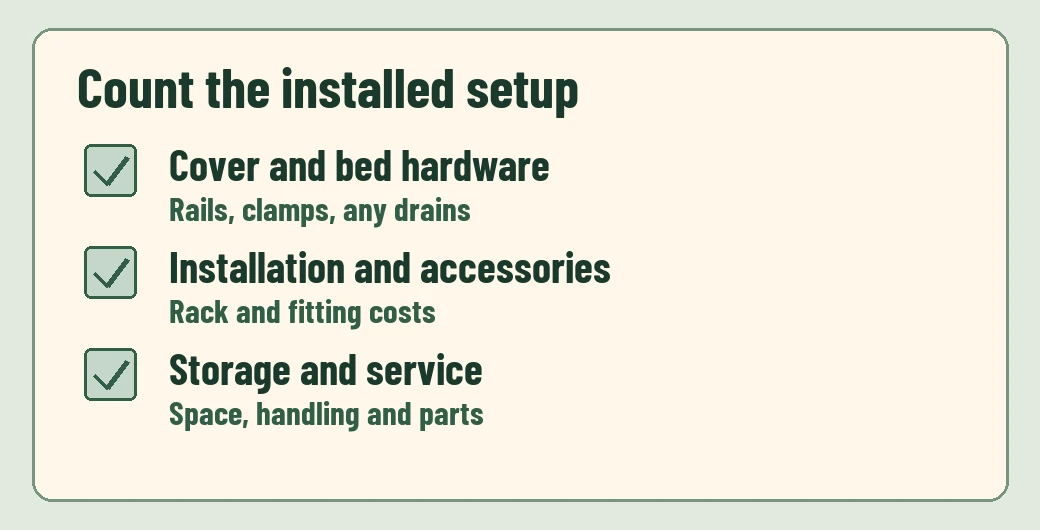
A cover purchase checklist showing mounting rails, storage space and replacement hardware.

Price the whole setup

Compare the cover plus any needed rails, drains, paid installation, rack hardware and replacement parts. Plan where to put a removed lid or stack and how to carry it. If initial cost and easy handling matter more than a rigid deck or a specific lock, compare soft covers before committing.

Start with how you’ll use the bed.

Choose your first priority, then add any rack or load-rating detail that matters. Use the result to decide what to measure on the truck and which instructions to read.

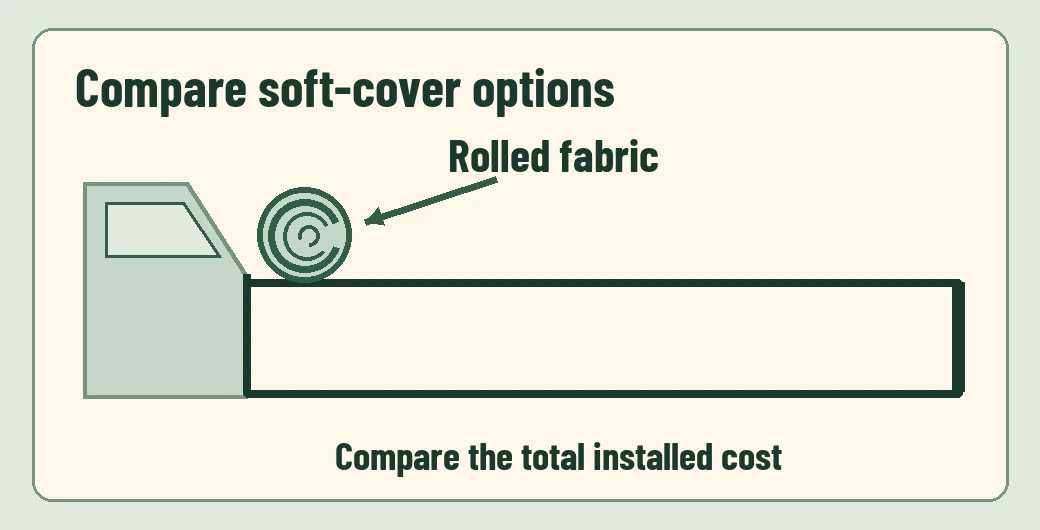
A lightweight roll sits above the bed, with a reminder to compare the installed cost.

Compare a soft cover first

If you want a cover that is easier to lift and tend to remove gear when parking, compare soft covers first. Check the installed cost of both options and who would lift a rigid lid if you had to take it off.

Find the hard and soft comparison
Rear view of a closed tailgate with panel latches and a separately keyed cover handle.

Choose a locking arrangement you can check

Check the release after securing the tailgate. A fold or hard roll can get the rear section out of your way for tools. A one-piece lid can use its own lock, with overhead room needed every time you open it. Bring valuable gear inside when practical.

See how to check the locks
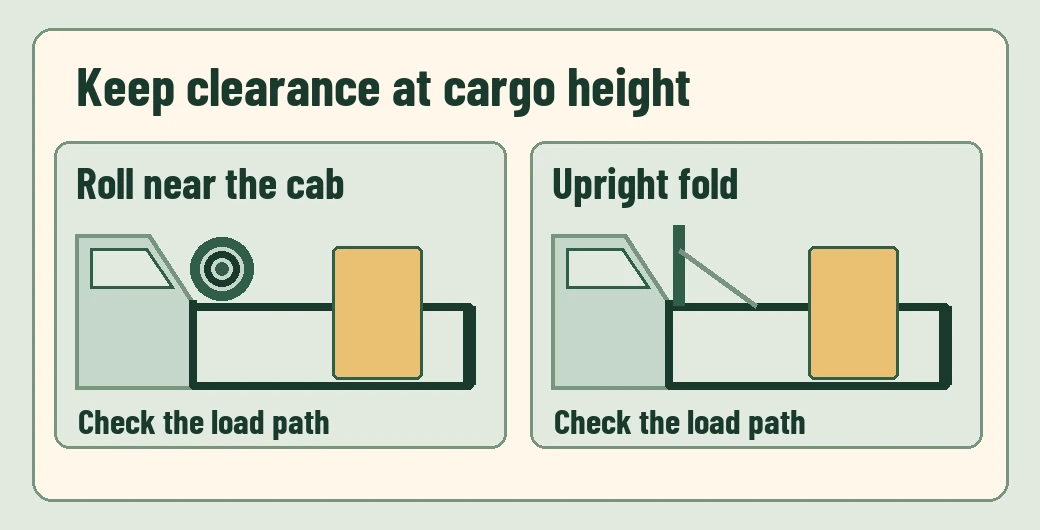
Cargo room comparison with a small roll near the cab and a supported fold upright.

Compare the roll and the upright folding position

Start with a hard roll or a folder with a manufacturer-approved upright position. Compare the roll size and the glass clearance. Also measure any retractable canister and the lift arc of a one-piece lid. Test at the tallest height of your regular load.

Compare where the roll sits
Side view shows a wide load secured at tie points above the cover rails with a separate truck payload check.

Verify the exact cover and rating before loading

Identify the maker’s moving-load rating for the exact installed system. Compare it with the vehicle, bed rails, rack and cargo requirements. Use the manufacturer’s allowed weight, placement and tie-down points rather than judging by material or appearance.

Check how ratings apply

Five examples of how rigid covers are built

Use these examples to see the mechanisms and materials in practice. The exact truck, year, bed and hardware still determine which part you can install.

Rigid MX4 Gen 3 aluminum panels upright next to the cab on separate supports, with slim ordinary rails.
Standard hard folding

BAKFlip MX4 Gen 3

Aluminum skins surround a high-density core. The standard version uses regular cover rails and can open in sections. In its supported upright position, verify your sightline through the rear glass separately from the high-mounted brake light.

Compact black roll with dark metal slats under its vinyl top sits above the front bed wall.
Hard rolling

BAK Revolver X4s

Black aluminum slats roll with the vinyl surface and engage the side rails when closed. The round bundle stays by the cab, where it can take up window or rack clearance. The X4s in this record has the ordinary rails.

A continuous dark RetraxONE XR deck retracts into its front housing between slim T-slot rails.
Manual retractable

RetraxONE XR

This manual model uses aluminum-reinforced polycarbonate and a fixed front canister. The XR rails have accessory T-slots. Check the space below the canister, the drains and whether the rack uses compatible hardware.

Single textured black UnderCover Elite lid raised at the tailgate on gas struts above the pickup bed.
One-piece hinged

UnderCover Elite

The molded ABS lid pivots at the front and uses gas struts, wraparound edges and an integrated lock. Check where it swings when raised, what it takes to lift off and whether you have room to store the one-piece lid.

DiamondBack SE textured black tread-plate lid panels lift from both sides of a fixed center strip.
Two access panels

DiamondBack SE

Two aluminum diamond-plate doors open from either end around a fixed center section. DiamondBack lists 400 lb for distributed hauling in motion for this SE. Check the vehicle’s limits for the rails and the full payload, counting the cover and any rack as part of the truck’s load. Use the limits that apply to the actual load path and follow the kit’s tie-down instructions. The parked rating is a separate specification.

Check the truck before choosing a part.

  • Write down the exact truck, model year, rail-height bed length, tailgate and factory box equipment.
  • Record the cover’s supported positions and check its swing, storage location and the tallest cargo you regularly need to load.
  • Bring your rack foot and crossbar details plus any applicable on-road ratings and tie-down requirements.
  • Verify the seller’s full part number and the mounting hardware. Check replacement parts and storage options for the exact cover.