
Cover styles
Load-Bearing Tonneau Covers and Weight Ratings
A heavy-duty claim is useful only when you know the allowed load, its footprint and whether the truck is parked or moving. A flat cover with thick panels can still have weak points at hinges, edges or mounting rails. Begin with the published rating for the exact model and truck.
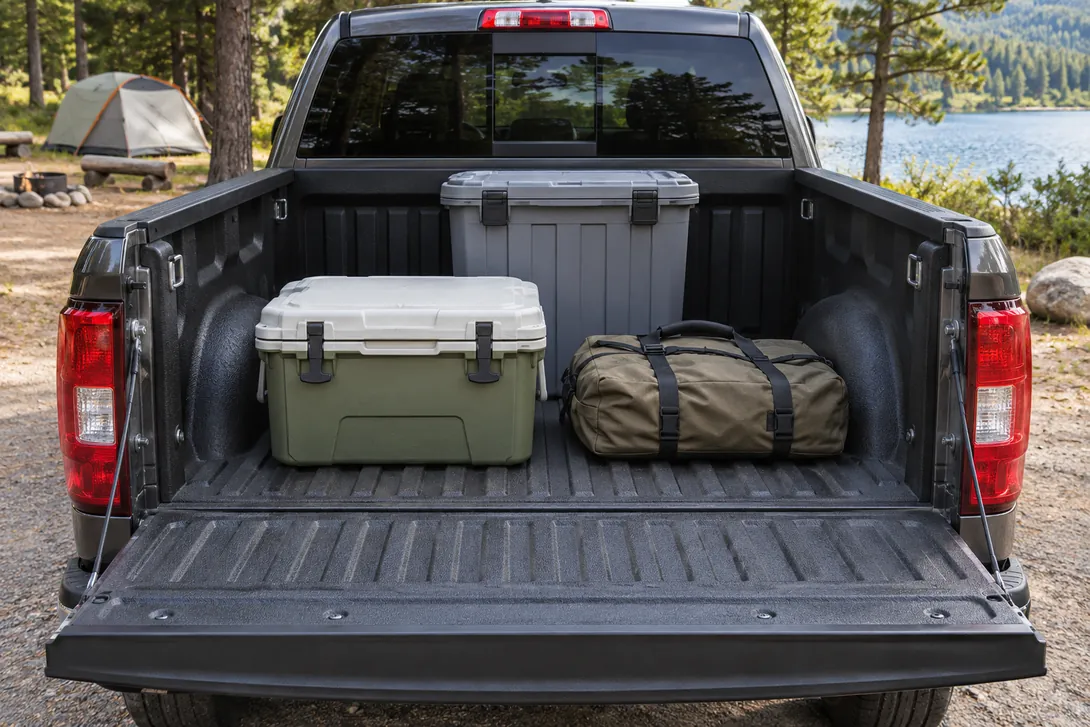
Separate platform capacity from truck capacity
A load-rated platform adds its own weight to the vehicle. Subtract occupants, cargo, accessories and any trailer tongue or pin load from the truck's applicable capacity following the owner's guidance. The platform rating cannot increase truck payload, axle ratings or attachment limits.
Ask for the conditions beside the number
DiamondBack publishes load information for the HD platform. Use the vehicle-specific version and its current instructions. Other DiamondBack designs, and other products sold as heavy-duty, can carry different limits. Record exactly what the manufacturer permits before using it as a comparison.
| Load type | What needs a separate answer |
|---|---|
| Distributed cargo | Permitted weight, support footprint and placement across panels. |
| Point or wheel load | Allowed contact pattern or a maker-approved loading system. |
| On-road or off-road use | Dynamic limit, securing points and any terrain-specific restriction. |
| People on the surface | An express statement about that activity and its conditions. |
Worked example
Four narrow feet change the rating question
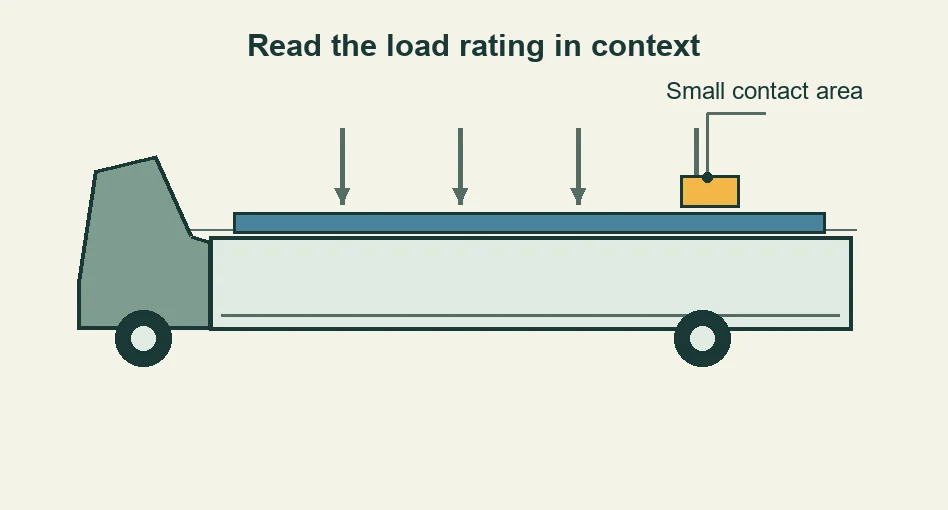
A work crew wants to transport an equipment case on a load-rated cover. Its total weight appears below the headline number, but the case rests on four small feet and will travel over uneven roads. Give the platform maker the loaded weight, footprint of each foot, proposed placement, tie-down direction and intended terrain.
Ask for the applicable moving-load limit and any required mounting or spreading equipment. If the only published figure concerns evenly distributed weight on a parked vehicle, the proposed use remains unresolved. Include the installed cover, occupants and other gear in the truck’s own load calculation too.
- Identify every contact point
- A wheel, jack foot or narrow runner can change the way a panel is loaded.
- Preserve the limit’s conditions
- A number without its model, terrain, movement and distribution restrictions is incomplete.
Match the claimed rating to your load
Describe the heaviest item by weight and by how it touches the top. Four small feet and a broad flat base distribute the same load very differently. Cargo must be secured with approved tie-down points.
| Situation | What to check |
|---|---|
| Broad equipment resting on the deck | Compare the footprint and tie-down arrangement with the model's instructions. Check the loaded truck limits as well. |
| ATV wheels or concentrated supports | Ask for the manufacturer's specified system and wheel-load conditions. A generic distributed figure cannot approve the setup. |
| A roof tent on crossbars | Check the rack and cover-track system for dynamic travel and static camping loads separately. |
Keep a record for future setups
Save the manufacturer's model, rating, conditions and mounting instructions together. Changing the bed mount, rack feet or load position can change the answer. If the maker gives no rating for your use, select a documented carrying system.