Roll-Up Tonneau Covers for Pickup Beds

A roll-up cover gathers in a bundle behind the cab. A soft roll is easier to handle. A hard roll uses linked rigid pieces for a stronger surface when shut. Check the rear latches and where the bundle sits before choosing.

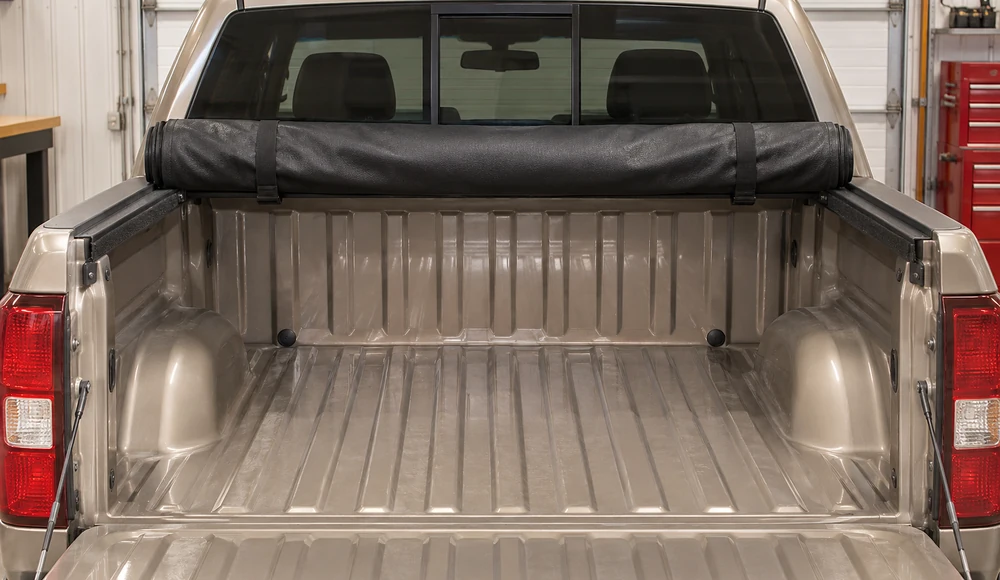
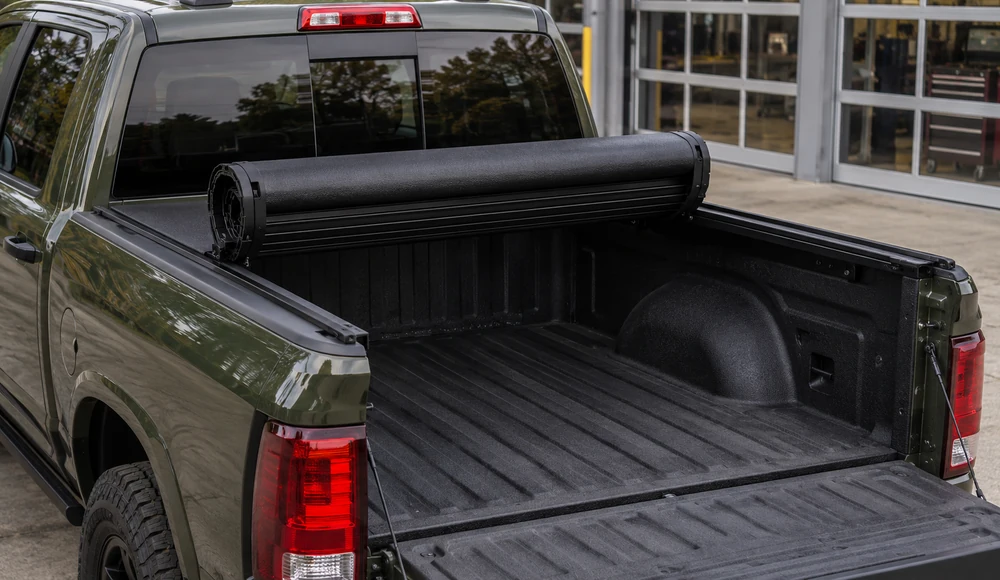
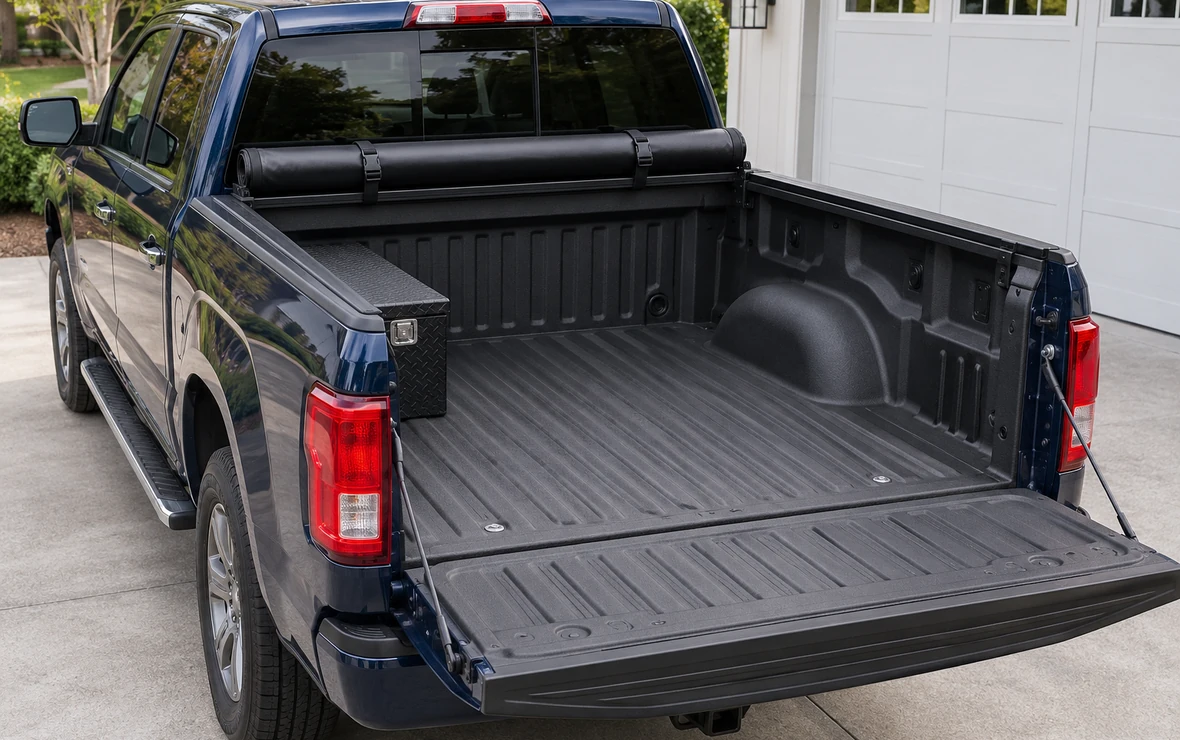
A rolled tonneau cover strapped near the pickup cab with clear floor space extending to the lowered tailgate.
See where the roll and straps sit above the bed rails before loading along the bed.

A listing can use “roll-top” for a retractable cover that slides into a box inside the bed. Ask where the cover ends up. On a roll-up cover the bundle remains above the rail at the cab, where its diameter and position affect what you can load.

What rolls into the bundle?

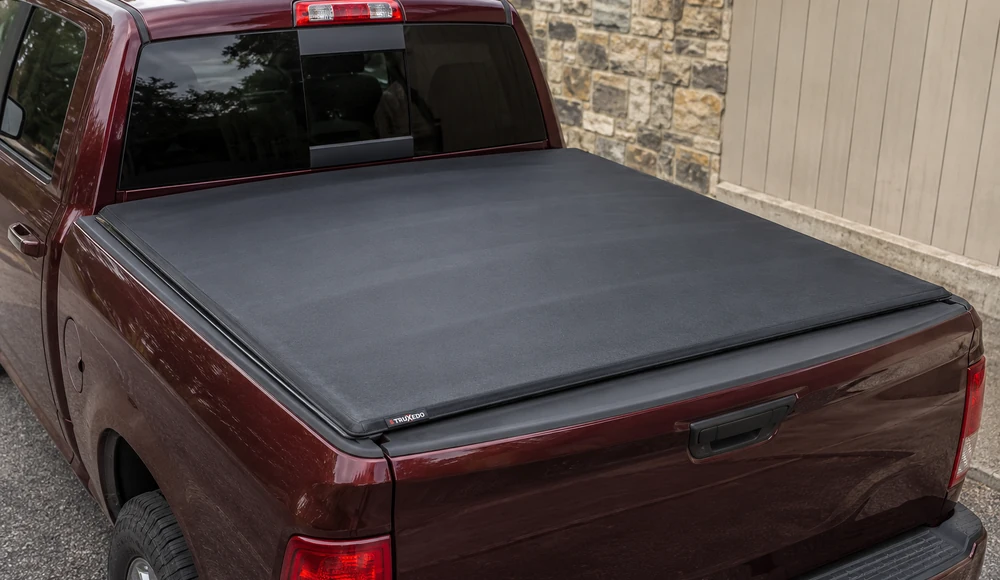
Both surfaces can look black and flat when closed. Look at the layers, closure and bed hardware for the difference.

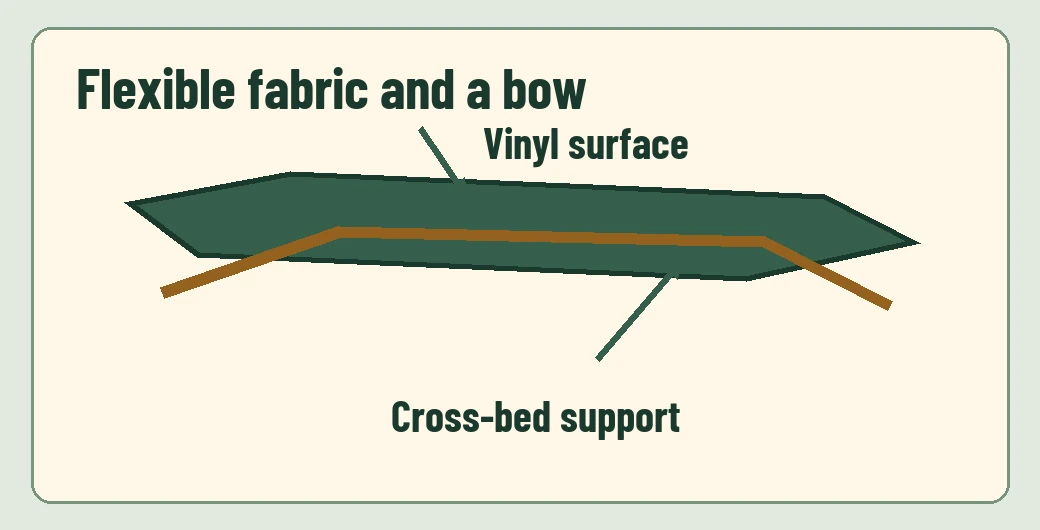
A flexible black cover and a curved cross-bed bow shown together.

Soft roll-up

A flexible surface rolls toward the cab, sometimes carrying the support bows with it. Pick this construction first if you regularly handle the cover yourself or want to compare a lower-cost setup.

Check the way the rear bar latches, how the side strips fasten and whether the kit uses manual or spring tension.
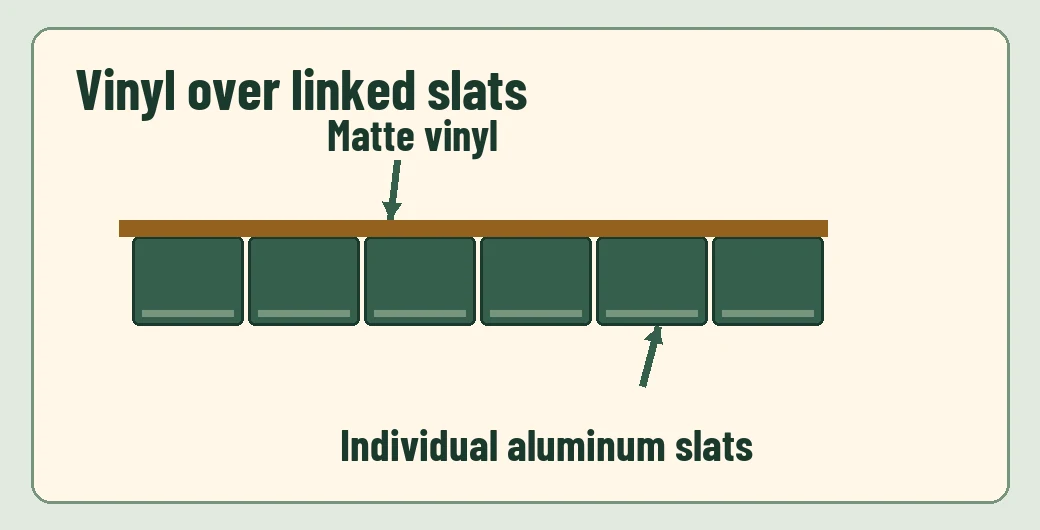
Dark linked aluminum slats shown beneath a matte vinyl surface.

Hard roll-up

On hard models like the Revolver X4s, rigid slats roll with a matte vinyl surface. They form a harder barrier when closed and can create a heavier bundle and more places where hands can pinch.

Check the solid pieces, how they engage the side rails and what room the larger bundle needs by the cab.

Check the rear bar, edges and rails.

Park the truck to check closure and tension. Use the instructions for the actual make and kit, particularly if the rails, straps or tailgate equipment have changed.

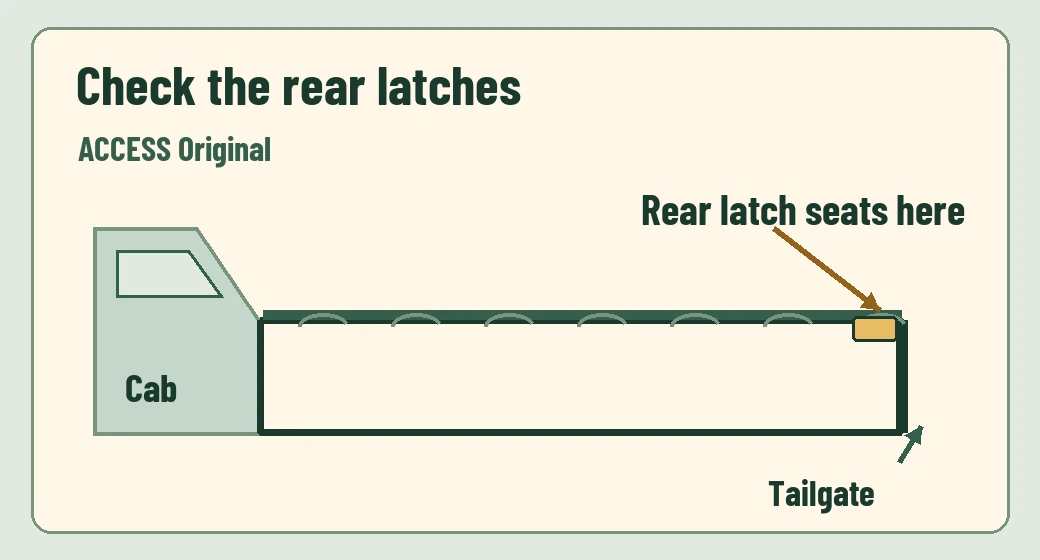
Rear view compares two rear latches under the bar and hook-and-loop placement at the edges.

Check the whole rear closure

On a soft cover the side strips keep the fabric against the rails. Check the rear latch separately. On a hard roll, verify that the sides and rear latch engage as shown in your manual. Check whether the release is accessible with the tailgate closed and locked. Bring valuables with you when you leave the truck.

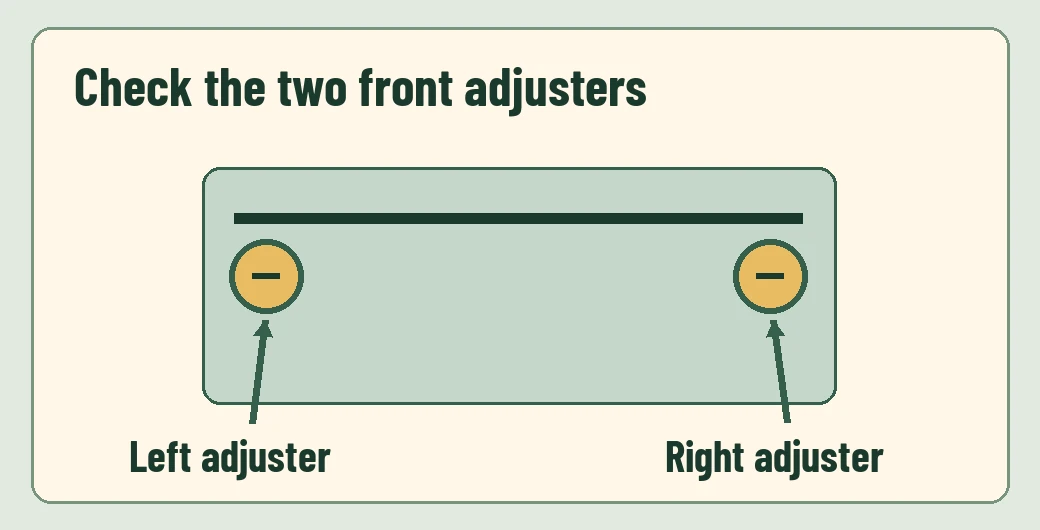
A top view highlights left and right front adjustment dials on an example soft roll.

Match the tension procedure to the brand

First check that both side strips are seated, the front bar is centered and the rails are parallel. The ACCESS Original manual calls for rolling the cover open and adjusting the two front tensioners equally. TruXedo Lo Pro uses a self-adjusting spring with floating side strips. Follow that cover’s instructions.

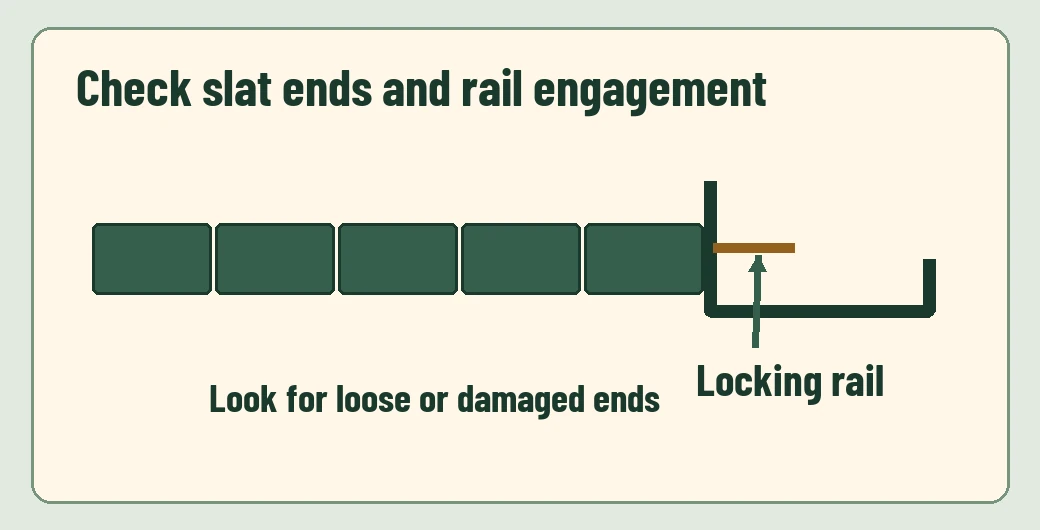
A row of linked slats meets an illustrated edge rail near the rear cap.

Check a hard roll that lifts or rattles

Park the truck, close the cover and check the two rear latch points and the full rail engagement. Inspect the slat ends, end caps and rail hardware for looseness or damage. Use the manual for service or replacement parts for your exact model.

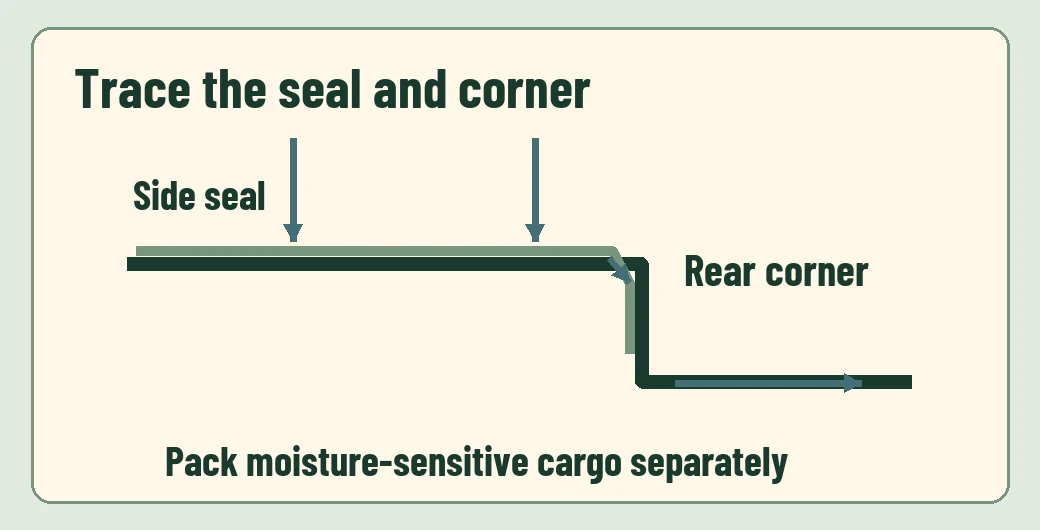
Simplified rail and rear corner showing where rain can track along the cover edge.

Trace the seals and openings

Clean the side and front seals and check the rear corners and tailgate gap. Recheck the actual rail and any added hardware if water follows one corner. Pack tools or electronics that must stay dry in a protected container.

Follow the cover through four positions.

Compare the ACCESS Original and the Revolver X4s at the same point in the opening motion. Read the manual for the exact kit before driving or moving cargo.

ACCESS Original soft roll

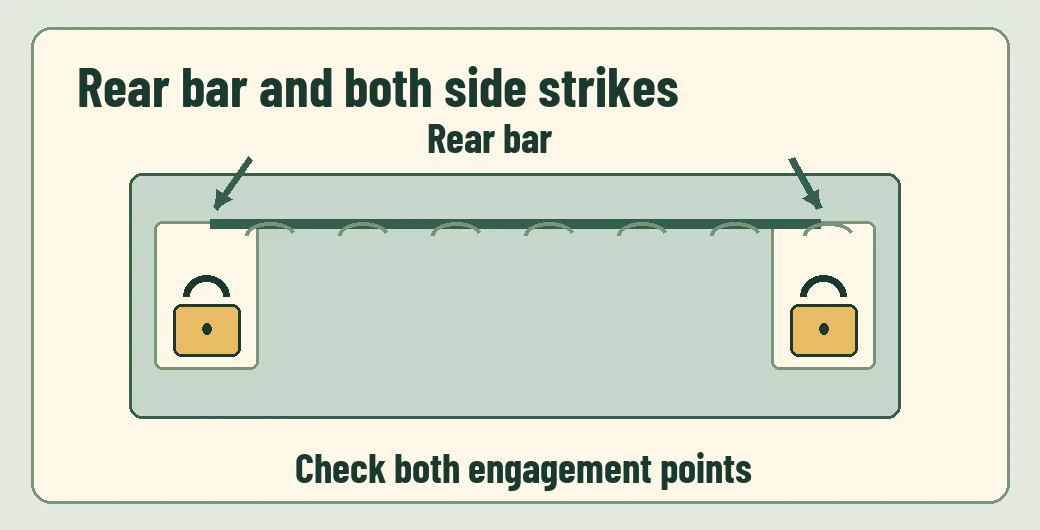
Taut fabric and recessed rear bar at the rail strikes.

Latched closed

The vinyl and rear bar lie flat. With the tailgate lowered while parked, confirm the rear bar catches the side-rail strikes. Press the hook-and-loop edges down full length on both sides.

Before travel, confirm the cover is shut, the rear bar is secured at both strikes and the side strips are sealed.

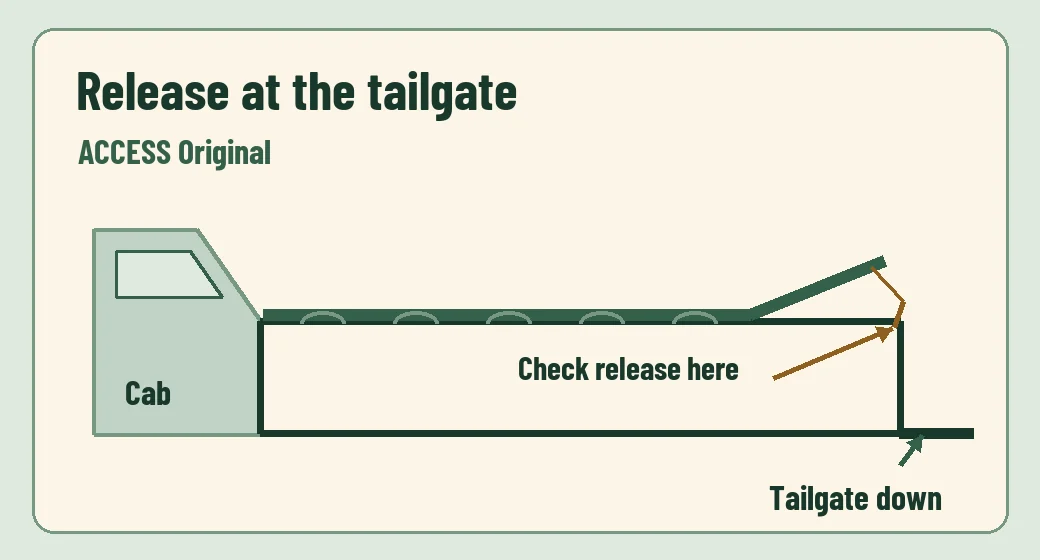
Soft roll rear bar turns up at the lowered tailgate where the release cord is pulled.

Rear released

Lower the tailgate. At the rear bar, pull the ACCESS latch cord and turn the bar with your other hand. Work at the tailgate with the cargo area clear.

Parked loading only.

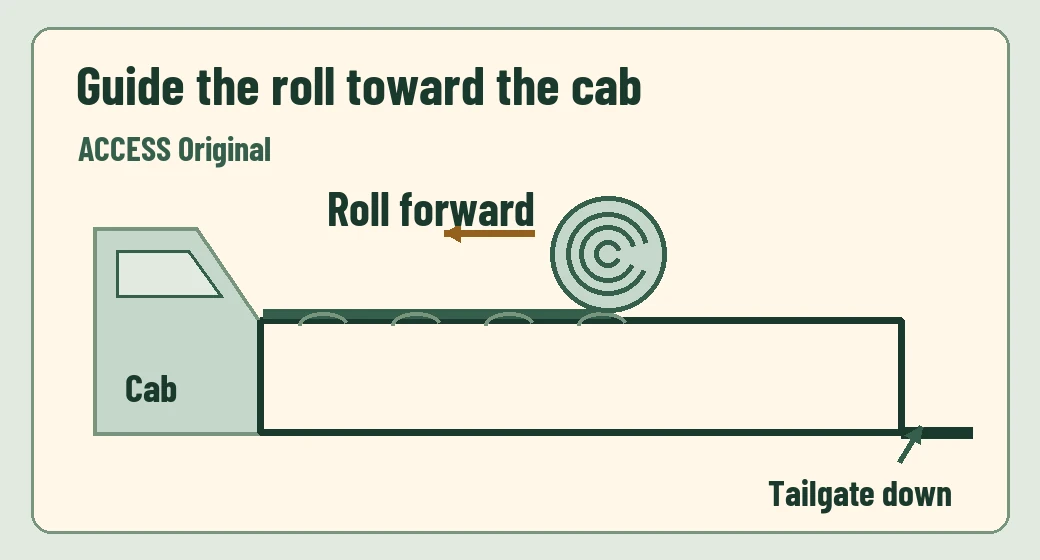
A fabric roll with its bows has moved toward the center of the bed.

Rolling partway

Use both hands to guide the cover toward the cab. The fabric and its bows gather together as the open section of the bed grows.

Parked loading only.

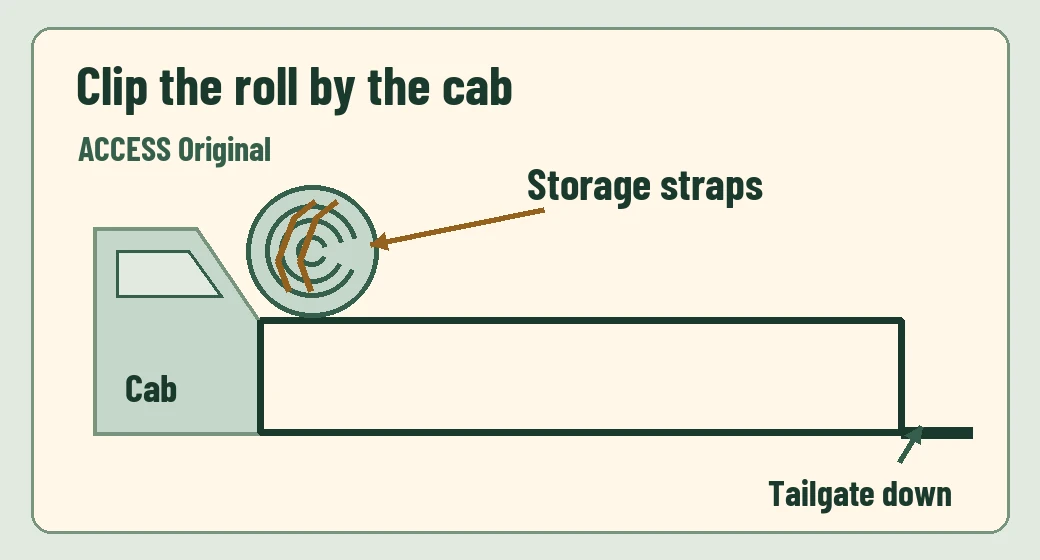
Fabric bundle held by storage straps at the cab, ahead of the open bed.

At the cab and clipped

Roll the cover to the front and fasten its storage straps. Make sure the bundle is held in the position shown in the instructions.

Use the strapped ACCESS Original roll for parked access. For normal travel, the manual calls for closing the cover. Latch and reseal it before driving.

BAK Revolver X4s hard roll

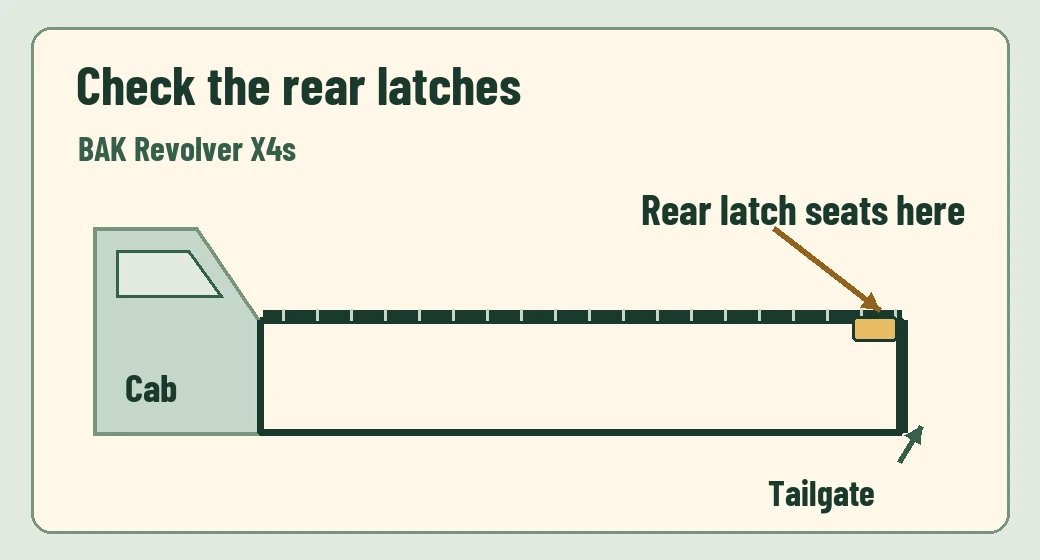
Rigid slats sit flat along the locking rails and latch at the rear.

Latched closed

With the deck flat, check the tail rail and both rear latches. Follow the instructions to confirm the slats have engaged the side rails.

BAK permits the flat closed position for driving when both rear latches are fully engaged.

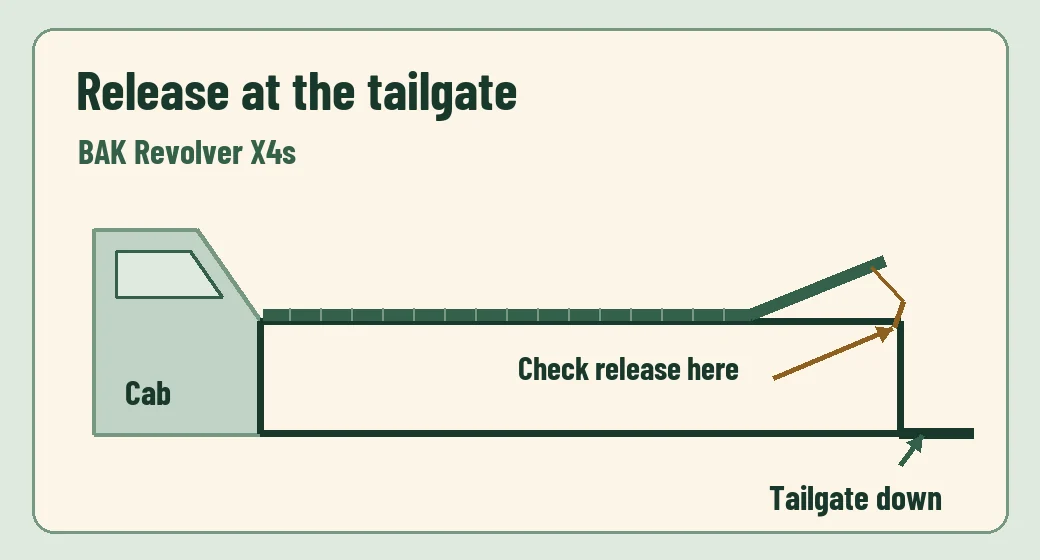
Lifted rear rail begins rotating the rigid deck with the release cable accessible underneath.

Rear released

Open the tailgate, operate the release cable at the rear and rotate the tail rail forward. Keep fingers clear of the moving rail and cover pieces.

Parked loading only.

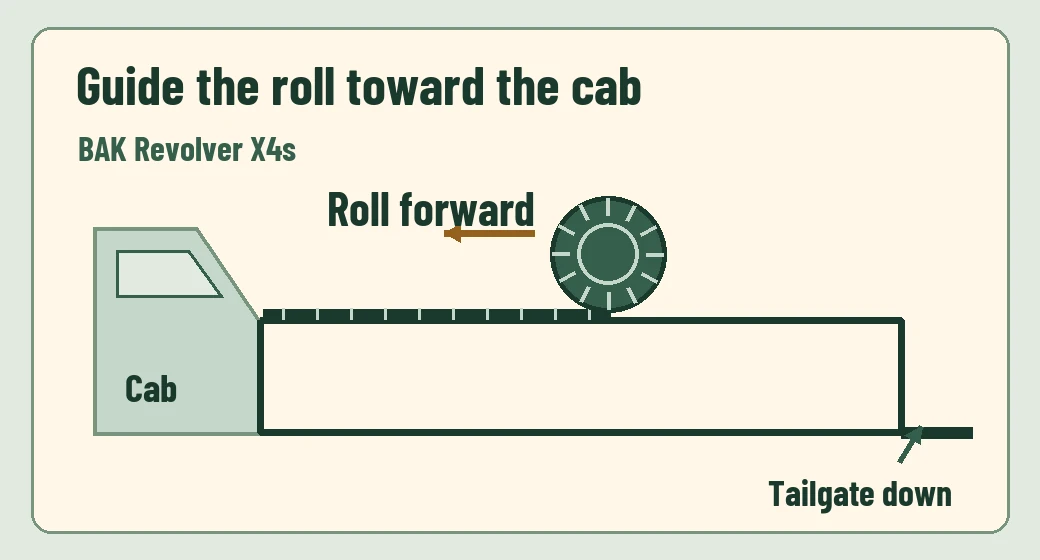
A partly moved hard roll shows the linked aluminum slats curling toward the cab.

Rolling partway

Guide the rigid cover toward the cab. Its black interlocking slats form the inside of the roll, and its weight moves forward as it rolls.

Parked loading only.

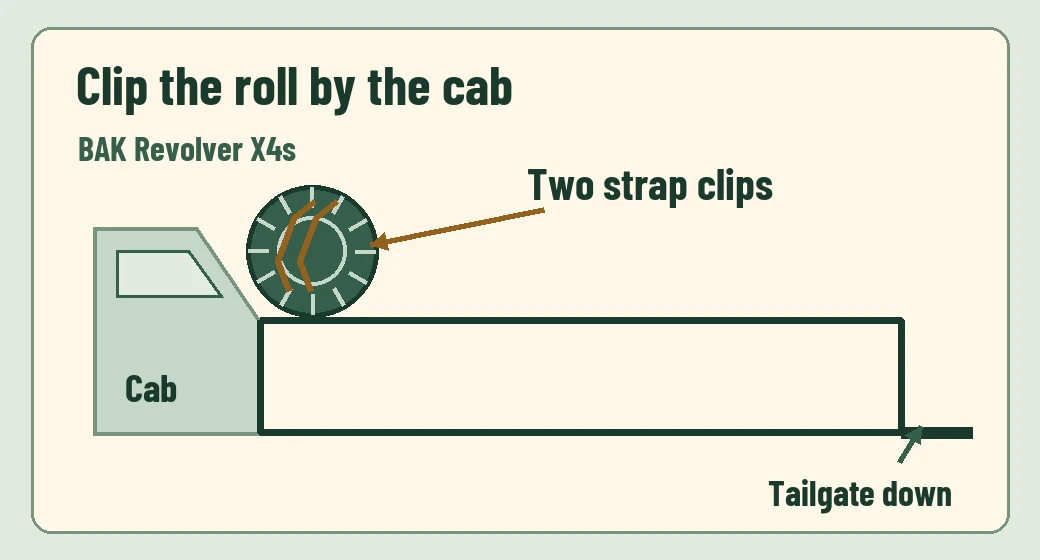
Fully rolled slats secured near the cab at two strap clamp locations.

At the cab and clipped

Finish the roll at the cab. Engage both strap clips and take up slack as shown in the standard Revolver instructions. Check that the roll is clear of the rear glass.

BAK permits this fully rolled position for driving with both straps secured. Follow the exact kit manual and secure the load separately.

Compare the roll to the lowest obstruction.

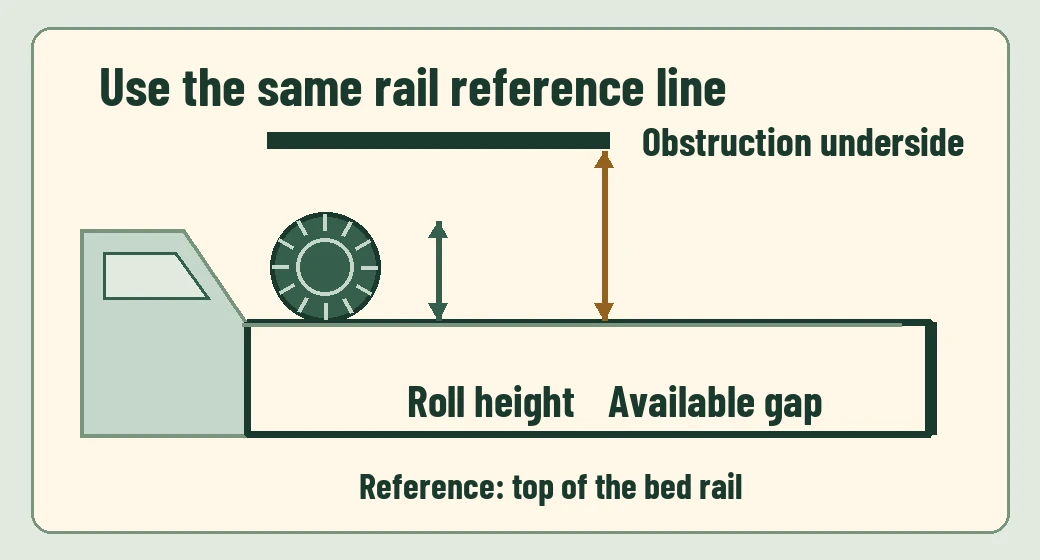
Measure the top of the strapped roll above the bed rail. Then use the same rail line and location to measure to the underside of the closest crossbar or the boundary of your cargo path. Subtract roll height from that available gap.

Cab-side section uses the same rail baseline for roll height and the available distance to a crossbar.
Measure the hardware and straps that stick out farthest. Also check roll depth, the places clamps reduce inside width, the nearest point to the cab and rear visibility.
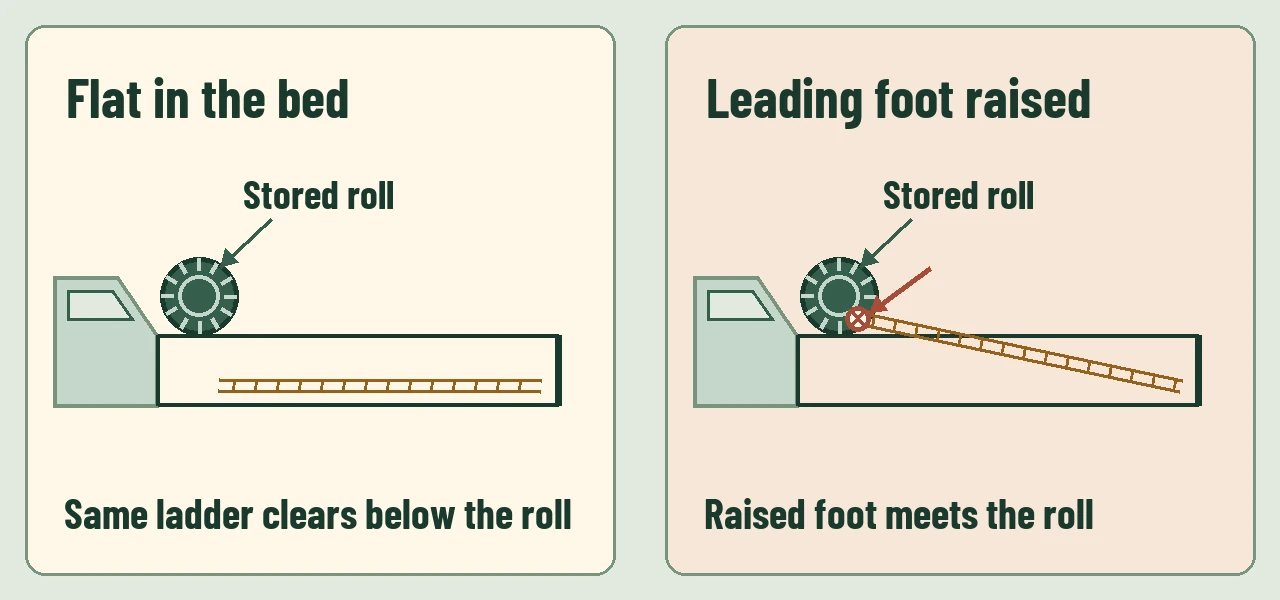
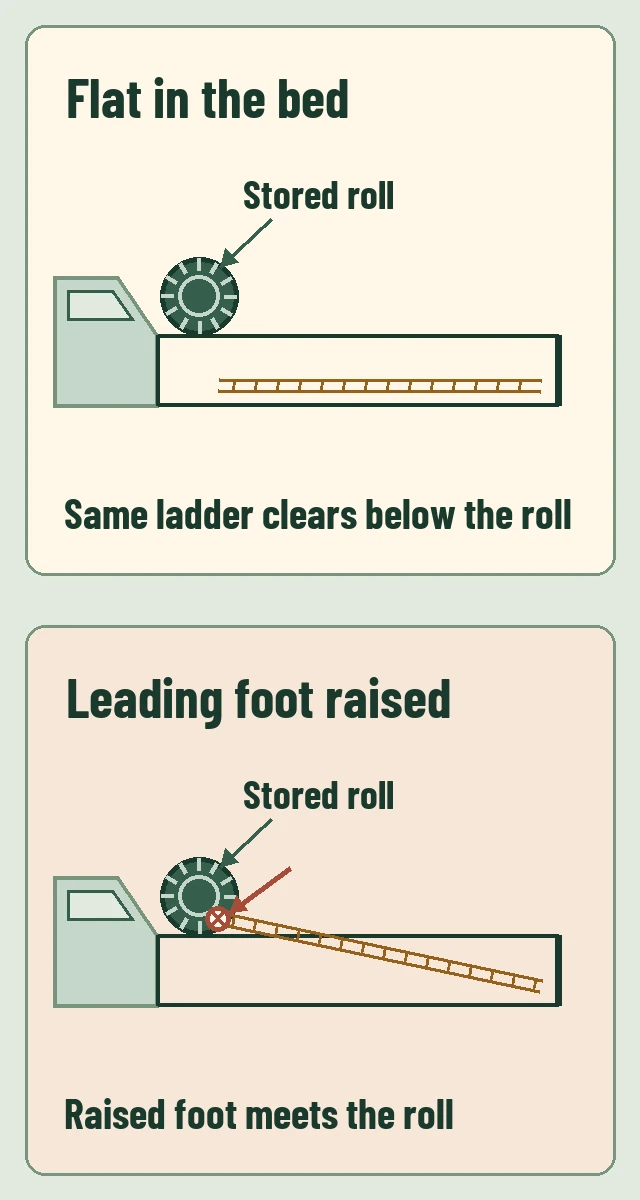
Two side views. A flat ladder fits below the stored roll. The leading end of the same ladder lifts into the roll’s space during unloading.Two side views. A flat ladder fits below the stored roll. The leading end of the same ladder lifts into the roll’s space during unloading.

The ladder fits flat. Does it clear when lifted?

A ladder can slide beneath the roll once it is flat, but its leading foot can catch the roll as you raise or angle the ladder. Check how you actually lift it in and out. Move the cargo or reconsider the cover if that path is blocked.

Two example measurements

  • Rack clears at rest. A 7 in roll under a 9 in gap leaves +2 in while parked. Move the cover and the cargo through their full paths before using that clearance.
  • Front ladder setup. A 10 in roll and 8 in of available space at the closest point when the leading ladder foot is raised gives −2 in. These readings describe a sample loading position, measured from the same rail line.

Three roll-ups to compare by hardware

Inspect the material and opening mechanism, then check the exact year, truck, bed and hardware before ordering. The Amazon buttons search the cover family.

The TruXedo Lo Pro lies taut and low inside the rails of a pickup bed.

TruXedo Lo Pro

Low-profile soft roll with spring tension

The Lo Pro mounts inside the bed rails and uses a self-adjusting spring tensioner with floating hook-and-loop edges. Look at the actual rail, latch and fitting instructions before selecting this version for your truck.

Write down what the exact kit needs to clear.

  • Record your truck’s year, model, bed length, tailgate and any options near the mounting rail. Look at your liner, existing rack, tie-downs and rail hardware.
  • Record the roll height and depth, the closest obstruction and the actual loading path for a long or tall object. Check the rear view and the high-mounted stop lamp separately.
  • Check which travel positions the current instructions permit, how the cover fastens and which strap or latch parts come with the kit.